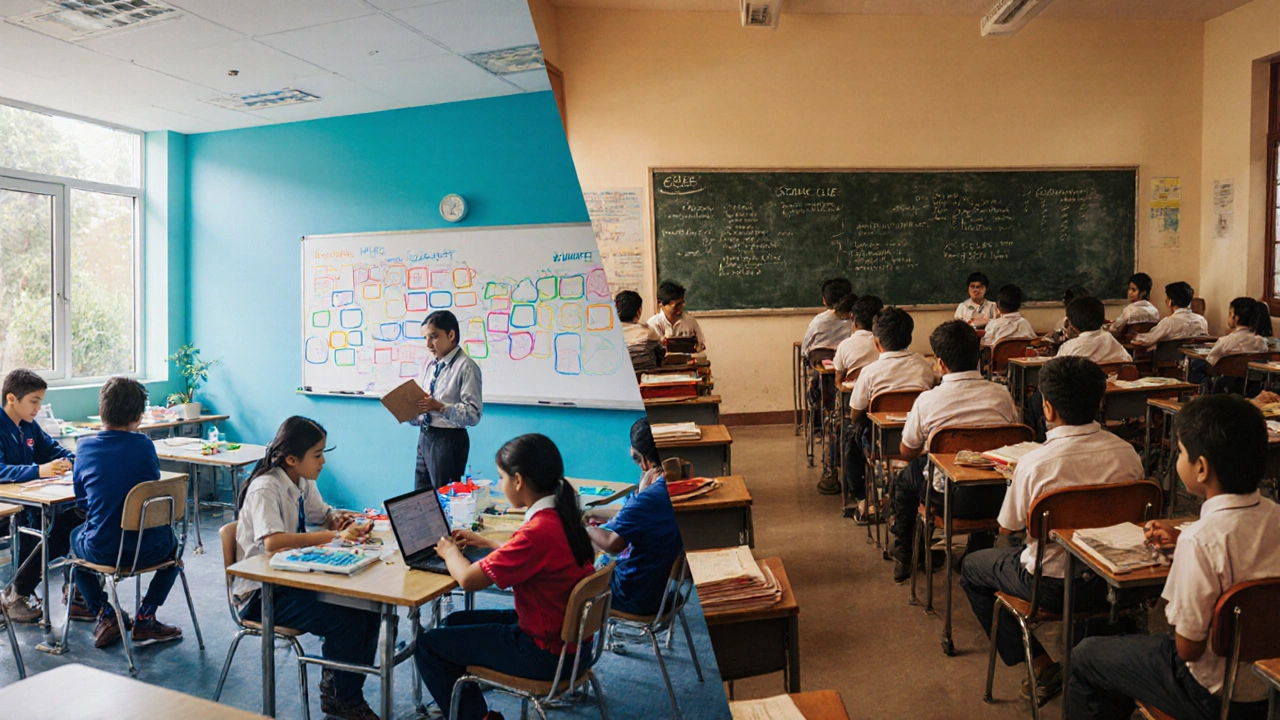
American Syllabus: What It Is, How It Compares, and What It Means for Indian Students
When people talk about the American syllabus, a flexible, skill-focused education framework used in public and private schools across the United States. Also known as the U.S. curriculum, it emphasizes critical thinking, project-based learning, and student choice over rigid memorization. Unlike India’s centralized boards like CBSE or ICSE, there’s no single American syllabus. Each state, and often each district, designs its own standards—though most follow the Common Core State Standards, a widely adopted set of guidelines for math and English language arts in grades K–12. This means a student in Texas might study slightly different topics than one in California, but both are expected to analyze texts, solve real-world problems, and explain their reasoning—not just recite facts.
The American education system, a decentralized model that prioritizes individual growth over standardized testing is built around the idea that learning should prepare you for life, not just exams. You’ll find fewer high-stakes board exams and more continuous assessment: class participation, group projects, presentations, and portfolios matter just as much as test scores. This approach suits students who thrive when they can explore topics deeply, ask questions, and learn by doing. It’s also why so many Indian families consider switching to American-style schools—especially if they’re planning for college in the U.S. or want their kids to develop confidence in speaking up, debating, and leading.
But it’s not all smooth sailing. The American system demands more self-discipline. Without daily homework checks or rigid timetables, students have to manage their time. And while CBSE aligns directly with JEE or NEET, the American curriculum doesn’t prepare you for those exams. If you’re aiming for IITs, switching mid-way can be risky. But if your goal is a U.S. university, the American syllabus gives you a real edge—especially with applications that value essays, extracurriculars, and leadership over a perfect 95% score.
What you’ll find in the posts below are real stories and clear comparisons: how the American syllabus stacks up against CBSE, what it takes to transition into it, which online platforms help Indian students follow it, and how families are using tools like Google Classroom and Khan Academy to recreate its flexibility at home. You’ll also see how some students cracked IIT JEE while studying under U.S.-style methods, and why digital learning is making this path more accessible than ever.