Highest Paid MBA Specializations in 2026: Finance, Tech, and Strategy

Discover the highest paid MBA specializations in 2026. We compare salaries in Finance, Tech, and Consulting to help you maximize your ROI.
Continue reading...When you think about MBA programs, a graduate business degree designed to build leadership, strategy, and management skills for real-world careers. Also known as Master of Business Administration, it’s one of the most common paths for professionals looking to switch roles, climb the ladder, or start their own company. But not all MBA programs are the same. Some focus on finance, others on tech or analytics, and a few are built for people already working full-time—those are the EMBA programs.
EMBA programs, a version of the MBA made for experienced professionals who don’t want to leave their jobs. Also known as Executive MBA, these classes usually happen evenings or weekends, and students often bring real business problems into the classroom. Then there’s the question of cost. An MBA isn’t cheap, and the salary boost you get afterward doesn’t always cover it right away. In 2025, top U.S. grads might start at $120,000, but many others see smaller jumps—especially outside big cities or elite schools. And if you’re considering this after 30 or even 40, you’re not alone. More adults are going back to school not because they’re stuck, but because they want to lead differently.
What you study matters just as much as where you go. Right now, the most in-demand specializations are analytics, AI, product management, and tech-focused MBAs. Finance and consulting are still strong, but they’re no longer the only paths to high pay. The math? It’s not calculus-heavy. It’s mostly spreadsheets, basic statistics, and understanding numbers fast—not solving equations for hours. And yes, some programs are brutal. The hardest ones push you with non-stop group work, midnight deadlines, and cutthroat competition. But that’s not the norm everywhere.
If you want to move into management, switch industries, or build a startup, an MBA still opens doors. But if you’re just looking to check a box, you might be better off with a specialized master’s or online certifications. The real value isn’t in the diploma—it’s in the network, the skills you actually use, and how well you can prove your impact after graduation. That’s why the posts below cover everything from salary numbers and admission odds to whether you should apply after 30, how many schools to target, and which programs actually make you stand out. No hype. Just what you need to decide if an MBA fits your life, your wallet, and your next step.
Discover the highest paid MBA specializations in 2026. We compare salaries in Finance, Tech, and Consulting to help you maximize your ROI.
Continue reading...
Discover the true cost of an MBA in 2026. We break down tuition, hidden fees, and ROI for elite, public, and online programs to help you decide if the degree is worth the investment.
Continue reading...
Discover realistic post-MBA salary data for 2026. We break down average compensation by industry, location, and school tier to help you calculate true ROI.
Continue reading...
Wondering if an MBA is too hard? We break down the actual workload, the toughest subjects like Finance, and the social pressure of business school.
Continue reading...
Discover key MBA requirements for 2026. Learn about academic qualifications, work experience, test scores, essays, and interviews. Actionable advice to strengthen your application and stand out to top business schools.
Continue reading...
An MBA degree typically takes 1 to 2 years, but length varies by program type-full-time, part-time, online, or executive. Your background, goals, and location affect how long it will take.
Continue reading...
Explore how age influences MBA outcomes, see a clear age bracket comparison, and get a practical checklist to choose the optimal time for your MBA.
Continue reading...
Discover which MBA programs are the toughest to get into in 2025, why they're so selective, and practical tips to boost your chances of admission.
Continue reading...
Explore the true financial ROI of an MBA in 2025, covering costs, salary boost, payback periods, and alternatives to help you decide if it's worth the investment.
Continue reading...
A clear 2025 answer on the most in-demand MBAs-Product, Analytics/AI, Tech, Finance, Consulting-plus salaries, how to choose, tables, checklists, and FAQs.
Continue reading...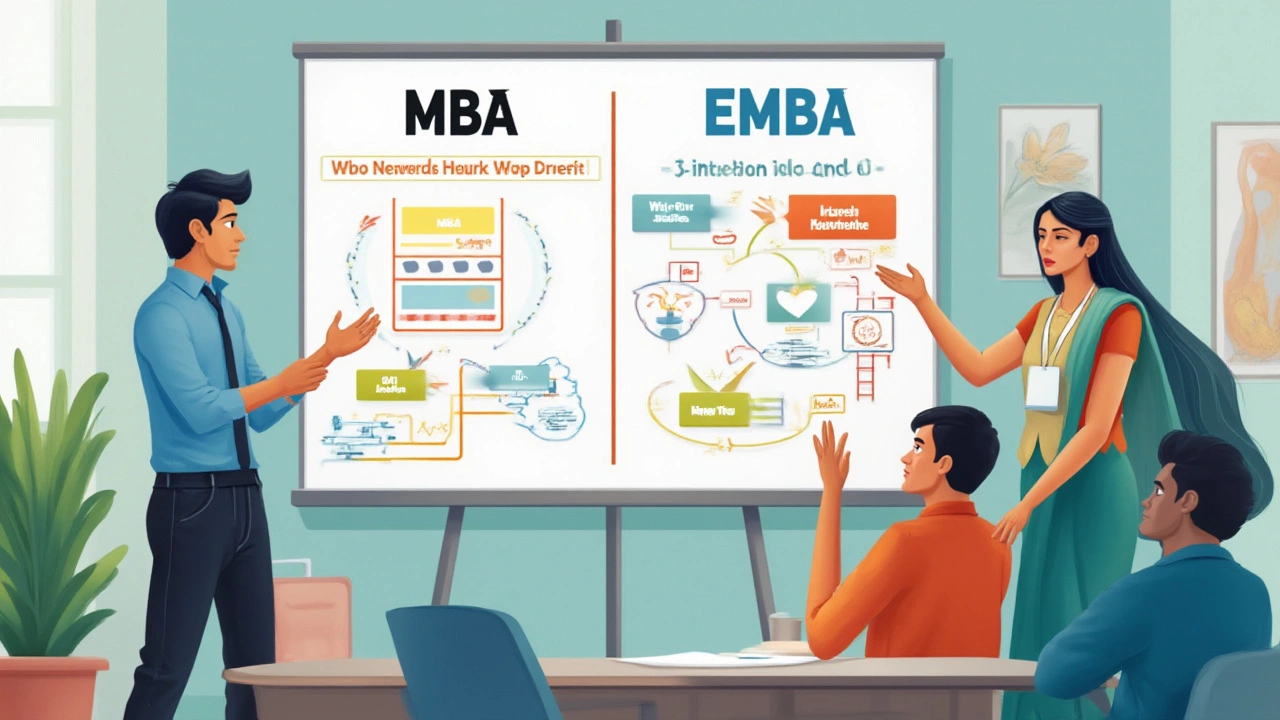
Struggling to pick between MBA or EMBA? Cut the confusion. This guide breaks down program formats, admissions, salary outcomes, lifestyle, and which fits your goals.
Continue reading...
Are MBAs losing value in 2025? Dive into real job stats, MBA salaries, and new trends to decide if that business degree still packs a punch.
Continue reading...