Curriculum Difficulty: What Makes School Syllabi Hard or Easy for Students in India
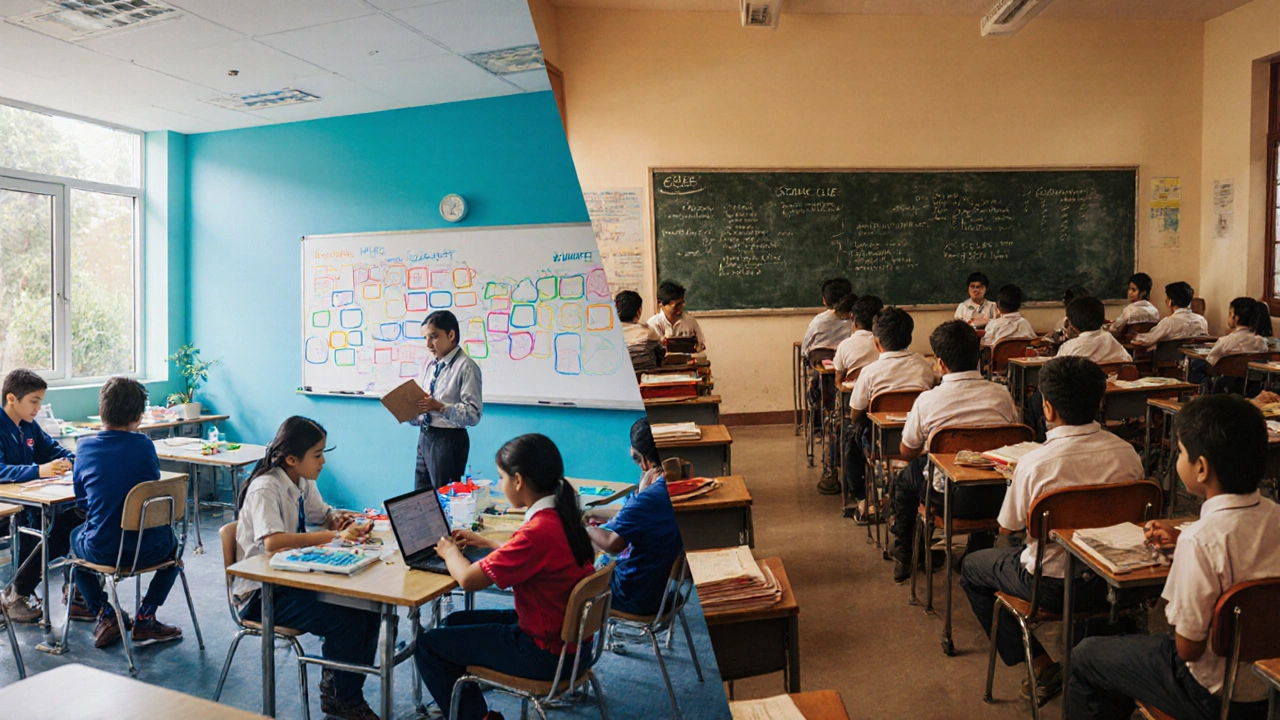
When we talk about curriculum difficulty, how demanding a school’s syllabus is in terms of content depth, pace, and exam pressure. Also known as academic rigor, it’s not just about how much you learn—it’s about how fast, how deep, and how often you’re tested. In India, this isn’t just a classroom issue. It’s the difference between a student spending 3 hours a day on homework or 7. It’s the reason some families pick CBSE over state boards, and why coaching centers thrive near schools with tough syllabi.
CBSE syllabus, the national curriculum followed by over 20,000 schools in India, designed for uniformity and alignment with competitive exams. Also known as Central Board of Secondary Education curriculum, it’s structured to build exam-ready students—especially for JEE and NEET. That’s why its curriculum difficulty feels high: it doesn’t just test memory, it tests speed, problem-solving, and application under pressure. Compare that to ICSE, which dives deeper into English and theory but moves slower, or state boards, which often focus on local language and rote learning. Each has a different kind of difficulty, and none are "easy"—they just demand different things. The real question isn’t which is harder, but which matches your child’s rhythm. If they thrive on structure and clear targets, CBSE’s pace might feel right. If they need space to explore ideas, ICSE’s depth could be better. And if they’re aiming for engineering or medicine, the competitive exam prep, the focused, high-stakes training outside school to crack entrance tests like JEE, NEET, or UPSC. Also known as entrance exam coaching, it’s not optional for many—it’s the next step after surviving the curriculum. That’s why so many posts here talk about starting IIT JEE prep early, using apps for NEET, or cracking JEE in six months. The curriculum sets the stage, but competitive prep is the real test.
What you’ll find in the posts below isn’t just a list of articles—it’s a map. A map of how curriculum difficulty shapes student choices, how it links to coaching culture, and why some boards feel heavier than others. You’ll see real stories from students who cracked tough exams, tools that help manage the load, and clear comparisons between CBSE, ICSE, and state systems. No theory. No fluff. Just what actually works when the pressure’s on.