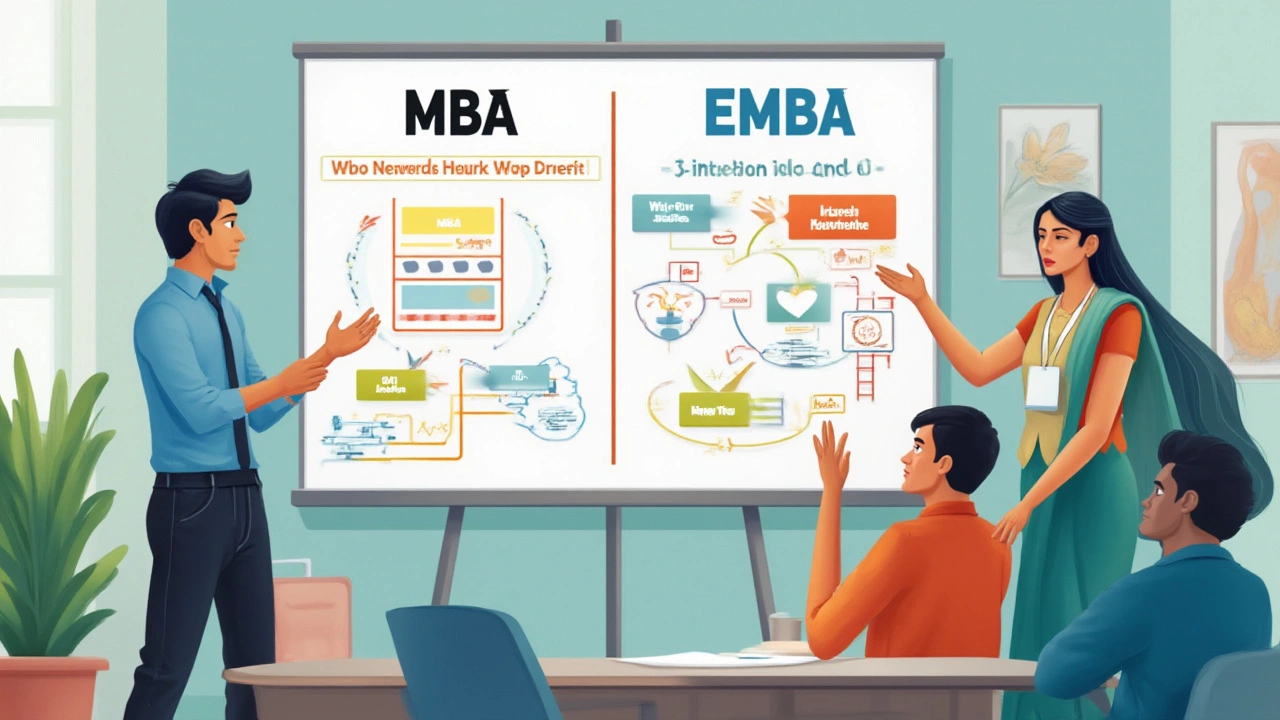
Difference Between EMBA and MBA: What You Really Need to Know
When people talk about EMBA, a Master of Business Administration designed for working professionals with significant experience and MBA, a graduate business degree typically pursued by younger professionals early in their careers, they often treat them like the same thing. But they’re not. An EMBA is built for people who are already leading teams, managing budgets, or running departments—while a traditional MBA is often the first big step up for someone looking to switch roles, industries, or climb from entry-level to management. The core curriculum might look similar, but the context, pace, and purpose? Totally different.
Most EMBA programs, tailored for executives with 10+ years of work experience are designed to fit around your job. Classes happen on weekends or evenings. You don’t take time off work—you bring real problems from your office into the classroom. Meanwhile, a full-time MBA, often pursued by people in their late 20s or early 30s usually means quitting your job for a year or two. You’re learning theory, doing internships, and building a network from scratch. The EMBA is about sharpening what you already know. The MBA is about building something new.
Cost is another big divider. An EMBA can cost $100,000 or more, but here’s the catch: your employer often pays for it. Companies invest in EMBA students because they want them to grow into leadership roles. An MBA usually comes out of your pocket—or your student loans. You’re paying for a career jump, not a promotion. And the ROI? EMBA grads often see faster salary bumps within their current company. MBA grads might land a new title at a new firm, but they’re starting over in some ways.
Who you sit with matters too. In an EMBA class, you’ll learn from other VPs, founders, and department heads. The discussions aren’t hypothetical—they’re about real supply chain issues, merger challenges, or team conflicts you’ve faced. In a traditional MBA, you’re surrounded by people who’ve worked 2–5 years. Their questions are about how to get hired, how to break into consulting, or how to switch from engineering to marketing. The EMBA is a peer network. The MBA is a launchpad.
You don’t need an EMBA if you’re still figuring out your path. And you won’t get much out of a full-time MBA if you’re already running a team. The right choice isn’t about prestige—it’s about timing. If you’re leading people and want to lead better, an EMBA makes sense. If you’re trying to get your foot in the door of management, an MBA is the way. There’s no universal best. Only the one that matches where you are now—and where you want to go next.
Below, you’ll find real breakdowns, personal stories, and practical advice on who benefits most from each program, how to pick the right one, and what to expect once you enroll.
Struggling to pick between MBA or EMBA? Cut the confusion. This guide breaks down program formats, admissions, salary outcomes, lifestyle, and which fits your goals.