Government Exam Book Relevance Checker
Check if your study material matches current exam patterns and is updated for 2026. Based on the latest government exam trends.
Result
If you're aiming for a government job in India, the right book can make all the difference. Thousands of candidates sit for exams like UPSC Civil Services, SSC CGL, Bank PO, and state-level PSCs every year. But not all study materials are created equal. Some books give you depth, others give you clarity, and a few actually help you win.
What Makes a Book Truly Useful for Government Exams?
A good book for government job prep doesn’t just list facts. It teaches you how to think like an examiner. The best ones connect concepts across subjects-like how history links to current affairs, or how basic math appears in data interpretation questions. They also include real past paper questions, not just made-up ones.
Many students waste months on books that are too thick, too vague, or outdated. The 2025-2026 exams have shifted focus: more current events, less rote memorization. That means your books need to reflect today’s patterns, not last decade’s.
Top Books for UPSC Civil Services Exam
For the UPSC Prelims and Mains, three books stand out as non-negotiable:
- Indian Polity by M. Laxmikanth - This is the go-to resource for the Constitution, governance, and public administration sections. Over 85% of successful candidates cite it as their primary source. It’s written simply, with clear examples from real cases like the Kesavananda Bharati judgment.
- India’s Struggle for Independence by Bipan Chandra - Unlike other history books that just list dates, this one explains why events happened. It’s the only book that makes modern Indian history feel like a story, not a textbook. UPSC has asked at least 12 direct questions from this book in the last five years.
- Indian Economy by Ramesh Singh - Covers everything from GDP calculations to recent reforms like GST and PLI schemes. It’s updated annually, and the 2025 edition includes data from the Economic Survey 2024-25.
Don’t skip NCERTs. Start with Class 6 to Class 12 NCERTs in History, Geography, Polity, and Economics. They’re not for beginners-they’re the foundation. UPSC paper setters often pull direct lines from these books.
SSC CGL and CHSL: The Must-Have Resources
For SSC exams, speed and accuracy matter more than depth. Here’s what works:
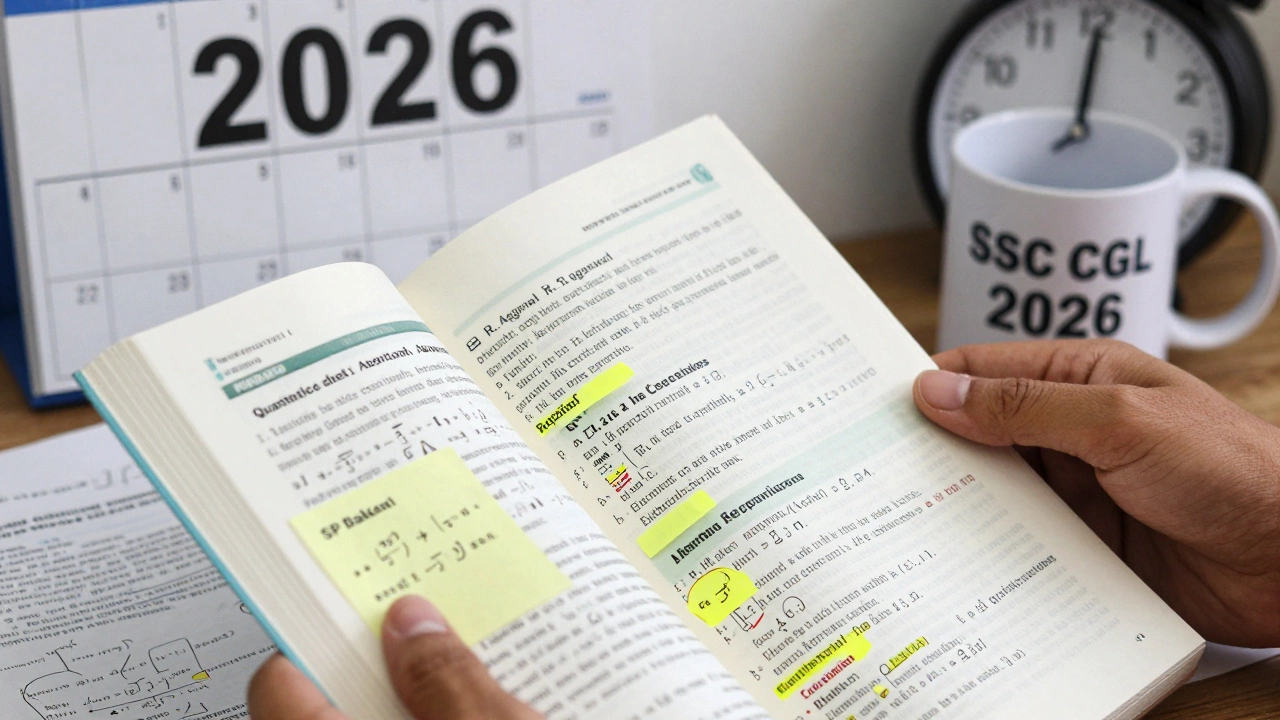
- Quantitative Aptitude by R.S. Aggarwal - The most trusted book for math sections. It breaks down topics like percentages, time-speed-distance, and data interpretation into digestible chunks. Over 70% of SSC toppers say they solved this book twice.
- English Language by SP Bakshi - Covers grammar, vocabulary, and comprehension in a way that sticks. It includes real SSC question patterns from 2020 to 2025. The error-spotting and sentence improvement sections are especially useful.
- Lucent’s General Knowledge - Still the most popular GK book for SSC. Updated yearly, it includes science, sports, awards, and current affairs from January 2024 to December 2025. It’s compact, easy to revise, and matches the exam’s trend toward recent events.
For reasoning, Verbal and Non-Verbal Reasoning by R.S. Aggarwal is still the gold standard. It’s not flashy, but it’s reliable. If you can solve 80% of its exercises, you’ll handle any reasoning question on the exam.
Bank PO and RRB: Focused Choices
Bank exams are different. They test speed, numerical ability, and banking awareness. Here’s what to use:
- Objective General English by S.P. Bakshi - Same book as for SSC, but here it’s even more critical. English is 40% of the exam. Focus on cloze tests and reading comprehension.
- Fast Track Objective Arithmetic by Rajesh Verma - Designed for banking exams. It has shortcut methods for multiplication, percentages, and averages that save precious minutes.
- Banking Awareness by Arihant Experts - Covers RBI policies, NPA trends, digital banking, and recent financial schemes like UPI 123. Updated for 2025-2026, it includes questions from actual 2025 IBPS PO papers.
State PSCs: Don’t Ignore Local Content
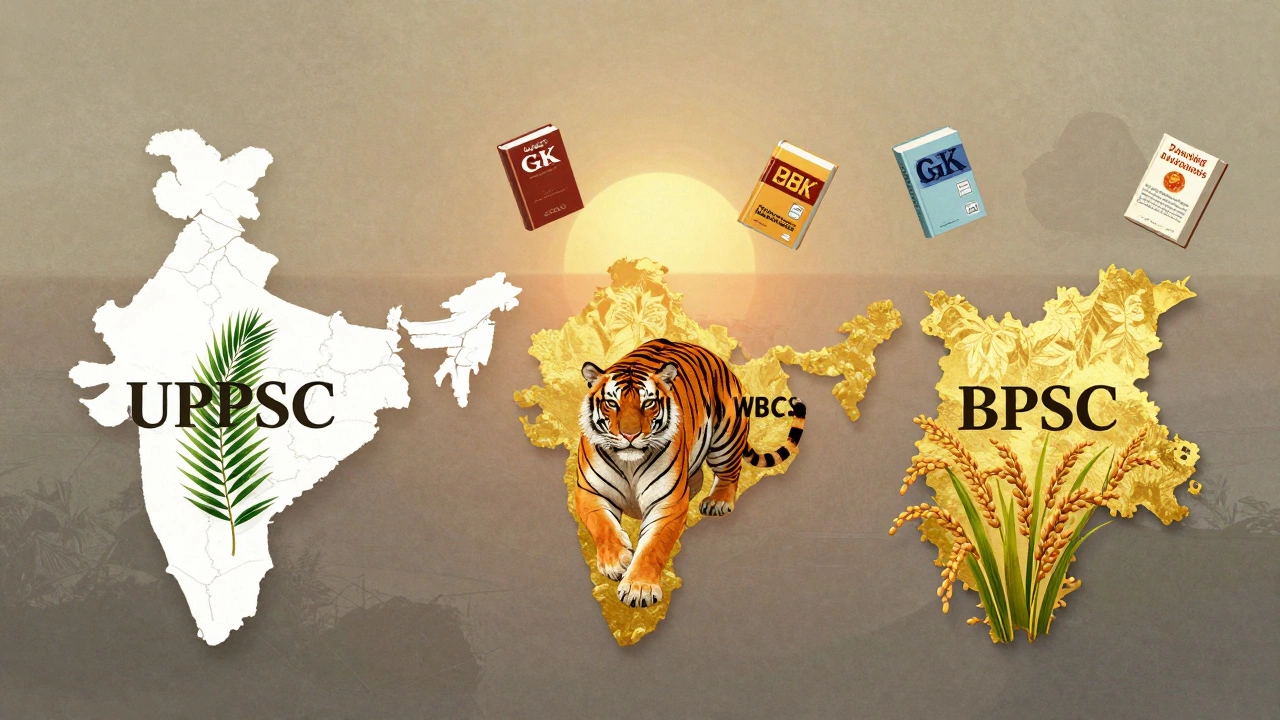
If you’re preparing for state exams like UPPSC, BPSC, or WBCS, you need two things: national-level books + state-specific material. For example:
- For Uttar Pradesh: Uttar Pradesh General Knowledge by Disha Experts - Covers state history, geography, and current schemes like the Samajwadi Pension Yojana.
- For West Bengal: West Bengal PSC Guide by Arihant - Includes Bengali literature, local festivals, and district-wise data.
Most candidates fail state exams because they use only UPSC books. State PSCs test local knowledge you won’t find in national publications.
What to Avoid
Stay away from:
- Books older than 2022 - Policies change fast. A 2020 book on GST or banking won’t help in 2026.
- Multi-author compilations with no clear structure - These are often copied from the internet and full of errors.
- Too many books - If you’re juggling 10+ books, you’re not studying. You’re collecting. Stick to 3-4 core books and revise them deeply.
How to Use These Books Right
Reading isn’t enough. Here’s how to turn pages into marks:
- Mark important lines with a highlighter - not just facts, but why they matter.
- Make one-page summaries after each chapter - force yourself to condense.
- Solve previous years’ questions from the same book - don’t wait for mock tests.
- Revise every 15 days - spaced repetition beats cramming.
The top scorers don’t read more. They read smarter. They know which pages appear every year. They know which topics are repeated in 7 out of 10 papers. That’s not luck. It’s strategy.
Final Tip: Combine Books with Current Affairs
No book can cover everything happening today. That’s why you need a daily habit:
- Read The Hindu or Indian Express for 30 minutes daily.
- Use a monthly current affairs magazine like Pratiyogita Darpan or Yojana - they summarize key events and link them to syllabus topics.
- Make flashcards for new policies, appointments, and international summits.
Your book gives you structure. Current affairs give you the edge. Together, they make you unbeatable.