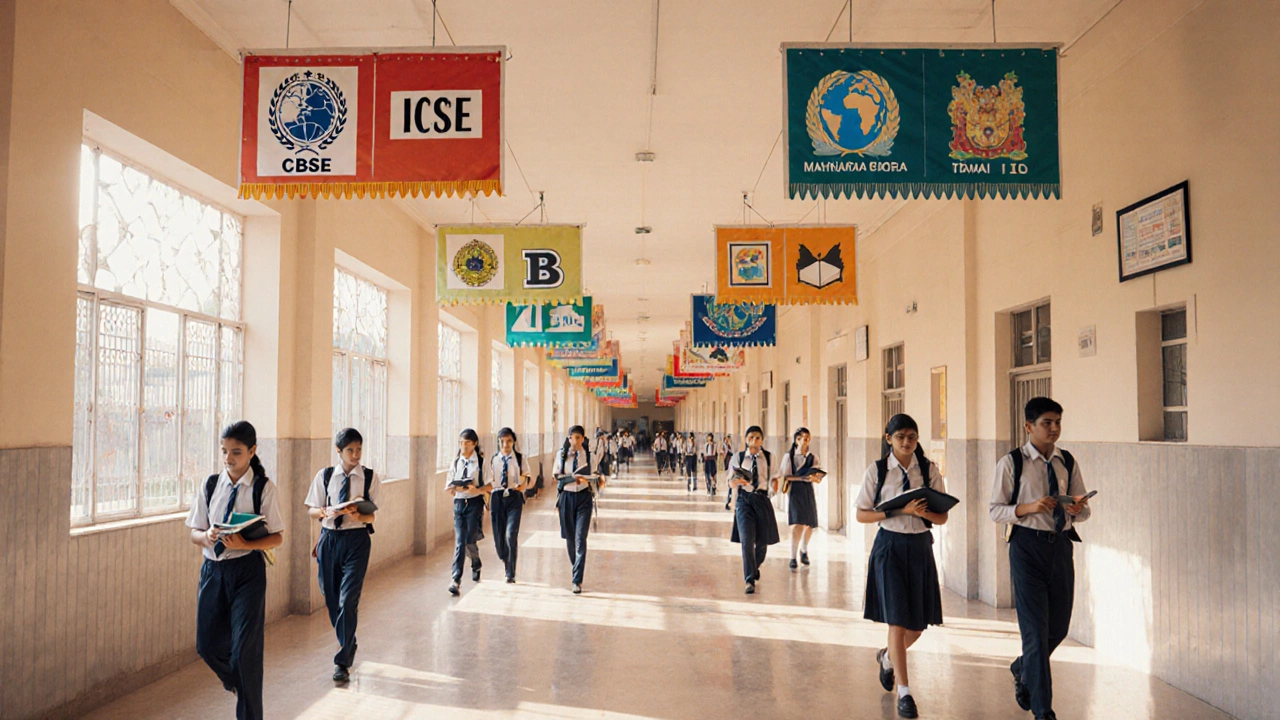
Education Board Ranking: Which Boards Dominate in India and Why
When it comes to education board ranking, the system that organizes school curricula, exams, and certification across India. Also known as school boards, it determines everything from textbook content to how students prepare for college entrance tests. Not all boards are created equal—and the one your child follows can shape their entire academic path.
The CBSE, the Central Board of Secondary Education, India’s largest and most widely adopted board. Also known as Central Board, it’s the go-to for families aiming for competitive exams like JEE and NEET. Why? Because its syllabus lines up directly with national engineering and medical entrance tests. Over 20,000 schools across India and abroad follow CBSE, and its exam pattern is predictable—making it easier to coach for. Meanwhile, the ICSE, the Indian Certificate of Secondary Education, known for its deeper, more language-heavy curriculum. Also known as CISCE, it pushes critical thinking over rote learning, but doesn’t align as closely with JEE or NEET. Then there are the state boards, regional education systems like Maharashtra’s SSC or Tamil Nadu’s SSLC, each with its own rules and focus. Also known as state syllabus, they’re often easier to pass but offer less national recognition for top colleges. The board you pick isn’t just about marks—it’s about future options.
Want to know why CBSE leads in education board ranking? It’s not because it’s the hardest. It’s because it’s the most practical for students who plan to take national exams. If your goal is IIT, AIIMS, or any top engineering or medical college, CBSE gives you the clearest path. ICSE might build stronger writing skills, and state boards might feel more local and relaxed—but neither offers the same direct pipeline to national-level competition. Parents often choose based on mobility too: CBSE schools are everywhere, so switching cities doesn’t mean restarting your child’s education.
What you’ll find below are real stories, data-backed comparisons, and honest breakdowns of what each board actually delivers. From how CBSE papers are standardized across the country to why some families switch from ICSE to CBSE after 10th grade, these posts cut through the noise. You’ll see which board suits a child who learns visually, which one helps with English fluency, and why some boards are quietly fading out in urban areas. No fluff. Just what works—and what doesn’t—for Indian students today.
Explore which Indian education board offers the highest overall value. Compare CBSE, ICSE, state boards, NIOS, IB and IGCSE on recognition, exam alignment, cost, and flexibility.