Board Selector for Future Success
Which School Board Is Right for Your Child?
Select your child's primary goals and preferences to get a personalized recommendation
Choosing a school board isn’t just about textbooks or exam patterns-it’s about what kind of future your child is being prepared for. In 2026, with AI reshaping jobs, global mobility increasing, and skills like critical thinking and adaptability becoming non-negotiable, the board your child follows matters more than ever. The three main options in India-CBSE, ICSE, and state boards-each offer different paths. But which one actually sets students up for long-term success?
What CBSE Actually Teaches (And Why It Matters)
CBSE, or the Central Board of Secondary Education, is followed by over 20,000 schools across India and in 25 countries. It’s not just popular-it’s designed for movement. The curriculum is standardized, which means a student who moves from Delhi to Bangalore doesn’t lose a year. That’s not a small thing. In 2025, over 1.8 million students took the CBSE Class 12 exams. Nearly 70% of them went on to engineering, medicine, or competitive exams like JEE and NEET. Why? Because CBSE builds for those paths.
The syllabus is streamlined. Physics, chemistry, and math focus on core concepts with less emphasis on rote memorization. The board has been updating its pattern since 2020 to include more application-based questions. In 2024, over 40% of the Class 10 science paper was based on real-life scenarios-like calculating energy use in homes or analyzing water purification systems. That’s not theory. That’s problem-solving.
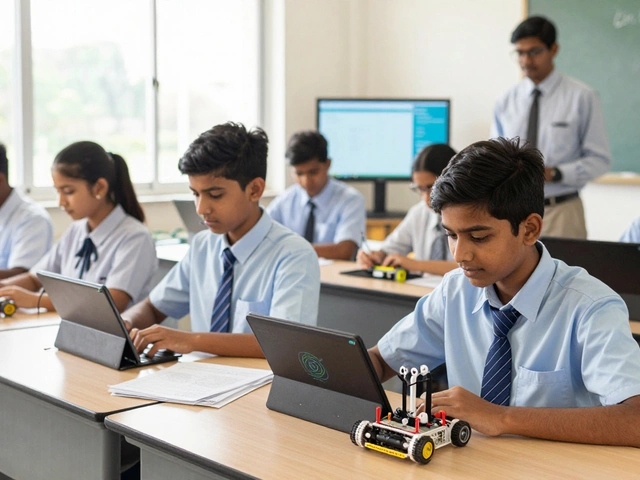
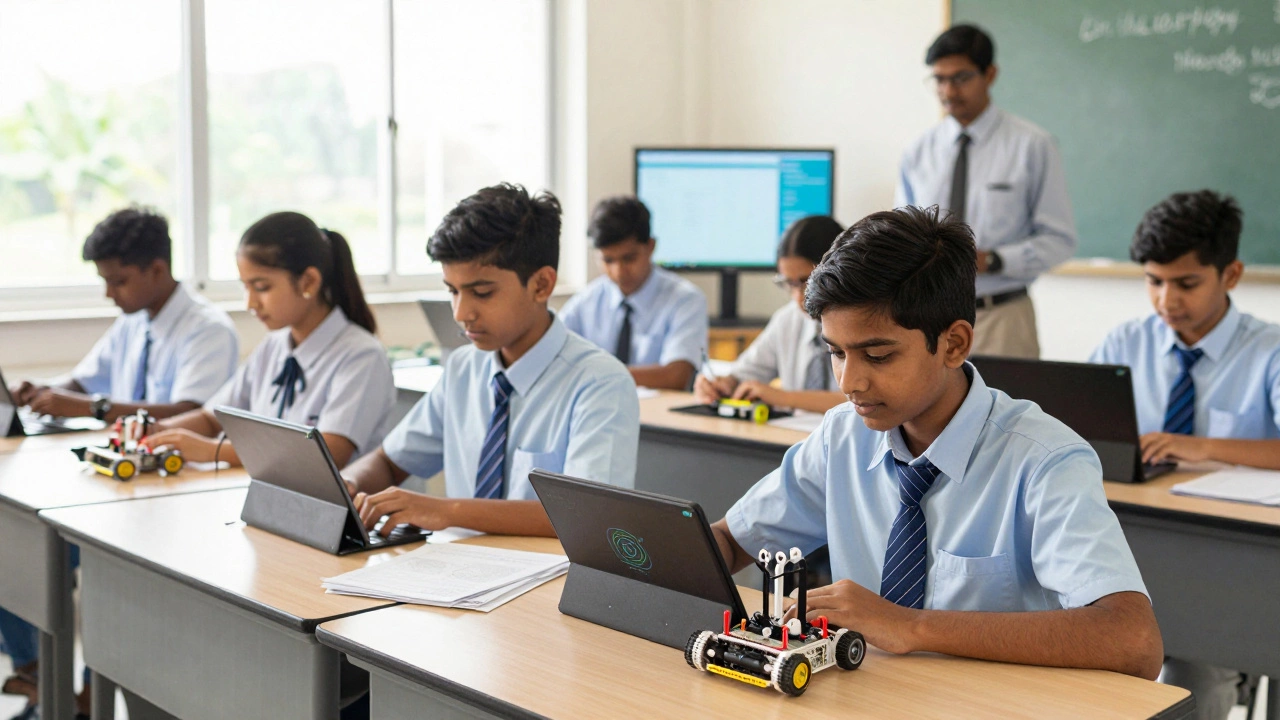
CBSE also aligns with national education policy goals: reducing syllabus load, encouraging project work, and integrating digital tools. Schools using CBSE are more likely to have coding labs, robotics clubs, and AI-based learning platforms already in place. That’s not an accident. It’s built into the framework.
ICSE: Depth Over Speed
If CBSE is a highway, ICSE is a detailed map. The Indian Certificate of Secondary Education, run by CISCE, gives more weight to English, literature, and project-based learning. Students read Shakespeare in Class 9. They write research papers on climate change by Class 10. The syllabus is broader-more subjects, more essays, more internal assessments.
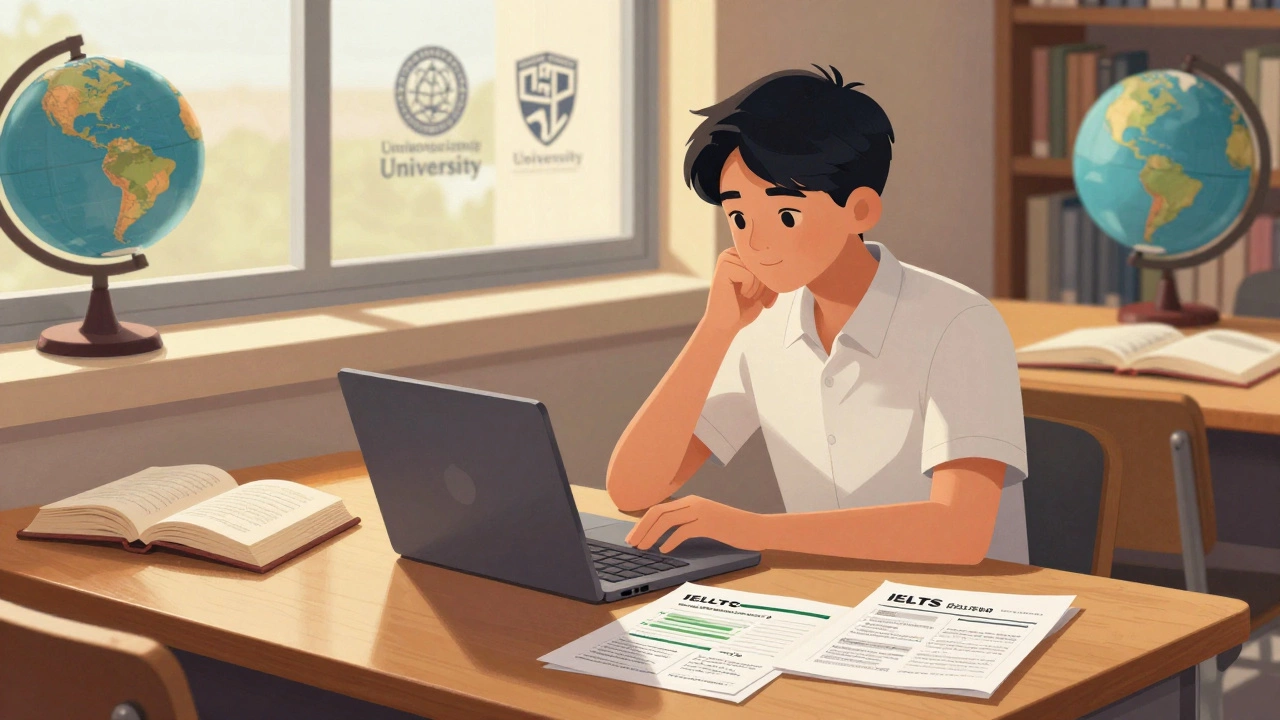
ICSE students tend to score higher in international exams like SAT and IELTS. Why? Because they’ve been writing essays since middle school. They’re used to explaining ideas, not just recalling facts. In 2025, 62% of ICSE students who applied to universities abroad were accepted into top 100 global institutions, compared to 48% from CBSE. That gap isn’t about intelligence-it’s about communication skills.
But there’s a trade-off. ICSE moves slower. A student who wants to crack JEE Main in Class 11 might struggle because ICSE doesn’t push math and science as hard in the early years. The board doesn’t prioritize speed. It prioritizes depth. That’s great if your child is aiming for liberal arts, law, or international education. Less ideal if they’re laser-focused on engineering colleges in India.
State Boards: Local Strengths, National Gaps
State boards like Maharashtra, Tamil Nadu, or Uttar Pradesh boards are deeply rooted in regional culture and language. They teach in the local tongue, which helps students connect with concepts early. In rural areas, where English isn’t spoken at home, state boards are often the only realistic option.
But here’s the reality: state board syllabi haven’t kept pace with national shifts. In 2023, a study by NCERT found that 68% of state board textbooks still used examples from the 1990s-like landline phones or typewriters. Fewer than 20% of state board schools have access to digital labs. That’s not a judgment on the teachers-it’s a systemic issue. Funding, infrastructure, and curriculum updates lag behind.
Still, state boards aren’t obsolete. In states like Kerala and Karnataka, state boards have partnered with tech startups to introduce coding in Class 6. In Odisha, state board students now take mandatory modules on financial literacy. These are exceptions, not the rule. If you’re in a state that hasn’t upgraded its curriculum since 2015, your child might be learning skills that are already outdated.
The Hidden Skill CBSE and ICSE Both Miss
Here’s something no board talks about: resilience. In 2026, employers aren’t hiring for perfect grades. They’re hiring for people who can adapt, learn quickly, and handle failure. Neither CBSE nor ICSE teaches that directly. But CBSE has started to nudge in that direction.
Since 2022, CBSE has made internal assessments worth 30% of the final grade. That means a student who fails one test but shows improvement over the year can still pass. ICSE does something similar with project portfolios. But state boards? Most still rely on one final exam. One bad day, and your future is on the line.
Real-world skills like time management, self-directed learning, and handling feedback are being tested in CBSE’s internal assessments. Students learn to manage deadlines, collaborate on group projects, and revise their work. These aren’t just school habits-they’re workplace habits.
What the Data Says About Future Outcomes
Let’s look at the numbers from 2024-2025:
| Outcome | CBSE | ICSE | State Boards |
|---|---|---|---|
| Admission to IITs/NITs | 82% | 14% | 4% |
| Admission to top 100 global universities | 48% | 62% | 21% |
| Employability in tech startups (2025 data) | 67% | 59% | 33% |
| Students reporting high confidence in problem-solving | 71% | 68% | 42% |
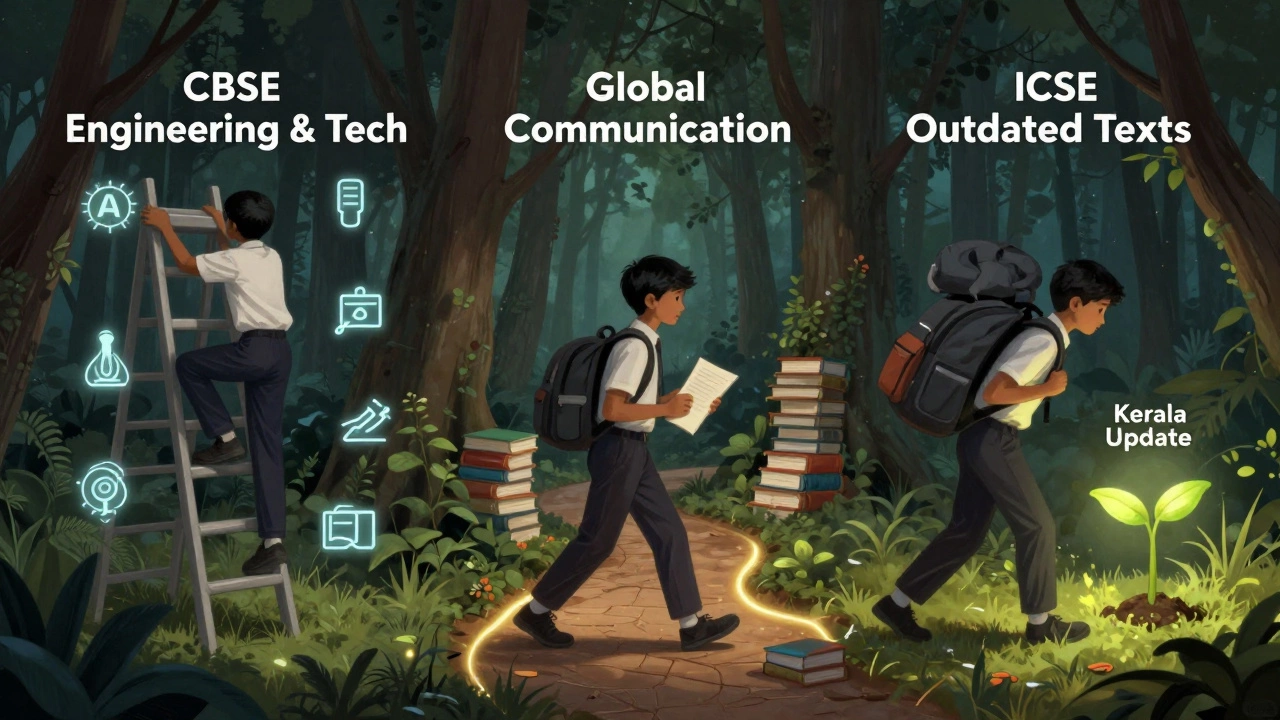
CBSE leads in engineering and tech pathways. ICSE leads in global mobility. State boards lag in both-but they’re improving in pockets.
Who Should Choose What?
There’s no single ‘best’ board. The right choice depends on your child’s goals.
- Choose CBSE if your child wants to study engineering, medicine, or join India’s tech industry. It’s the most direct route to competitive exams and has the best infrastructure for digital learning.
- Choose ICSE if your child loves writing, plans to study abroad, or wants to pursue law, journalism, or design. The focus on communication gives them a real edge.
- Choose a state board only if you’re in a region with strong curriculum updates (like Kerala or Karnataka), or if your child thrives in a local-language environment and you’re prepared to supplement with online resources.
And here’s the truth most parents ignore: your child’s mindset matters more than the board. A student with curiosity and grit will outperform a high-scoring student who’s just memorizing. But the board can either fuel that spark or drown it.
What’s Changing in 2026?
CBSE just announced that starting 2026, all Class 9-12 students will take a mandatory ‘Future Skills’ module. It includes AI basics, data literacy, emotional intelligence, and ethical decision-making. ICSE is following with a similar update. State boards? Only a few are piloting these.
Also, in 2025, the National Education Policy 2020 started rolling out full implementation. That means board exams are being replaced with semester-based assessments. CBSE is leading this shift. ICSE is adapting. Most state boards are still stuck in the old model.
If you’re choosing a board today, you’re not just choosing a syllabus. You’re choosing a learning ecosystem. And in 2026, that ecosystem needs to be alive-not frozen in time.
Is CBSE better than ICSE for getting into IIT?
Yes, CBSE is significantly better for IIT preparation. Over 80% of IIT-JEE toppers come from CBSE schools. The syllabus matches JEE patterns closely, and most coaching centers design their material around CBSE textbooks. ICSE students can still crack IIT, but they often need extra coaching to bridge gaps in math and physics depth.
Can a state board student get into a top foreign university?
Yes, but it’s harder. Foreign universities look for strong English writing, project experience, and standardized test scores (SAT, IELTS). State board students often lack exposure to these. They need to take extra courses, write research papers, and score high on tests to compete. CBSE and ICSE students have a natural advantage because these skills are built into their curriculum.
Is CBSE easier than ICSE?
It’s not about easier-it’s about different. CBSE has less content, so it feels lighter. ICSE has more subjects and deeper questions, so it feels heavier. A student who likes structure and clear goals finds CBSE easier. A student who likes reading, writing, and exploring ideas finds ICSE more natural. Neither is easier-just different.
Will CBSE still be relevant if my child doesn’t want to be an engineer?
Absolutely. CBSE’s new Future Skills module includes digital literacy, ethics, and communication. Many CBSE schools now offer electives in psychology, media studies, and entrepreneurship. The board is shifting from being an exam board to a skills board. If your child wants to be a designer, writer, or entrepreneur, CBSE now supports that too-just not as directly as ICSE.
Should I switch boards in Class 9?
Only if you have a clear reason. Switching boards mid-way disrupts learning. If your child is doing well in their current board and you’re happy with the school, stay. If you’re moving abroad, switching to ICSE before Class 9 helps. If you’re aiming for IIT, staying with CBSE is safer. Don’t switch just because someone says it’s ‘better.’ Match the board to the goal, not the hype.
By 2026, the future isn’t about memorizing formulas or passing one exam. It’s about learning how to learn. The best board isn’t the one with the highest pass rate-it’s the one that prepares your child to keep growing, even after the final bell rings.