
Fluency Progress Tracker
Track your daily speaking practice to build fluency like the article suggests. Just 10-15 minutes daily can transform your confidence.
0 days completed - 0% progress
"Progress isn't linear. Some weeks you'll feel like you're flying. Other weeks, you'll feel stuck. That's normal."
Want to speak English without freezing up, second-guessing every word, or sounding like a textbook? You’re not alone. Millions of people around the world are stuck in the same place: they understand English, they can write it, but when it’s time to talk, their mind goes blank. The good news? Speaking fluently isn’t about having a perfect accent or knowing every word. It’s about building habits that make your brain switch to English automatically.
Start speaking from day one - even if you sound bad
Most people wait until they feel ready to speak. They memorize lists of vocabulary, study grammar rules, watch videos with subtitles - and still don’t talk. But fluency doesn’t come from studying. It comes from using. Your brain learns English by doing, not by watching. Try this: spend 10 minutes every morning talking to yourself in English. Describe what you’re doing. "I’m brushing my teeth. The water is cold. I need coffee." It sounds silly, but it works. You’re training your mouth and mind to form sentences without translating from your native language. No one hears you. No one judges you. That’s the point. A study from the University of Edinburgh found that learners who practiced speaking daily for just 15 minutes improved their fluency 40% faster than those who studied grammar for an hour. The key wasn’t the time - it was the consistency.Listen like you’re learning a song
You didn’t learn your first language by memorizing rules. You heard it over and over - in songs, in conversations, in cartoons. English works the same way. Pick one short podcast or YouTube video you enjoy - maybe a comedy sketch, a cooking show, or a vlog about travel. Listen to it three times in a row. First, just listen. Second, try to catch the words. Third, repeat what the speaker says out loud, word for word. Copy their rhythm, their pauses, their tone. This is called shadowing. Shadowing forces your mouth to move in English patterns. It builds muscle memory. After a few weeks, you’ll notice you start using phrases naturally - like "I’m gonna grab a coffee" or "That’s not bad," - without thinking about them. These are the phrases real people use. Not the ones in textbooks.Find your speaking partner - not a teacher
Language exchange is the most powerful tool most people ignore. You don’t need a paid tutor. You need someone who wants to learn your language, and you want to learn theirs. Apps like Tandem or HelloTalk connect you with native speakers. Find someone who speaks English and wants to learn your language. Set a 20-minute rule: 10 minutes in English, 10 minutes in your language. No grammar corrections. No essays. Just talk. The magic? You’re not being tested. You’re not worried about making mistakes. You’re just chatting. That’s when real learning happens. One learner in Wellington told me she went from barely holding a conversation to confidently ordering food, asking for directions, and joking with coworkers in six months - all because she talked to a student in Brazil every Tuesday.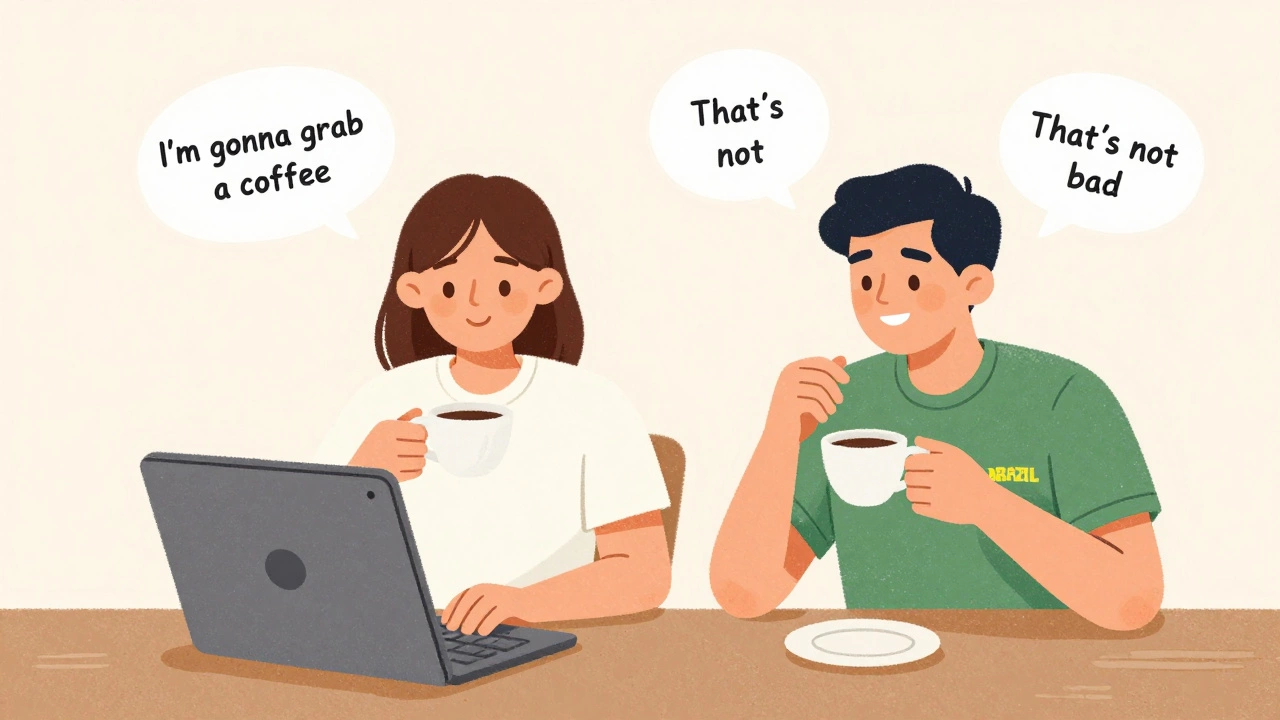
Record yourself and listen like a critic
It’s uncomfortable. You’ll cringe. But it’s necessary. Record yourself speaking for two minutes on any topic: your weekend, your favorite movie, what you had for breakfast. Then play it back. Don’t judge your grammar. Listen for these things:- Where do you pause too long?
- Do you repeat the same word three times? ("Uh, um, like...")
- Do you sound robotic, or do you sound like you’re actually thinking?
Use English for things you already do
Stop treating English like a subject you study. Treat it like a tool you use. Switch your phone’s language to English. Watch Netflix without subtitles (yes, even if you miss half the words). Read the news headlines in English before checking your local news. Write your grocery list in English. Text a friend in English about what you’re watching. Why? Because your brain starts to see English as part of your life - not something separate. You stop thinking "I’m learning English" and start thinking "I’m watching this show," and English just happens. One man in Auckland started reading Reddit threads in English about car repairs. He didn’t know half the words, but he kept going. Six months later, he was helping his neighbor fix his engine - and explaining how in English.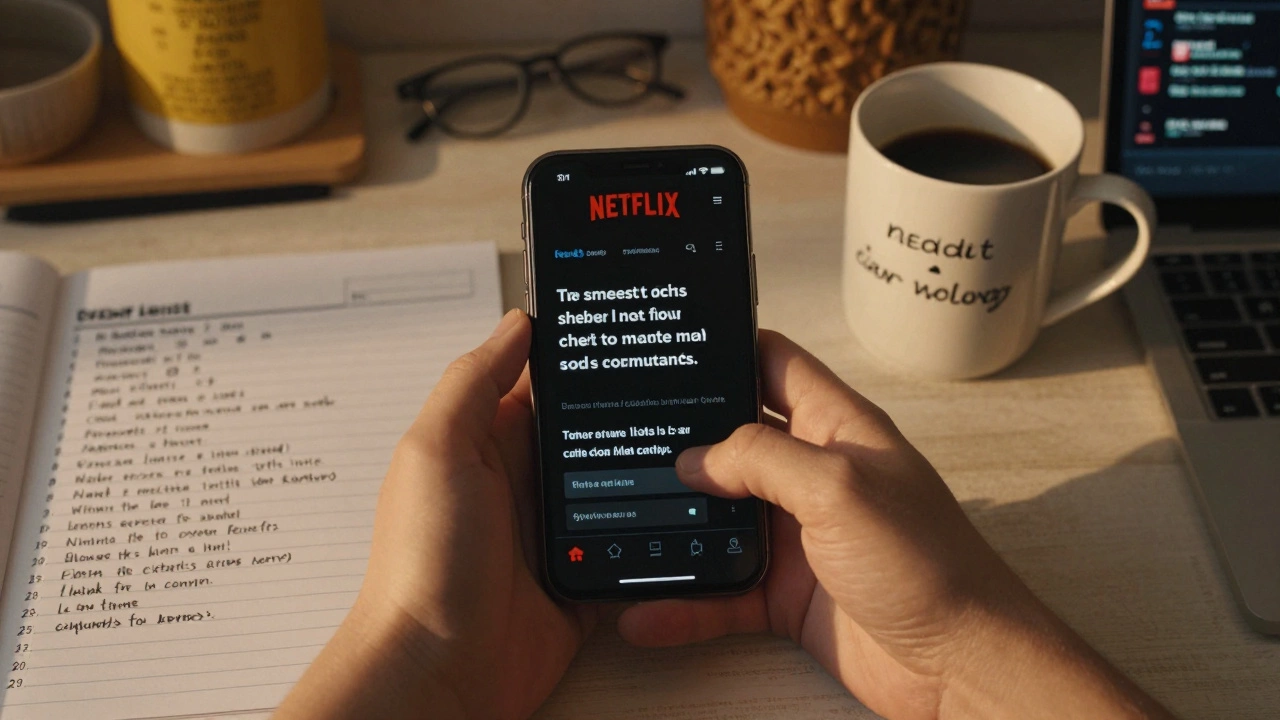
Don’t chase perfection. Chase connection
The biggest blocker to speaking English isn’t vocabulary. It’s fear. Fear of sounding stupid. Fear of being misunderstood. Fear of embarrassment. Here’s the truth: native speakers don’t care if you make mistakes. They care if you’re trying. If you say "I go to store yesterday," they’ll understand you. They won’t laugh. They’ll say, "Oh, you went to the store? What did you buy?" Focus on being understood, not perfect. Use simple words. Speak slowly. Pause when you need to. It’s okay to say, "Wait, let me think." Everyone does. I’ve met people from Japan, Colombia, Nigeria, and Vietnam who speak English with heavy accents - but they’re the most confident communicators I know. Why? Because they stopped trying to sound like Americans. They just spoke.What to do when you hit a wall
Progress isn’t linear. Some weeks you’ll feel like you’re flying. Other weeks, you’ll feel stuck. That’s normal. If you feel stuck:- Go back to shadowing - pick a new 2-minute clip and repeat it 5 times.
- Write down three phrases you heard recently and use them in a conversation today.
- Talk to someone - even if it’s just for five minutes.
Real progress takes 30 days - not 30 hours
You won’t wake up one day speaking like a native. But after 30 days of daily practice - even just 10 to 15 minutes - you’ll notice a shift. Your brain will start thinking in English. You’ll catch yourself dreaming in it. You’ll understand jokes without translating. It’s not magic. It’s repetition. It’s showing up. It’s choosing to speak, even when it’s hard. Start today. Say one sentence out loud. Just one. Then do it again tomorrow. And the next day. That’s how you learn to speak English - not by studying harder, but by speaking more.How long does it take to become fluent in spoken English?
There’s no fixed timeline, but most people notice real progress in 30 to 60 days with daily practice. Fluency - meaning you can hold a 10-minute conversation without struggling - usually takes 6 to 12 months of consistent speaking. It’s not about how much you study, but how often you use English to communicate.
Do I need to take an English course to speak better?
No. Many people spend thousands on courses and still can’t speak. What matters is practice, not curriculum. Free tools like podcasts, language exchange apps, and shadowing exercises work better than most paid classes. A course can help if you need structure, but it won’t make you fluent unless you speak outside the classroom.
I’m shy. How do I start speaking if I’m afraid of making mistakes?
Start by talking to yourself. Then talk to a language partner who’s also learning. Most people are too focused on their own mistakes to judge yours. Remember: native speakers make mistakes too. The goal isn’t perfection - it’s being understood. Every mistake is a step forward, not a failure.
Should I focus on grammar when speaking?
Not while you’re speaking. Grammar is for editing, not for talking. If you think about verb tenses while someone’s asking you a question, you’ll freeze. Learn grammar through exposure - notice how people phrase things naturally. Correct yourself later, not in the moment. Fluency comes from flow, not accuracy.
What if I don’t have anyone to practice with?
You still have options. Talk to your pet. Talk to your mirror. Record yourself and answer questions out loud. Use apps like ELSA Speak or Speechling to get feedback. Even speaking to an AI chatbot in English helps - it trains your brain to respond. The key is to make your mouth move, not to find a perfect partner.