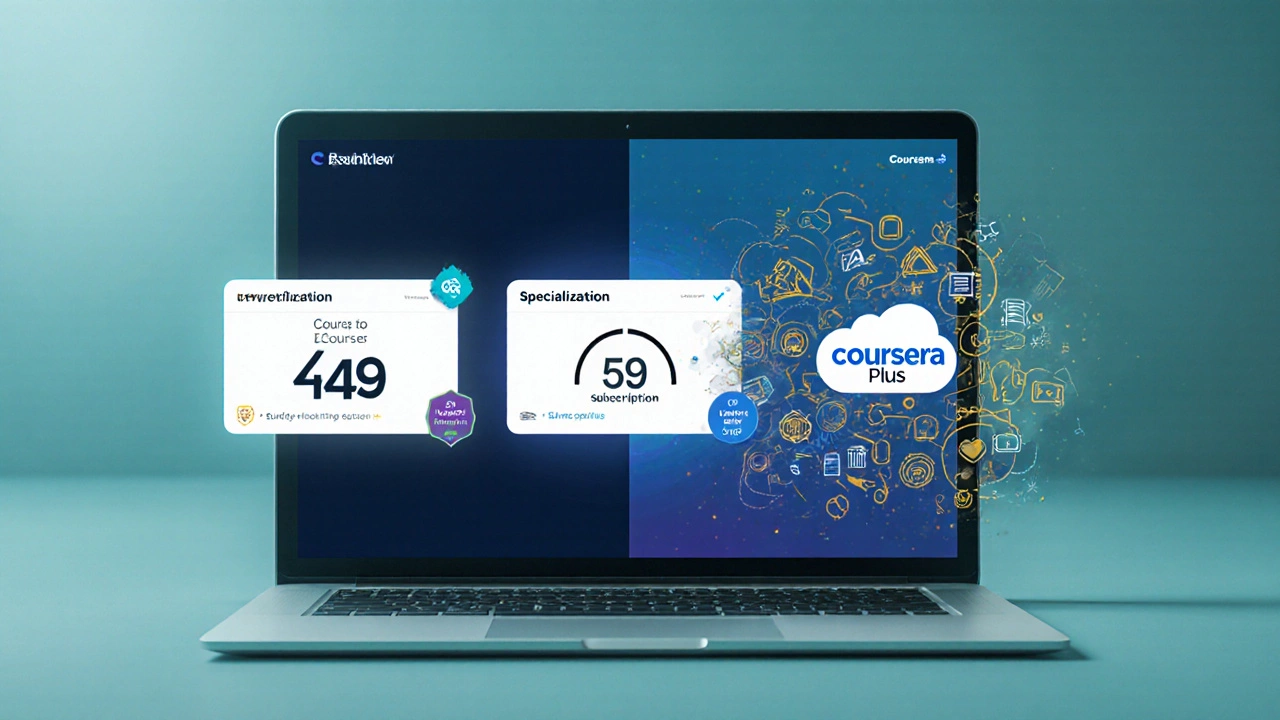
Coursera Monthly Cost: What You Really Pay and What You Get
When you think about Coursera, a global online learning platform offering courses from universities and companies like Stanford, Google, and IBM. Also known as an e-learning platform, it lets you learn skills from anywhere—whether you’re aiming for a promotion, switching careers, or just curious. But here’s the real question: how much does it actually cost each month?
Coursera doesn’t have one single price. Some courses are free to audit, but if you want certificates, graded assignments, or access to specializations, you’re looking at monthly fees. Most individual courses run $39–$79 per month if you pay upfront, but if you go with a subscription, you can get unlimited access to hundreds of courses for $39 to $59 a month. That’s not just one class—it’s dozens of programs from top schools, all in one place. And unlike some platforms, Coursera lets you pause or cancel anytime. No long contracts. No hidden fees.
What you’re paying for isn’t just videos. You’re paying for structured learning paths, real projects, peer feedback, and sometimes even job placement help. For example, if you’re learning data analysis, you might complete a project using real datasets from companies like Amazon. If you’re in IT, you could earn a Google IT Support Certificate that employers actually recognize. These aren’t just certificates you print out—they’re digital credentials you can add to your LinkedIn profile. And yes, many of them come with university credit you can transfer later.
It’s not all expensive, though. Coursera offers financial aid to anyone who can’t afford it. You just fill out a short form explaining why you need help, and if approved, you get full access for free. Also, many public libraries and nonprofits partner with Coursera to give free access to their members. If you’re a student, teacher, or unemployed, there’s a good chance you qualify for discounts or free plans.
And here’s what most people miss: the real value isn’t in the monthly cost—it’s in what you build while you’re learning. One person used Coursera to go from zero coding knowledge to landing a job as a junior developer in eight months. Another used a project management course to get promoted at their government job. The platform doesn’t guarantee success, but it gives you the tools, structure, and credibility to make it happen.
So when you ask about Coursera’s monthly cost, you’re really asking: is this worth my time and money? The answer depends on what you want to do. If you need a certificate for your resume, it’s worth it. If you just want to learn something new for fun, you can start for free. Either way, you’re not just paying for content—you’re investing in a path forward.
Below, you’ll find real stories, comparisons, and breakdowns of what’s included in Coursera’s plans—and what you can get elsewhere for less—or even for free.
Coursera costs between $39 and $79 per course, or $33-$59 per month with Coursera Plus. Learn how to choose the right plan based on your goals, whether you're learning one skill or building a career.