Daily English Fluency Progress Calculator
Track Your Speaking Practice
Your Fluency Journey
Based on your daily practice, you'll reach fluency in 21 days
Want to speak English better but don’t have time for classes or commuting? You don’t need to spend money or travel anywhere. You can get noticeably better in just a few weeks - if you know what to do. The key isn’t more study. It’s smarter practice. And it all happens right where you are: at home.
Start speaking out loud - every day
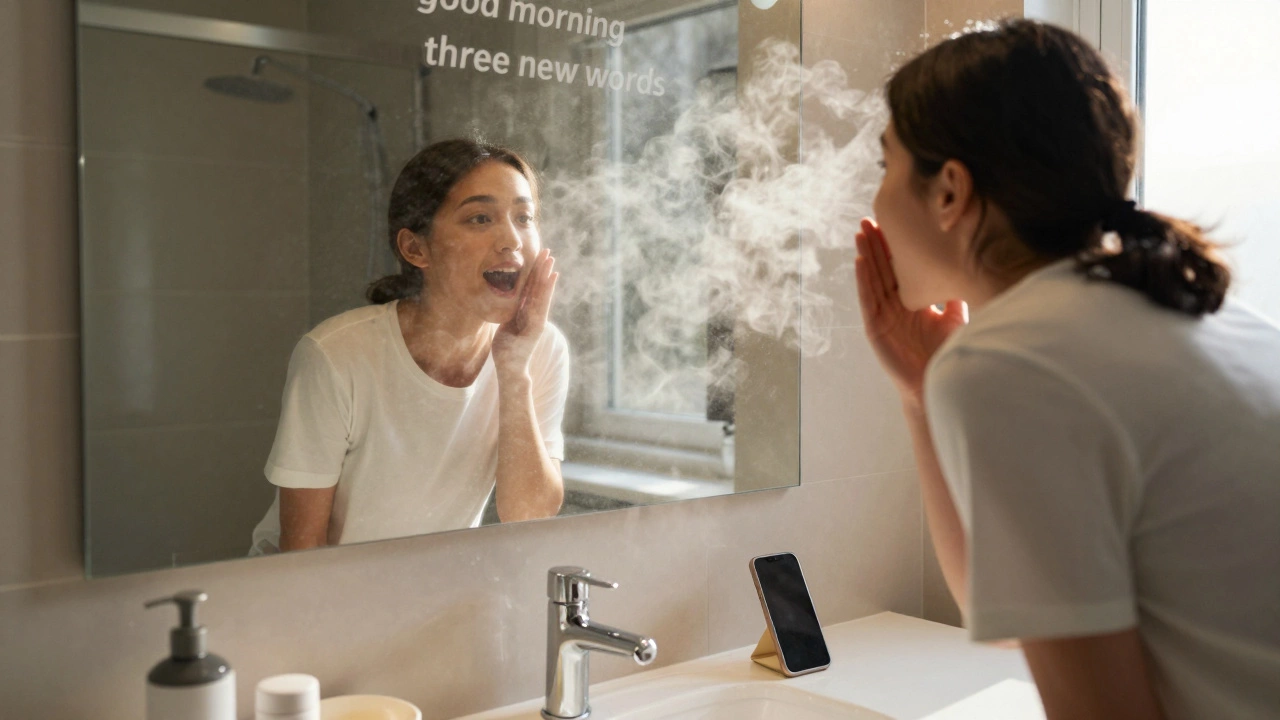
Most people think learning English means memorizing grammar rules or vocabulary lists. That’s not enough. You need to train your mouth, not just your brain. The moment you wake up, say something out loud. Even if it’s just, "Good morning, today I’ll learn three new words." Say it again. And again. Your tongue needs muscle memory. Just like playing guitar or running, your speaking muscles get stronger with repetition.
Try this: Record yourself for two minutes on your phone. Talk about your day, your favorite food, or what you saw outside. Don’t stop. Don’t correct yourself. Just speak. Listen back. You’ll hear where you stumble, where you pause too long, where you mispronounce words. That’s your roadmap. Do this every morning. In two weeks, you’ll notice a difference.
Watch English content with subtitles - but not the way you think
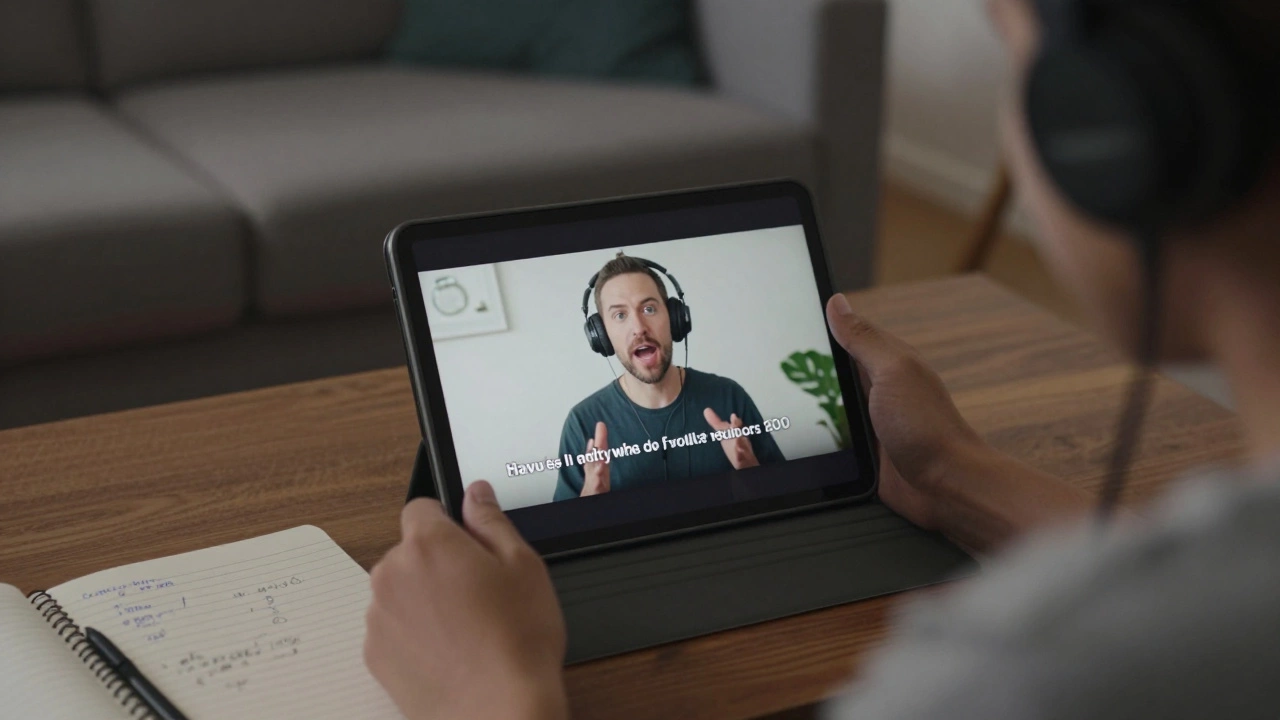
Watching Netflix or YouTube in English sounds like a good idea. But if you’re just passively listening, it won’t help. Here’s how to make it work:
- Choose short clips - 3 to 5 minutes max.
- Watch first with English subtitles. Focus on how words are spelled versus how they sound.
- Watch again without subtitles. Can you catch 70% of what’s said?
- Then watch one more time, repeating each line right after the speaker. Mimic their rhythm, their tone. This is called shadowing.
Shows like "Friends," "The Crown," or "The Good Doctor" are great because the speech is clear and natural. Avoid fast-paced action movies or heavy accents at first. Stick to clear, everyday conversation. Do this 20 minutes a day, and you’ll start picking up phrases without even trying.
Change your phone and apps to English
Your phone is with you all day. Make it your teacher. Go into settings and switch the language to English. Everything - your calendar, your weather app, your notes - will now be in English. You’ll see words like "notification," "battery," "sync," and "settings" over and over. You don’t have to memorize them. You’ll absorb them.
Same with apps. Use English-only social media. Follow pages that post short, clear sentences. Try @BBCLearningEnglish or @EngVid. Don’t scroll for hours. Spend five minutes reading posts, then say them out loud. "I need to finish my project by Friday." Say it. Now say it differently: "My project is due Friday." That’s how you build flexibility in your brain.
Use free AI tools - but don’t rely on them
You’ve got tools now that didn’t exist five years ago. Free AI chatbots like ChatGPT or Claude can correct your sentences instantly. Type: "I go to market yesterday." It’ll reply: "You went to the market yesterday." Simple. Powerful.
But here’s the trap: Don’t just copy the correction. Ask why. "Why is it ‘went’ and not ‘go’?" The AI will explain past tense. Then write your own sentence using that rule. "I ate breakfast." "She called her mom." Practice the pattern yourself. That’s how it sticks.
Use these tools to practice writing short messages - like texts or emails. Then read them out loud. Your brain connects the written word to the spoken sound. That’s real learning.
Talk to yourself - yes, really
It sounds weird. But talking to yourself is one of the most effective ways to build fluency. You’re not alone. People do it. You just never hear them.
While you’re washing dishes, say: "I’m using soap to clean the plates. The water is hot. I need to rinse them well." While walking to the kitchen: "I’m hungry. I’ll make tea. Maybe toast too." It’s not about being perfect. It’s about keeping your mouth moving in English.
Try this daily challenge: Pick one activity - brushing teeth, folding laundry, waiting for coffee - and describe it out loud in English. No pauses. No thinking. Just talk. After a week, you’ll find yourself thinking in English, not translating from your first language.
Set small goals - not big ones
"I want to speak English fluently" is a dream. It’s too vague. You need tiny wins.
Here’s what works:
- Day 1-3: Say 3 new sentences out loud every morning.
- Day 4-7: Watch one 5-minute video and repeat every line.
- Day 8-14: Write three text messages in English and say them aloud.
- Day 15-21: Describe your whole day out loud while doing chores.
Each of these takes less than 10 minutes. But after 21 days, you’ll notice you’re not afraid to speak. You’ll understand more on TV. You’ll catch words you never knew. That’s progress. And it’s real.
Don’t fear mistakes - use them
Mistakes aren’t failures. They’re feedback. Every time you say "I have 25 year" instead of "I am 25," your brain is trying. It’s learning. Don’t hide from those moments. Lean into them.
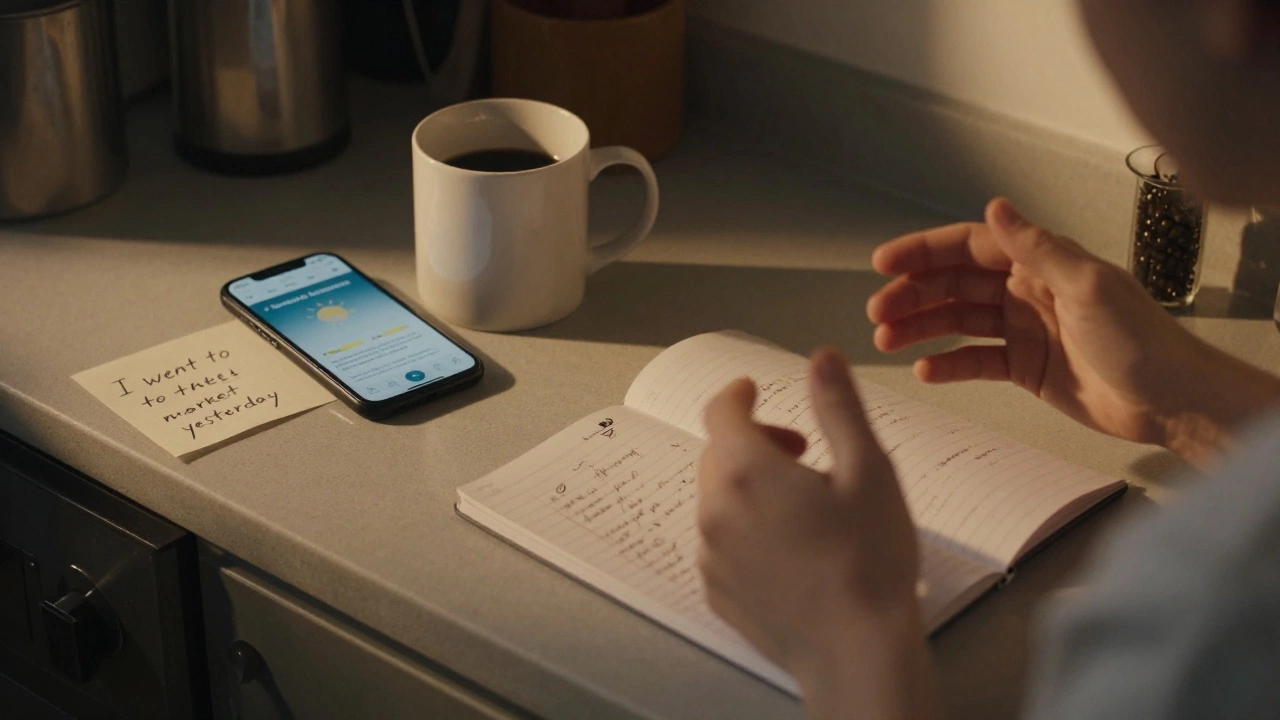
Keep a small notebook (or a note on your phone) for mistakes. Write down what you said, what you meant, and the right version. Example:
- What I said: "I go to school last week."
- What I meant: "I visited my old school last week."
- Correct version: "I went to my old school last week."
Review this list every Sunday. You’ll see patterns. Maybe you struggle with past tense. Maybe you mix up "there," "their," and "they’re." Now you know where to focus. That’s power.
Build a routine - not a checklist
You don’t need to study for hours. You need consistency. Pick three things and stick to them:
- Morning: Speak out loud for 5 minutes.
- Afternoon: Watch one short video and shadow it.
- Evening: Write or say one thing in English before bed.
That’s 15 minutes a day. No apps to download. No payments. Just you, your voice, and your phone. Do this for 30 days. You won’t be perfect. But you’ll be confident. And that’s what matters.
What stops most people?
The biggest reason people don’t improve? They wait for "perfect conditions." They think they need a teacher, a class, or a native speaker. But those things aren’t the barrier. Fear is.
You’re afraid you’ll sound silly. You’re afraid you’ll forget words. You’re afraid someone will laugh. But here’s the truth: No one is listening. Not really. Everyone is too busy with their own life. The only person judging you is you.
Speak anyway. Mess up. Try again. That’s how fluency is built - not in classrooms, but in quiet kitchens, during morning walks, and in front of mirrors.