Coursera Pricing: What You Really Pay for Online Courses in 2025
When you think of Coursera, a global online learning platform offering courses from top universities and companies. Also known as an e-learning platform, it lets you learn skills like data science, business, and programming without enrolling in a degree program. But here’s the real question: Coursera pricing isn’t one-size-fits-all. Some courses are free. Others cost hundreds. And degrees? They run into thousands. So what are you actually buying?
Coursera isn’t just a website—it’s a mix of free lessons, paid certificates, monthly subscriptions, and full degree programs. The e-learning platforms, digital systems that deliver courses online, track progress, and issue credentials like Coursera, Udemy, and Khan Academy all work differently. Coursera stands out because it partners with schools like Stanford, Yale, and IBM. That means you’re not just watching videos—you’re getting content designed by professors and industry experts. But that also means the price tags reflect that quality.
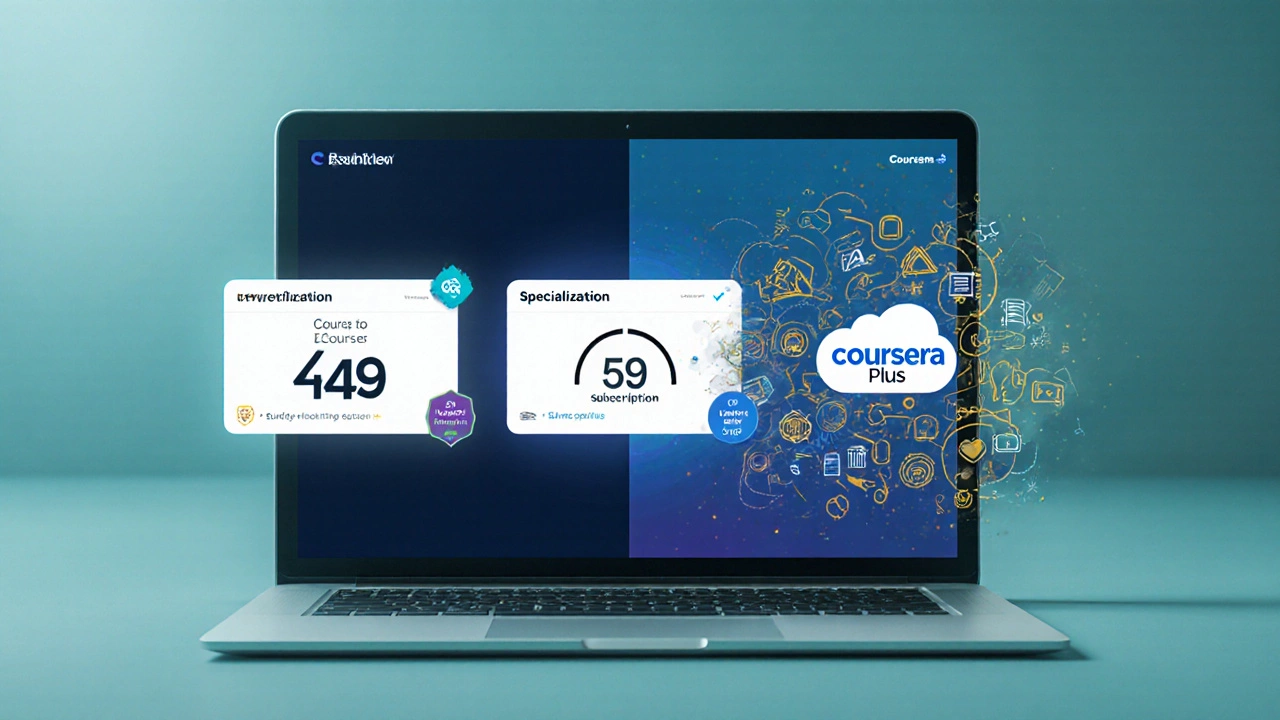
Most people start with free courses. You can audit classes without paying—watch lectures, read materials, even take quizzes. But if you want a certificate to put on your LinkedIn? That’s where the cost kicks in. Individual courses usually run $39–$99. Specializations (a series of 5–10 courses) are $39–$79 per month. Then there’s Coursera Plus, their $59/month subscription that gives you unlimited access to over 7,000 courses. It’s a steal if you’re learning multiple skills. But if you only need one course? Paying monthly doesn’t make sense.
And then there’s the big stuff: degrees. A Master’s on Coursera can cost $15,000–$25,000. That’s way less than a traditional university, but still a serious investment. Are these degrees recognized? Yes—many are accredited and issued by the same schools you’d attend in person. But they’re not for everyone. You need discipline, time, and a clear goal. Most people use Coursera to upskill, not to replace college.
What’s missing from the pricing page? Transparency. Coursera hides fees behind buttons. You won’t know the total cost until you’re deep into checkout. Some courses charge extra for graded assignments. Others lock access after a trial. And financial aid? It exists—but you have to ask for it. Most users don’t.
If you’re learning for a job, a certificate from Coursera can help. Employers recognize Google, IBM, and Meta certificates on the platform. But if you’re just curious? Start free. Try one course. See if the teaching style clicks. Don’t rush into a subscription. And never pay for a degree unless you’ve researched the outcome—graduation rates, alumni networks, and job placement stats.
Below, you’ll find real guides on how to pick the right course, whether Coursera beats other platforms, and how to get the most value without overspending. No fluff. Just what works.
Coursera costs between $39 and $79 per course, or $33-$59 per month with Coursera Plus. Learn how to choose the right plan based on your goals, whether you're learning one skill or building a career.