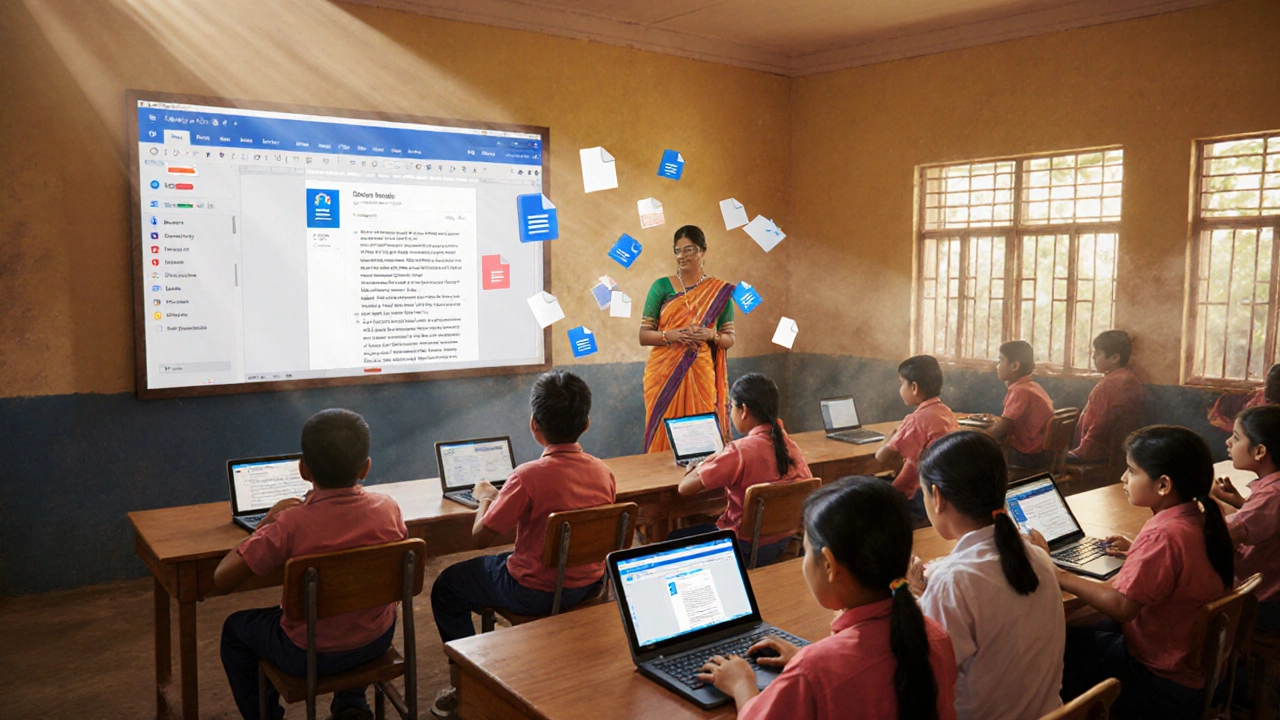
Google for Education: Tools, Platforms, and How Schools Use It
When schools switch to digital learning, Google for Education, a suite of free tools designed for schools to teach, collaborate, and manage assignments online. Also known as Google Classroom ecosystem, it powers daily learning in thousands of Indian schools—from rural towns to metro cities—without requiring expensive hardware or training. It’s not just about putting worksheets online. It’s about connecting teachers and students in real time, tracking progress, and giving every kid a chance to learn at their own pace.
Google Classroom, the central hub where teachers post assignments, share files, and give feedback. Also known as digital assignment board, it replaced paper handouts and email chains in many CBSE and ICSE schools. Teachers in Delhi, Pune, and Lucknow now use it to send math problems, collect science reports, and even run quizzes—all in one place. Students get notifications on their phones, submit work from home, and see grades without waiting weeks. This isn’t magic. It’s simple tech made for real classrooms.
Google Meet, the video tool that lets classes happen online when kids can’t be in school. Also known as virtual classroom, it became essential during lockdowns and still works for remote tutoring, guest lectures, or parent-teacher meetings. You don’t need a fancy setup. A phone, a stable internet connection, and a Google account are enough. Schools in small towns use it to bring in experts from cities—like a physics professor from IIT explaining Newton’s laws to 50 students at once. And it’s free. No subscriptions. No hidden fees.
Google for Education doesn’t stop at Classroom and Meet. It includes Google Drive, the cloud storage where students save essays, projects, and research. Also known as digital backpack, it lets them access work from any device, whether it’s a school laptop or a shared family tablet. No more lost USB drives. No more forgetting homework. Everything’s backed up, shared easily, and organized by date or subject. Teachers can even see who worked on what and when—helping spot plagiarism or group effort early.
These tools fit perfectly into how Indian schools are changing. With CBSE pushing digital literacy and more students preparing for competitive exams like JEE and NEET, learning doesn’t stop at 3 PM. Google’s free apps let students revise at night, join study groups, or watch video lessons from Khan Academy—linked right inside Classroom. And since most families already use Gmail or YouTube, there’s no steep learning curve.
You won’t find Google for Education in every school yet. But in the ones that use it, the difference shows: fewer lost assignments, faster feedback, and more students staying engaged. It doesn’t replace teachers. It gives them superpowers—without the cape.
Below, you’ll find real guides on how teachers and students are using these tools every day—from setting up a digital classroom in under an hour to picking the best apps that work with Google’s system. No theory. Just what works.
Google is more than a search engine - it's a complete digital learning platform used by millions of students and teachers worldwide. Discover how its free tools like Classroom, Drive, and Meet power modern education.