Exam Difficulty Analyzer & Comparison Tool
Select Exams to Compare
Quick Stats Overview
Did you know? The UPSC exam spans over a year with three distinct stages, while Gaokao is completed in just 2 days but carries immense cultural weight.
Analysis Results
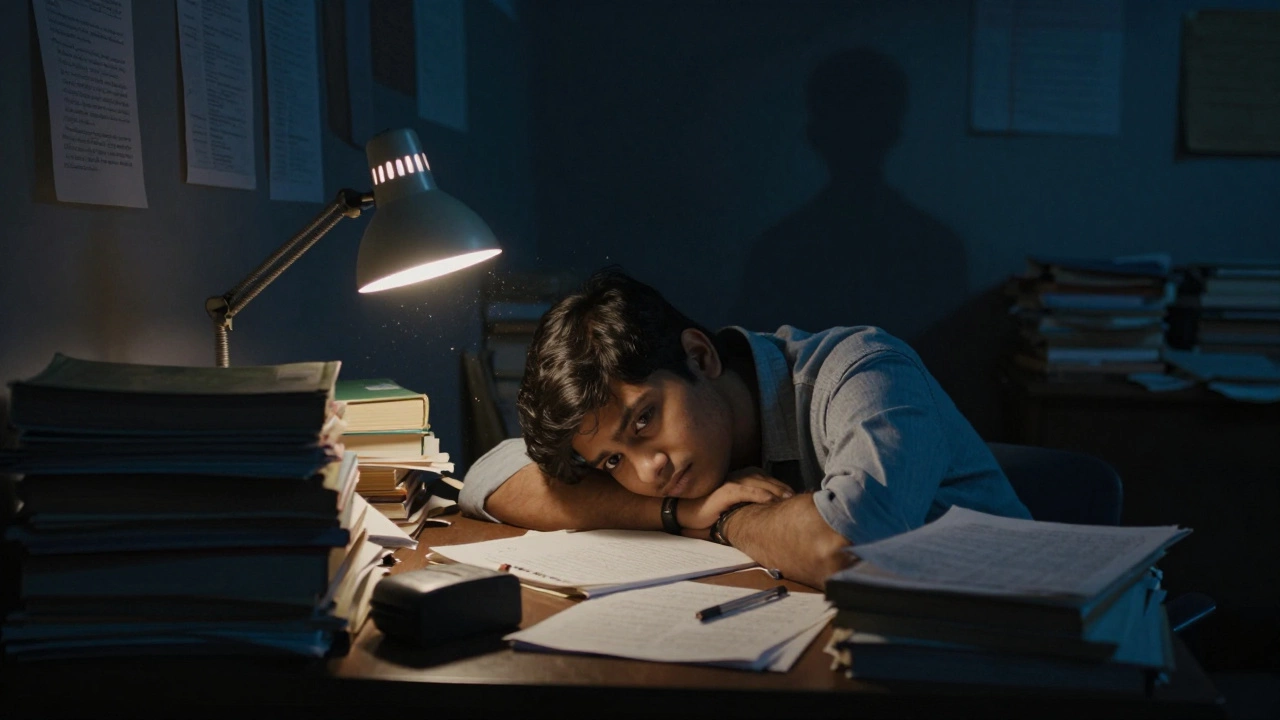
Imagine studying for twelve hours a day, every single day, for two years. You memorize thousands of facts, solve complex problems until your eyes blur, and face a selection rate lower than getting accepted into an Ivy League school. This isn't a scene from a dystopian novel; it is the reality for millions of students chasing the world's most prestigious academic and professional certifications.
We often hear that certain tests are "hard," but there is a massive difference between a difficult college final and an exam that dictates your entire career path. When we talk about the toughest exams in the world, we aren't just looking at low pass rates. We are looking at the sheer volume of knowledge required, the psychological pressure, and the life-changing stakes involved.
If you have ever wondered what separates the global elite from the rest, or if you are simply curious about the limits of human endurance and intellect, this breakdown covers the three undisputed champions of difficulty: India's UPSC Civil Services, China's Gaokao, and India's IIT-JEE.
The Ultimate Test of General Knowledge: UPSC Civil Services
To understand why the Union Public Service Commission (UPSC) exam breaks people, you need to look at the structure. It is not a one-day event. It is a marathon spanning over a year with three distinct stages: the Preliminary Exam, the Mains Exam, and the Personality Test (Interview).
The Preliminary stage acts as a filter. Over a million candidates show up, but only about 10-15% make it through to the next round. The catch? Your score in the Prelims doesn't count toward the final ranking. It is purely qualifying. If you fail here, all that studying goes to waste.
Then comes the Mains. This is where the real pain begins. Candidates must write nine subjective papers by hand. These include essays, general studies, optional subjects, and language papers. You are expected to demonstrate deep analytical skills, ethical reasoning, and administrative aptitude. Imagine writing five thousand words on "Climate Change Policy" under strict time limits, while also solving complex mathematical problems in another paper.
Finally, the Interview. This isn't just about answering questions. It is about assessing your personality, confidence, and suitability for leadership roles in the government. The success rate hovers around 0.1% to 0.2%. For context, if 1,000 people start, only 1 or 2 will get selected. The breadth of the syllabus means you cannot specialize; you must be a master of everything.
The Gatekeeper of Destiny: China's Gaokao
In many Western countries, college admissions involve grades, extracurriculars, essays, and interviews. In China, there is mostly just one number: your Gaokao score. This national standardized test is taken by over ten million students annually. The cultural weight of this exam is immense. It is believed to determine not just your university, but your social class for the rest of your life.
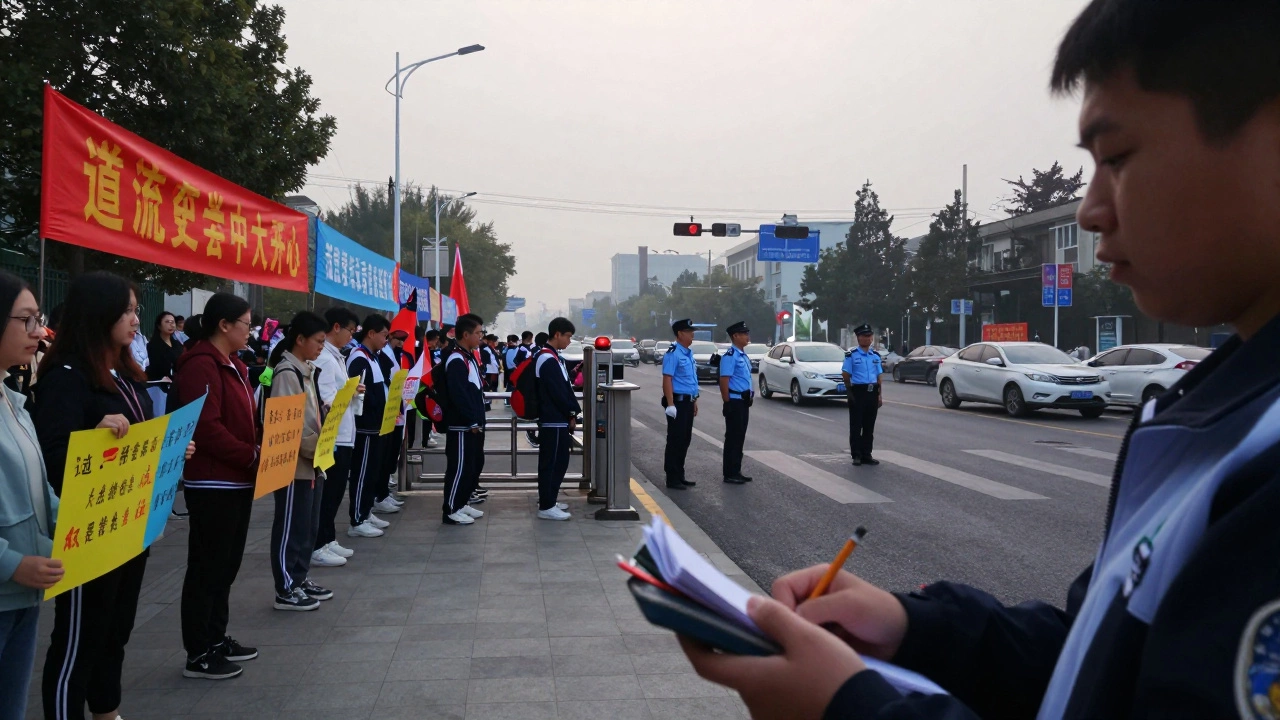
The preparation starts years in advance. Students often attend "cram schools" after regular classes, studying well past midnight. The atmosphere during exam week is surreal. Traffic is halted near testing centers to ensure silence. Parents wait outside holding banners with encouraging messages. Some even bring earplugs to block out noise, treating the exam like a sacred ritual.
The test itself lasts two days. It covers Chinese literature, mathematics, foreign languages (usually English), and either science or arts subjects. The questions are notoriously tricky, designed to test not just memory but lateral thinking and speed. A single point can separate you from a top-tier university like Tsinghua or Peking University.
Why is it so tough? Because the competition is fierce. There are limited spots in elite universities, and the population is huge. The pressure creates a high-stress environment where mental health struggles are common among students. It is a pure meritocracy, but it is a brutal one.
The Engineering Elite: IIT-JEE Advanced
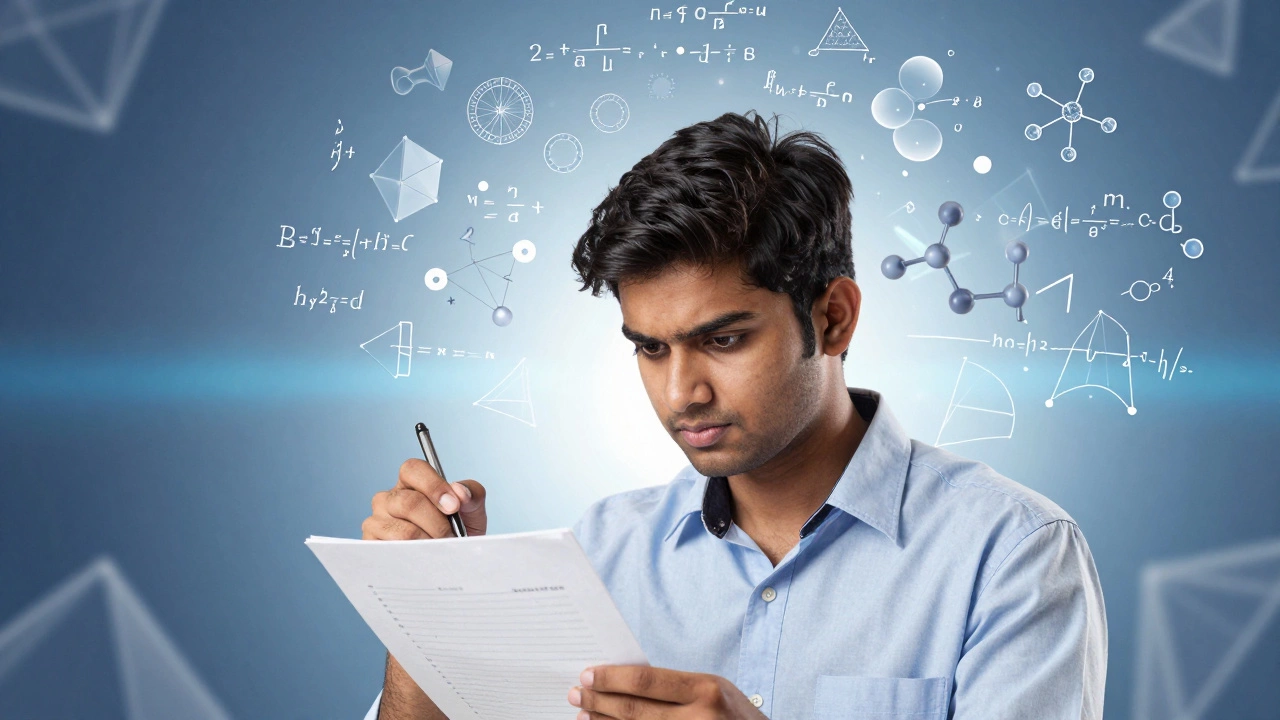
If the UPSC tests your breadth of knowledge, the IIT-JEE (Joint Entrance Examination) tests your depth. Specifically, it tests your ability to solve incredibly complex problems in Physics, Chemistry, and Mathematics. Only the top 250,000 scorers from the preliminary JEE-Main exam qualify to sit for the JEE-Advanced.
The IITs are the MITs of India. They produce some of the world's best engineers, scientists, and tech entrepreneurs. Consequently, the bar is set impossibly high. The questions are not standard textbook problems. They are designed to confuse, mislead, and challenge your fundamental understanding of concepts.
Consider this: a typical JEE-Advanced physics problem might require you to combine principles of electromagnetism with calculus and mechanics in a scenario that has never been seen before. You have to think on your feet. Speed is crucial, but accuracy is non-negotiable. Negative marking penalizes wrong answers, adding a layer of strategic risk to every guess.
The selection rate is approximately 0.1%. To put that in perspective, if you take a random group of 1,000 brilliant students who have already passed the first stage, only one will get into an IIT. The coaching industry around this exam is a billion-dollar business, with institutes in Kota, Rajasthan, becoming legendary training grounds for these future elites.
Comparing the Giants: What Makes Them Different?
While all three exams are brutally difficult, they test different skills. Understanding these differences helps clarify why each holds its title.
| Feature | UPSC CSE | Gaokao | IIT-JEE Advanced |
|---|---|---|---|
| Primary Focus | General Knowledge & Analysis | Academic Mastery (Arts/Science) | Problem Solving (PCM) |
| Duration | Over 1 Year (3 Stages) | 2 Days | 2 Papers (Half Day Each) |
| Selection Rate | ~0.1% | Varies by Province (~1-5% for Top Tier) | ~0.1% |
| Key Skill Tested | Breadth, Ethics, Leadership | Speed, Accuracy, Memory | Depth, Logic, Creativity |
| Career Outcome | Government Administration | University Admission | Engineering/Tech Career |
The UPSC requires you to be a polymath. You need to know history, geography, economics, and polity. The Gaokao requires intense discipline and rote learning combined with application. The JEE requires raw intellectual horsepower and creative problem-solving. Which is harder? It depends on your strengths. A great writer might crush the UPSC but fail the JEE. A math prodigy might ace the JEE but struggle with the essay-writing demands of the UPSC.
The Psychological Toll of High-Stakes Testing
We often focus on the academic rigor, but the mental game is equally important. Preparing for any of these exams isolates you from normal life. Friends move on to jobs and relationships. You live in a bubble of study materials and mock tests.
Anxiety is a constant companion. Many students report sleep deprivation, burnout, and depression. The fear of failure is paralyzing because the opportunity cost is so high. If you fail the Gaokao, you may have to repeat a year or settle for a lesser university. If you fail the UPSC, you may have to restart the entire cycle after a waiting period.
This psychological pressure shapes the candidates. Those who succeed are not just smart; they are resilient. They develop coping mechanisms, time management skills, and an unwavering focus. These traits serve them well in their future careers, whether they become civil servants, engineers, or researchers.
How to Approach Such Challenges
If you are inspired by these exams or facing a similarly tough challenge, here are some practical takeaways:
- Consistency Over Intensity: Studying 12 hours for one day and zero for the next week is useless. Sustainable progress comes from daily habits.
- Active Recall: Passive reading does not work for these levels. You must test yourself constantly. Solve problems, write essays, and explain concepts aloud.
- Analyze Mistakes: Every error is a lesson. Keep a mistake journal. Understand why you got it wrong-was it a concept gap, a silly error, or time pressure?
- Mental Health First: Sleep, exercise, and hobbies are not distractions; they are fuel. A tired brain cannot solve complex problems.
The world's toughest exams are not just tests of intelligence. They are tests of character. They reveal who you are when things get hard. Whether you aim for the IAS, Tsinghua University, or an IIT, the journey itself transforms you. It teaches you that limits are often self-imposed and that with enough dedication, almost anything is possible.
Is the UPSC exam really the hardest in the world?
It is widely considered the hardest due to its multi-stage format, vast syllabus, and extremely low selection rate of around 0.1%. Unlike other exams that focus on specific subjects, UPSC tests general knowledge, analytical skills, and personality, making it a holistic challenge.
What is the difference between Gaokao and IIT-JEE?
Gaokao is a national university entrance exam in China covering various subjects including arts and sciences, determining overall university placement. IIT-JEE is specifically for engineering admissions in India, focusing intensely on Physics, Chemistry, and Mathematics with highly complex problem-solving questions.
How long does it take to prepare for the UPSC Civil Services?
Most successful candidates spend 1 to 2 years preparing full-time. The process involves covering a massive syllabus, practicing answer writing, and staying updated with current affairs. The actual exam process spans over a year from Prelims to the final interview.
Can anyone crack the IIT-JEE Advanced?
While it is extremely difficult, it is not impossible for dedicated students. Success requires strong fundamentals in PCM, consistent practice with previous years' papers, and effective time management. Coaching institutes provide structured guidance, but self-discipline is key.
Why is the Gaokao so stressful for students?
The Gaokao is often seen as the sole determinant of a student's future. With millions of competitors and limited spots in top universities, the pressure to perform is immense. Society, family, and schools place high expectations on students, leading to significant mental stress.