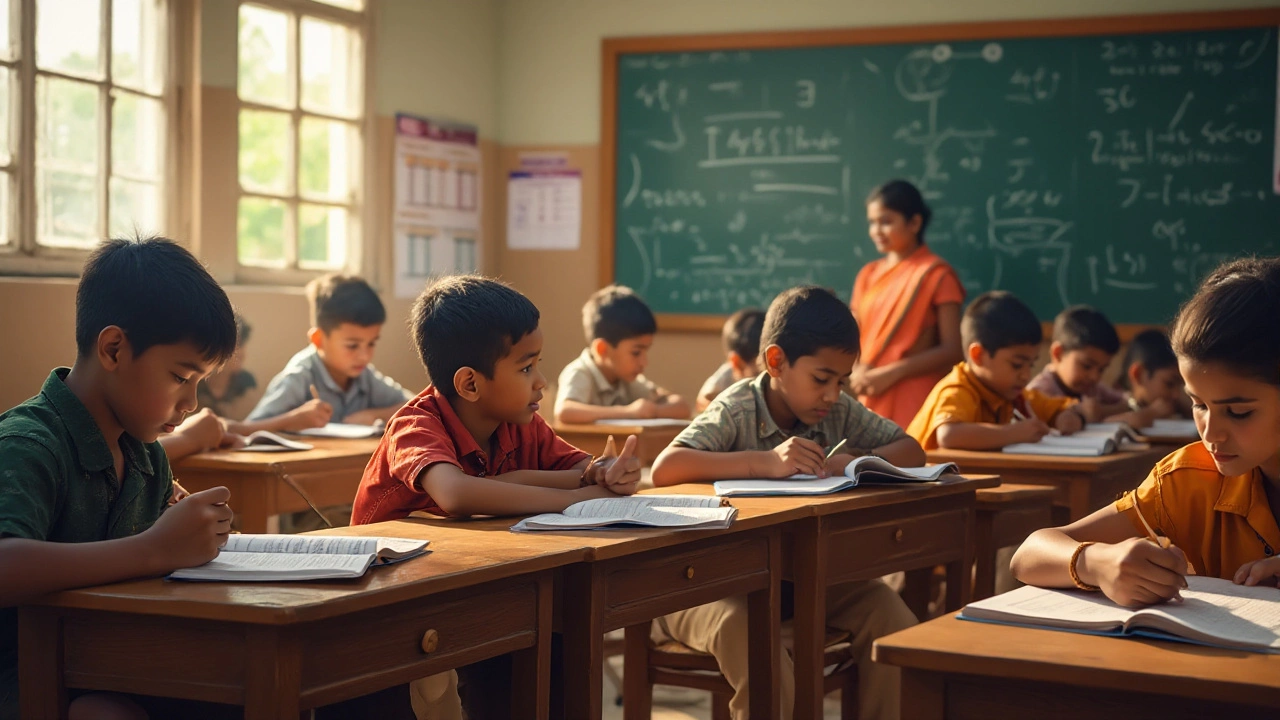
Global Education: What Works, Who Leads, and How It Affects You
When we talk about global education, the interconnected systems and practices that shape how students learn across countries. Also known as international education, it’s not just about where you study—it’s about what you’re taught, how you’re tested, and who’s designing the rules. The truth is, education doesn’t stop at borders. A student in Delhi preparing for IIT JEE is using the same logic, problem-solving tools, and even apps as a kid in Singapore or Finland. What changes is the structure—some systems push deep theory, others focus on real-world application.
CBSE, India’s most widely followed school board, designed to align with national and global competitive exams is a perfect example. It’s not just popular in India—it’s recognized abroad because it mirrors the rigor of international systems like the IB or British A-Levels. That’s why families choose CBSE even if they plan to study overseas later. Meanwhile, countries like China and Singapore dominate global math rankings because their systems build strong foundations early, with heavy emphasis on practice, consistency, and clear progression. And it’s not magic—it’s curriculum design. e-learning platforms, digital tools that deliver lessons, track progress, and connect learners worldwide like Coursera, Khan Academy, and Google Classroom have made these systems more accessible than ever. You don’t need to move to another country to learn like they do—you just need the right platform.
Global education isn’t about copying one system. It’s about picking what works. If you’re preparing for NEET or CAT, you’re already part of a global ecosystem of competitive exams—just like the SAT, GRE, or GMAT. The apps you use, the study habits you build, even how you manage time—they’re all shaped by trends that cross oceans. The best learners today aren’t the ones who memorize the most. They’re the ones who understand how different systems connect, and who know how to use tools like digital platforms to fill their own gaps.
Below, you’ll find real stories, data-backed comparisons, and practical guides that show exactly how global education impacts students in India. Whether you’re wondering why CBSE is so popular abroad, which country really tops in math, or how apps are changing how millions study—everything here is pulled from what’s actually working on the ground. No theory. No fluff. Just what helps you move forward.
When it comes to rigorous educational environments, several countries have made a name for themselves. While India's CBSE curriculum is structured to maintain high standards and broad coverage, students worldwide also face significant challenges. From South Korea's high pressure in competitive exams to Finland's focus on equity and less standardized testing, each country approaches education uniquely. Understanding these systems can offer valuable insights into what makes an education system 'tough.' The varying methodologies highlight cultural differences, societal expectations, and future workforce requirements.