
Let’s cut through the noise: CPA and MCAT aren’t just exams. They’re gatekeepers. One locks you into the world of finance and public accounting. The other opens the door to medical school and a career as a doctor. But which one is harder? People ask this all the time. And the truth? It’s not about which test is harder-it’s about which one breaks you harder.
What the CPA Exam Actually Tests
The CPA exam isn’t one test. It’s four. And you have to pass all of them within 18 months. The sections are:
- Business Environment and Concepts (BEC) - Corporate finance, economics, IT, ethics
- Financial Accounting and Reporting (FAR) - GAAP, government accounting, nonprofit reporting
- Auditing and Attestation (AUD) - Internal controls, audit procedures, professional standards
- Regulation (REG) - Federal tax law, business law, ethics
Each section is 4 hours long. That’s 16 hours of pure cognitive overload in one sitting. You’re not just memorizing rules-you’re applying them. Imagine being handed a 200-page financial statement and asked to spot where a company is hiding liabilities. Or being told a client wants to deduct a $500,000 expense, and you have to know whether the IRS will approve it. No room for guesswork.
The pass rates? Around 50% per section. That means more than half of people who take it fail at least once. And if you fail one part, you have to retake it. The whole thing. No partial credit. No second chances. You get one shot per section per testing window.
What the MCAT Actually Tests
The MCAT is a 7.5-hour marathon. It’s divided into four sections:
- Biological and Biochemical Foundations of Living Systems - 95% biology, 5% biochemistry
- Chemical and Physical Foundations of Biological Systems - Organic chemistry, physics, thermodynamics
- Psychological, Social, and Biological Foundations of Behavior - Psychology, sociology, ethics
- Critical Analysis and Reasoning Skills (CARS) - Dense passages from humanities and social sciences
You don’t just need to know facts. You need to analyze. In CARS, you get a 600-word passage on Kant’s ethics or the sociology of medical bias. Then you answer 5-7 questions about what the author implied, not what they said. It’s like reading Shakespeare and being asked to explain why the character lied-without ever being told the reason.
And the content? It’s vast. You’re expected to know everything from cellular respiration to the effects of socioeconomic status on health outcomes. The AAMC publishes a 600-page content outline. Most students spend 300+ hours studying. And even then, the average score is around 506 out of 528. That’s a 96th percentile. You’re not just competing with pre-med students-you’re competing with geniuses.
Time and Pressure: The Hidden Battle
CPA candidates usually take 6-12 months to finish all four sections. Some take longer. But they can space it out. Study for BEC, take the test, then take a month off before tackling AUD. It’s grueling, but it’s paced.
MCAT? You have one shot. Most people study for 6-8 months and then take it in one go. If you bomb it, you wait 30 days to retake. And retakes cost $375 each. You can’t retake it twice in a month. You can’t retake it more than three times in a year. One bad day, and your med school application goes from “strong” to “reconsider next cycle.”
CPA lets you fail and try again. MCAT doesn’t. One mistake on the MCAT can cost you a year. One mistake on the CPA? You just reschedule.
Who Finds Each Exam Harder?
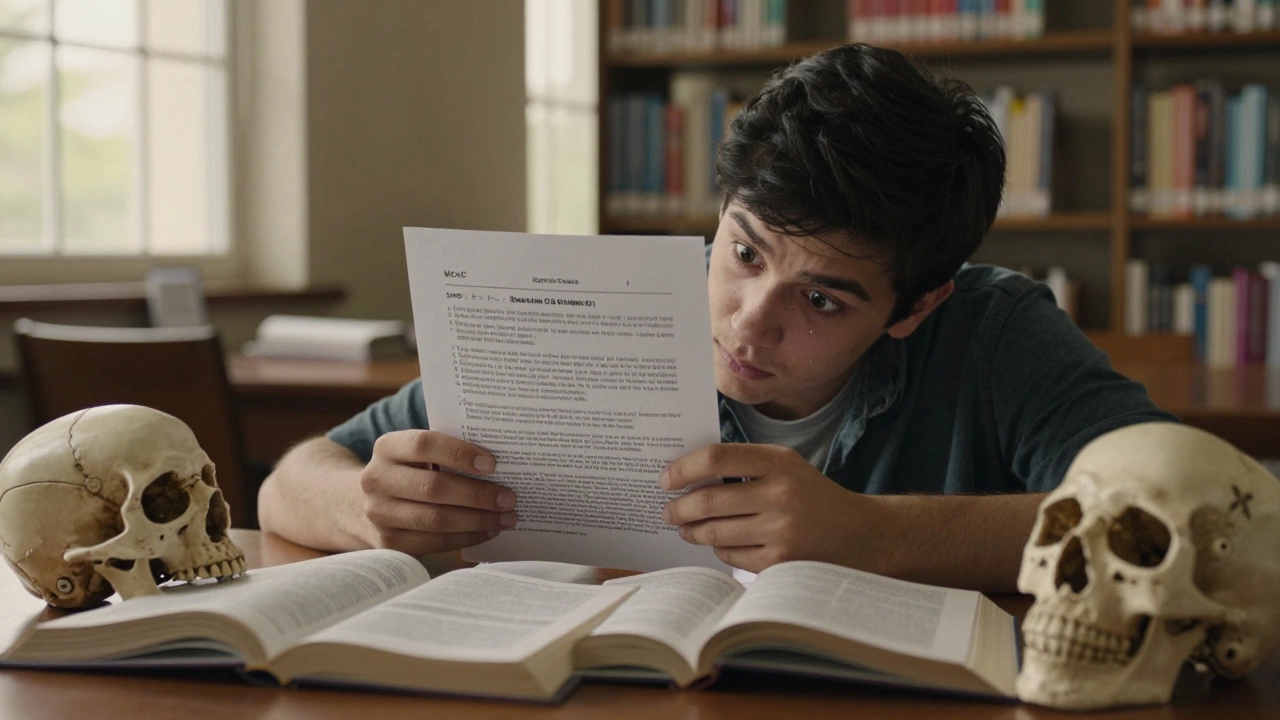
People with science backgrounds-biology majors, chemistry PhDs-often find the MCAT easier. The content feels familiar. The problem? CARS. No one prepares for CARS. You can’t memorize your way out of it. You have to read fast, think critically, and ignore your own biases. Most science students hate it.
CPA is brutal for people who never took accounting classes. If you didn’t grow up with T-accounts and journal entries, the terminology alone is a wall. You have to learn how to read financial statements like a detective. And then you have to explain why a company’s revenue recognition is wrong. It’s not about being smart. It’s about being precise.
Here’s what most people don’t tell you: CPA is harder if you’re bad at detail. MCAT is harder if you’re bad at reading. Both require discipline. But they break you in different ways.
The Real Difference: Consequences
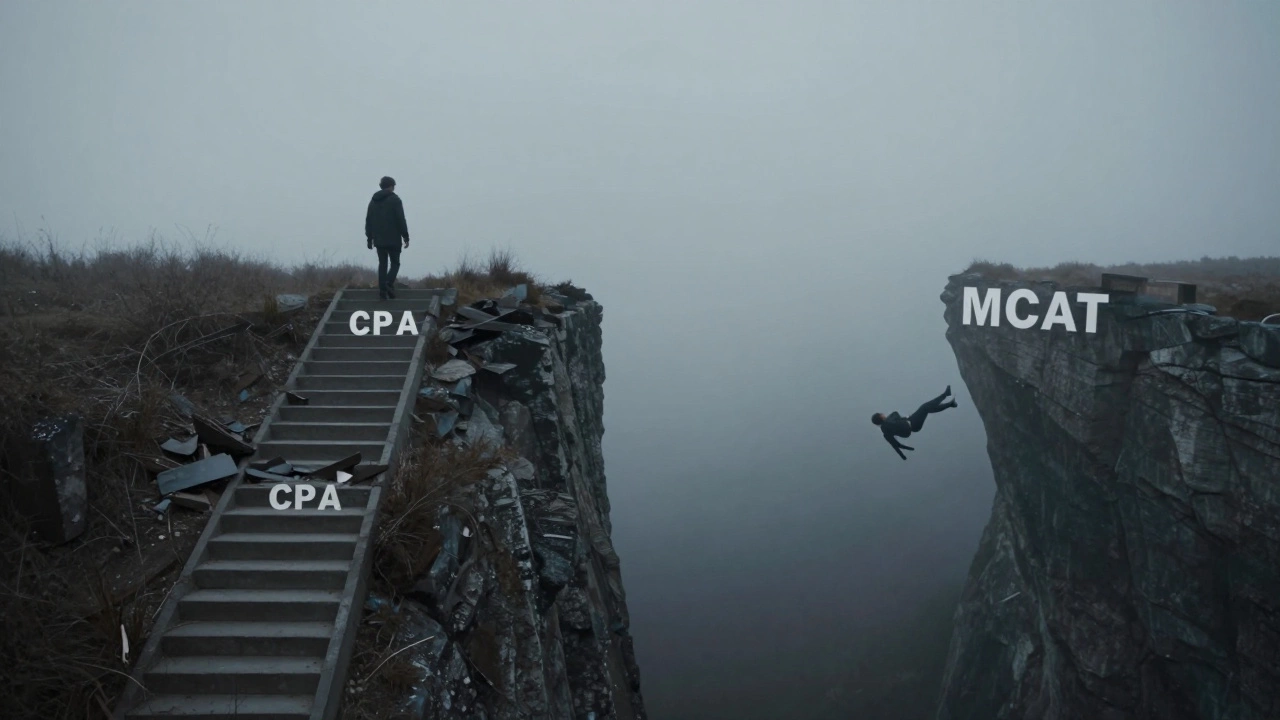
Fail the CPA? You lose a few months. Maybe a few thousand dollars. You can still work as an accountant. You can retake. You can try again next year.
Fail the MCAT? You might not get into med school at all. And if you don’t get in, you don’t become a doctor. Not this year. Not next. Maybe ever. The financial cost? Over $300,000 in tuition and lost income. The emotional cost? You’re not just failing a test-you’re failing a dream.
That’s the difference. CPA is a hurdle. MCAT is a cliff.
Which One Should You Take?
Don’t ask which is harder. Ask which one aligns with who you are.
If you’re a numbers person who loves rules, structure, and precision-CPA might be your match. You’ll grind through standards, memorize tax codes, and find satisfaction in clean audit trails.
If you’re a deep thinker who loves science, human behavior, and complex systems-MCAT might be your path. You’ll thrive on dissecting biological mechanisms and wrestling with ethical dilemmas in patient care.
Neither exam is “easier.” They’re just different kinds of hard.
Final Thought: It’s Not About the Test
What makes the CPA hard? The fact that you’re expected to know everything about accounting law-and still make ethical calls under pressure.
What makes the MCAT hard? The fact that your score can determine whether you save lives-or never get the chance to try.
The CPA tests your knowledge. The MCAT tests your resilience.
And that’s why people who’ve taken both say the same thing: "I survived the CPA. But the MCAT? That changed me."
Is the CPA harder than the MCAT?
There’s no simple answer. The CPA is harder if you struggle with detail, rules, and financial systems. The MCAT is harder if you struggle with reading dense material under pressure or if you’re not deeply familiar with biology and chemistry. Both require months of intense study, but the MCAT has higher stakes-failing it can delay your entire medical career. The CPA lets you retake sections. The MCAT doesn’t.
Which exam has a lower pass rate?
The MCAT has a higher average score requirement. To be competitive for U.S. medical schools, you typically need a score above 510, which puts you in the top 10% of test-takers. The CPA has a 50% pass rate per section, meaning more people fail each attempt. But since you can retake CPA sections individually, the overall success rate over time is higher than for the MCAT, where one bad day can derail your plans.
Can you take the CPA and MCAT at the same time?
Technically, yes. But no one should. The CPA requires 16+ hours of testing across four sections, each with its own study load. The MCAT is a 7.5-hour single-day exam that demands 300+ hours of preparation. Trying to prepare for both at once would burn you out. Most people choose one path and stick with it.
Do you need a degree to take the CPA?
Yes. Every U.S. state requires at least a bachelor’s degree with specific accounting and business credits. Most candidates have a degree in accounting or finance. Some states require 150 semester hours of education-more than a typical four-year degree. You can’t sit for the CPA without meeting these educational requirements.
Is the MCAT harder than the bar exam?
The MCAT is more content-heavy and requires deeper scientific knowledge. The bar exam is longer (two days) and tests application of law across dozens of subjects. But the MCAT is more unpredictable-you can study everything and still get wrecked by CARS. The bar exam is more about memorization and pattern recognition. Most professionals agree: MCAT is harder to prepare for. Bar exam is harder to pass.