
Vocational Path Finder
What Are Your Strengths?
Your Vocational Path
Vocational Course:
Why It Matches:
Career Path:
Tip: Many vocational courses provide pathways to university through NCEA credits. Check with your school counselor about specific requirements.
When you hear the word vocational in school, it doesn’t mean boring or second-rate. It means practical. Real. Hands-on. It’s about learning how to do a job while you’re still in school-not just studying for a test, but getting ready to walk into a workplace and start contributing from day one.
What Exactly Is Vocational Education?
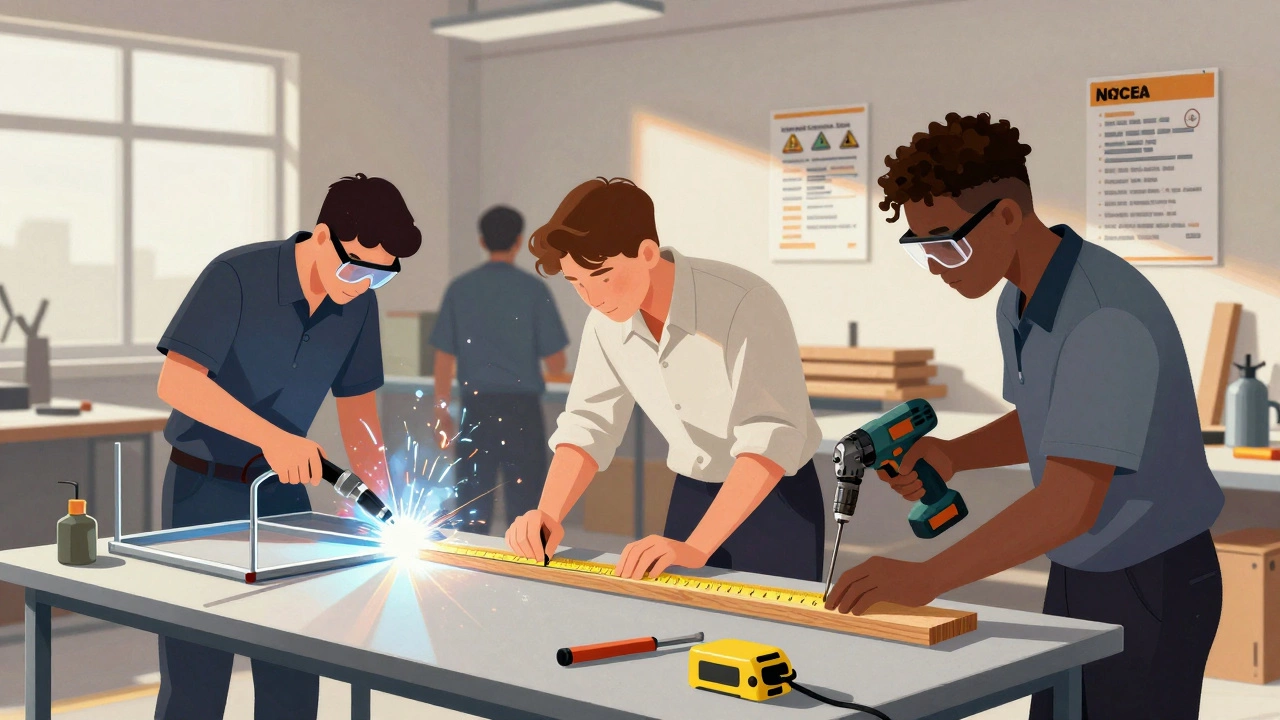
Vocational education is training that prepares students for specific careers. Instead of focusing on theory-heavy subjects like advanced math or literature, vocational courses teach skills you can use right away. Think welding, nursing assistants, automotive repair, graphic design, culinary arts, or IT support. These aren’t side projects-they’re full programs built into the school day, often with real tools, real clients, and real certifications.
In New Zealand, where I live, vocational learning is part of the National Certificate of Educational Achievement (NCEA) at Levels 1-3. Schools partner with industry groups so students can earn qualifications that employers actually recognize. A student in Year 11 might spend half their week in a kitchen learning food safety, and the other half in class learning nutrition science. That’s vocational education.
How Is It Different From Regular School Subjects?
Traditional school subjects are designed to build general knowledge. You learn history to understand society. You study biology to grasp how living things work. Vocational subjects are built differently. They’re built around tasks.
For example:
- In a regular science class, you might memorize the parts of a cell.
- In a vocational health course, you learn how to take a patient’s blood pressure, record it correctly, and explain the results to them.
One teaches understanding. The other teaches doing. Both matter-but vocational learning skips the long road to theory and gets you to the skill faster.
Who Benefits From Vocational Courses?
Not everyone wants to go to university. And that’s okay. Vocational courses are perfect for students who learn better by doing than by reading. Maybe you’re the kind of person who’d rather fix a bike than write an essay about how bikes work. Or maybe you love working with your hands, or you’re drawn to service jobs like hairdressing or childcare.
Research from the New Zealand Ministry of Education shows that students in vocational programs have higher attendance rates and lower dropout numbers than those in purely academic tracks. Why? Because they see the point. They know that the skills they’re learning today will help them get a job tomorrow.
It’s also great for students who aren’t sure what they want to do. A six-week module in carpentry or digital marketing can help you figure out if that’s something you’d actually enjoy before you commit to years of study.
What Kinds of Vocational Courses Are Available in Schools?
The options have exploded in the last decade. Here’s what you’re likely to find in most secondary schools today:
- Health and Social Care - Basic first aid, elder care, mental health support
- Construction Trades - Carpentry, plumbing, electrical basics
- Information Technology - Computer repair, cybersecurity fundamentals, web design
- Business and Enterprise - Bookkeeping, customer service, small business planning
- Creative Industries - Photography, video editing, fashion design, animation
- Food and Hospitality - Cooking, barista training, food safety certification
- Agriculture and Environmental Skills - Sustainable farming, native plant care, conservation work
Some schools even offer apprenticeships where students spend one or two days a week working at a local business while still attending school. By the time they graduate, they’ve got real work experience, references, and often a job offer waiting.
Do Vocational Courses Count Toward University?
Yes-sometimes. Many vocational qualifications now count as credits toward NCEA, which is accepted by universities and polytechnics in New Zealand. But here’s the catch: not all university programs accept vocational credits for entry. If you’re thinking about studying engineering or medicine later, you’ll still need to take core subjects like math and science.
But if your goal is to become a tradesperson, a nurse, a web developer, or a chef, vocational courses give you a head start. You’re not starting from zero when you walk into your first job. You’ve already done the training. You’ve already held the tools. You’ve already met the professionals.
Why Vocational Learning Is Growing Fast
Employers are screaming for skilled workers. In New Zealand, there are shortages in construction, aged care, plumbing, and IT support. Schools are responding. Governments are funding more programs. Companies are offering equipment, mentors, and paid internships.
It’s not just about filling jobs-it’s about giving students real choices. Not everyone thrives in an exam hall. But many thrive in a workshop, a kitchen, or a design studio. Vocational education says: your path matters. Your skills matter. Your future doesn’t have to look like someone else’s.
How to Find Vocational Courses at Your School
If you’re curious, ask your school counselor or careers advisor. They should have a list of available programs. Look for:
- Programs that offer industry-recognized certificates (like NZQA-registered qualifications)
- Partnerships with local businesses or training providers
- Work placements or on-site training labs
- Teachers with real-world experience (not just academic backgrounds)
Don’t assume vocational means easy. These courses are demanding. You’ll be expected to show up on time, follow safety rules, meet deadlines, and work as part of a team. That’s not just training for a job-it’s training for life.

Myths About Vocational Education
Let’s clear up a few misunderstandings:
- Myth: Vocational courses are for students who aren’t smart enough for academics.
Truth: They’re for students who learn differently. Many top electricians and chefs were top students in other areas. - Myth: You’ll earn less money.
Truth: Skilled tradespeople often earn more than university graduates in their early 20s. A qualified plumber in New Zealand can earn $70,000+ within five years of starting. - Myth: It limits your future.
Truth: Many people start in a vocational role and later go back to study. Others run their own businesses. Skills open doors, not close them.
Vocational education isn’t a backup plan. It’s a direct route to a meaningful career-with pay, purpose, and pride.
Final Thought: It’s Not Either/Or
You don’t have to choose between academic learning and vocational learning. Many schools now blend both. A student might take biology for university entry while also doing a certificate in community health. They’re learning science and serving people at the same time.
That’s the future. Flexible. Practical. Real.
Is vocational the same as technical education?
Yes, in most cases. The terms are often used interchangeably. "Technical" usually refers to skills tied to machines, tools, or systems-like engineering or IT. "Vocational" is broader and includes service jobs like childcare or hospitality. But both focus on job-ready skills rather than theory.
Can I still go to university after doing vocational courses?
Absolutely. Many universities accept NCEA credits from vocational courses, especially if they’re at Level 2 or 3. Some programs even offer pathways-like a diploma in business leading into a bachelor’s degree. But if you want to study something like medicine or law, you’ll still need to take the core academic subjects like chemistry, physics, and math alongside your vocational training.
Are vocational courses free in school?
In New Zealand, most vocational courses offered during school hours are free. Materials and tools are usually provided by the school or through government funding. Some external certifications might have small fees, but these are often covered by grants or employer partnerships. If you’re asked to pay a lot, ask if there’s financial support available.
Do employers value vocational qualifications?
Yes, especially in skilled trades and service industries. Employers know that someone with a Level 2 Certificate in Carpentry has already proven they can handle tools, follow safety rules, and complete tasks on time. That’s more valuable than a high grade in a subject they’ll never use on the job.
What if I change my mind later?
Changing your mind is normal. Vocational courses don’t lock you in-they help you explore. A student who takes a cooking course might realize they love the kitchen but want to become a food scientist. That’s still a win. They now know what they like, and they’ve got transferable skills like time management, teamwork, and precision.
Next Steps: What to Do Now
If you’re a student, talk to your careers advisor this week. Ask what vocational options are available at your school. Look at the course booklet. Ask if you can shadow someone in a trade for a day.
If you’re a parent, don’t assume your child needs to go to university to succeed. Ask them what they enjoy doing. If they like fixing things, building things, helping people, or creating things-there’s probably a vocational path that fits.
Vocational education isn’t about giving up. It’s about choosing a different kind of success-one that’s built on doing, not just knowing.