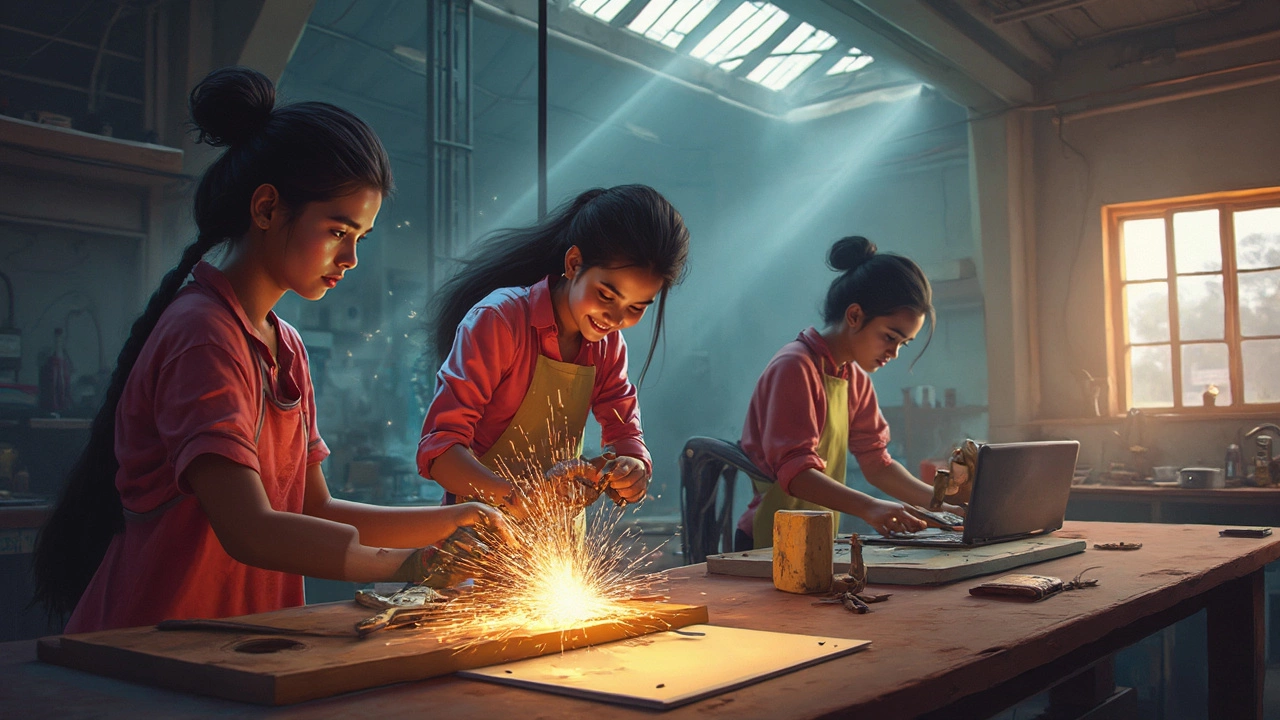
Hands-on Skills: Learn by Doing in Education and Careers
When you're learning something, hands-on skills, practical abilities built through direct experience rather than just reading or listening. Also known as applied skills, they’re what turn classroom knowledge into real results—whether you’re fixing a circuit, coding a website, or speaking English in a job interview. No amount of theory replaces the muscle memory you build when you actually do the thing. That’s why students who practice solving physics problems daily beat those who only memorize formulas. It’s why people who speak English every day, even badly, outperform those who study grammar books for years but never open their mouths.
vocational jobs, careers that require direct, physical or technical skill application like plumbing, nursing, or welding depend entirely on hands-on skills. You don’t pass a plumbing test by writing an essay—you fix a leak. Same with digital learning platforms, online tools like Coursera or Khan Academy that let you practice coding, design, or data analysis in real time. The best ones don’t just show you videos—they give you a sandbox to try things, make mistakes, and try again. That’s why platforms like these are now the backbone of eLearning, structured education delivered through digital tools with active participation. They’re not passive. You click, drag, code, record, submit. You learn by doing.
Even in high-stakes environments like competitive exam preparation, focused study for exams like IIT JEE, NEET, or UPSC that demand both knowledge and timed application, hands-on practice wins. The people who crack IIT JEE in six months aren’t the ones who read the most—they’re the ones who solved the most problems. They timed themselves. They redid wrong answers. They built habits around doing, not just knowing. The same goes for learning to code: the cheapest, most effective course isn’t the one with the flashiest website—it’s the one that gives you a project to finish by Friday.
What’s missing in most classrooms isn’t theory—it’s time to practice. Schools teach you what electricity is. But if you’ve never wired a plug, you won’t know what happens when you mix the wires. That gap is why so many graduates struggle in their first job. Employers don’t want people who can explain a concept. They want people who can fix it, build it, or use it—right now. That’s the power of hands-on skills. They turn passive learners into active doers. And in a world where information is free, the only thing that still has real value is what you can actually do.
Below, you’ll find real stories, tools, and guides that show exactly how to build these skills—whether you’re prepping for an exam, switching careers, or just trying to get better at something that matters.
A vocational qualification is your gateway to hands-on skills tailored to specific trades or careers. Unlike traditional college degrees, these programs focus on practical training and job readiness. Ideal for those eager to dive straight into the workforce, vocational qualifications can jumpstart your career in fields ranging from healthcare to technology. This guide explores what vocational qualifications are, their benefits, and how they can shape your professional journey.