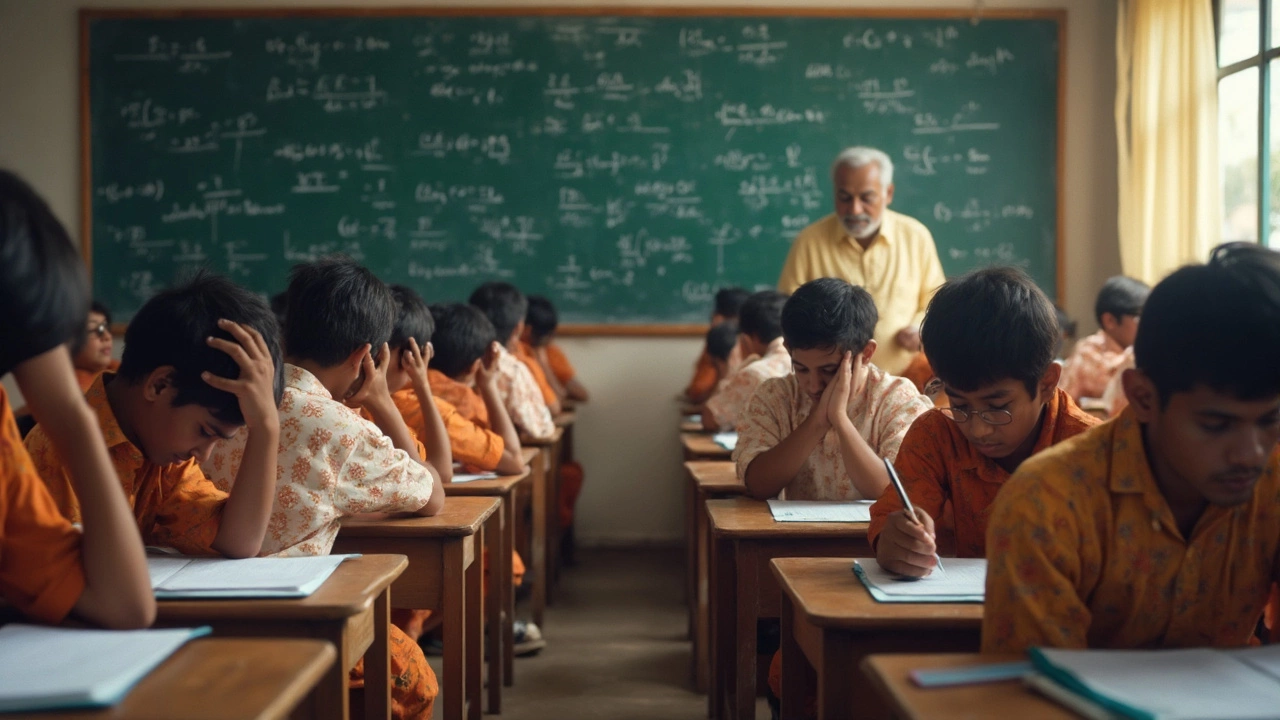
International Comparison in Education: How India Stacks Up Against the World
When we talk about international comparison, the process of evaluating education systems across countries to identify strengths, weaknesses, and best practices. Also known as global education benchmarking, it helps us understand why some students outperform others—not because they’re smarter, but because their systems work differently. This isn’t about bragging rights. It’s about finding what actually helps kids learn better, faster, and with less stress.
Take PISA scores, a global assessment that measures 15-year-olds’ ability in math, reading, and science. Countries like Singapore, Japan, and Estonia consistently rank at the top. Meanwhile, India’s performance is improving but still lags behind. Why? It’s not just about money. It’s about how often students practice real problem-solving, how teachers are trained, and whether exams reward memory or thinking. CBSE, India’s most widely used school board, aligns closely with competitive exams like JEE and NEET, making it a practical choice for students aiming for engineering or medicine. But how does it compare to the IB curriculum, an internationally recognized program that emphasizes critical thinking, research, and global awareness? IB students often score higher in real-world applications, but CBSE students are better prepared for high-stakes national exams. That’s the trade-off.
And then there’s math education, a core subject where global differences are stark. China and South Korea dominate math Olympiads, not because their kids study more hours, but because their teaching focuses on deep understanding over rote memorization. Singapore’s system builds math skills step-by-step, starting with concrete examples before moving to abstract problems. India’s approach, especially in CBSE schools, leans heavily on textbooks and exams. But the best results come from mixing structure with creativity—something we’re starting to see in top coaching centers and digital platforms like Physics Wallah and Khan Academy.
What does this mean for you? If you’re a parent, teacher, or student, international comparison isn’t about copying another country. It’s about picking what works. Should your child follow CBSE for exam readiness? Or try IB for broader skills? Should you use apps that mimic Singapore’s problem-solving style? The posts below show real examples—how Finland trains teachers, how Japan handles homework, how India’s top JEE toppers study differently than students in the U.S. or Germany. You’ll see what’s working, what’s not, and what you can adapt right now—no matter where you are in India’s education system.
Math exams vary widely across the globe, with some countries having a reputation for particularly challenging tests. Understanding which country presents the hardest math exams can provide insights into global education standards and practices. From rigorous problem-solving to complex theoretical questions, these exams test students' abilities to the limit. This article delves into the intricate world of international math exams, examining what makes some countries' tests exceptionally tough.