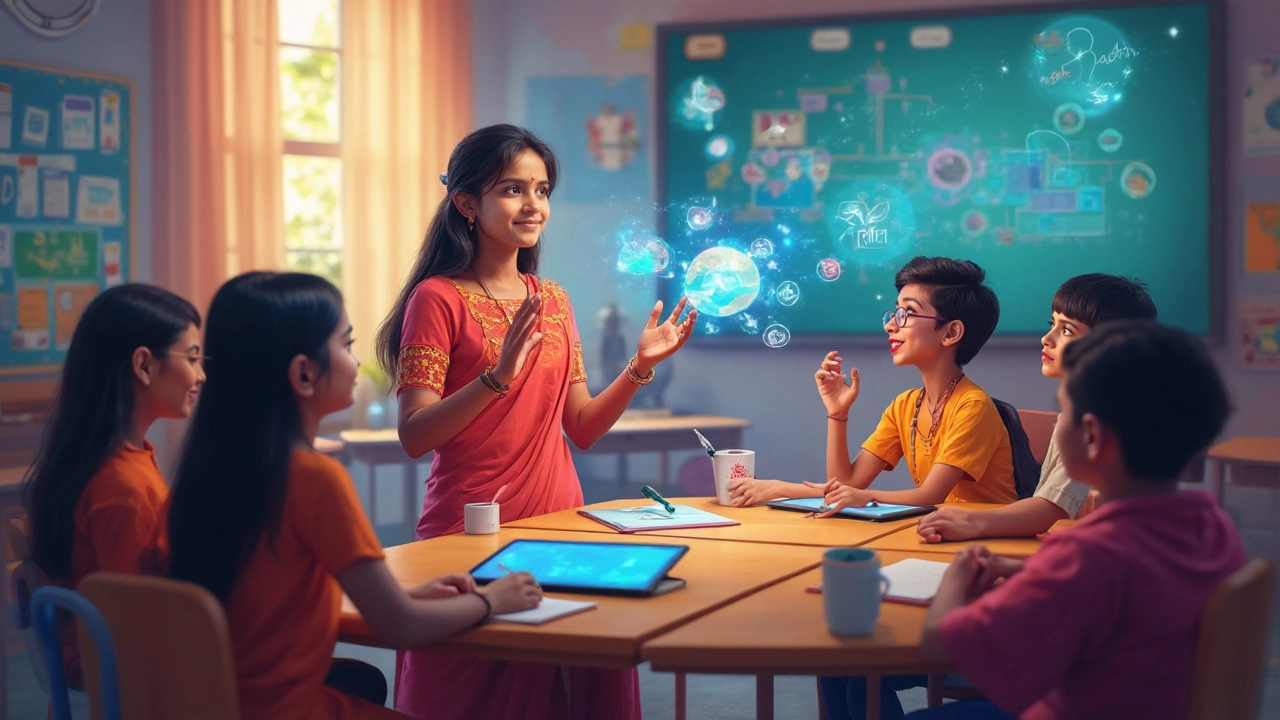
Teaching Skills: What Works in Indian Classrooms Today
When we talk about teaching skills, the practical abilities educators use to help students understand, retain, and apply knowledge. Also known as instructional techniques, it's not just about delivering a lesson—it's about creating moments where learning actually sticks. In India, where classrooms range from urban schools with smartboards to rural setups with chalk and blackboards, the best teaching skills are the ones that work under pressure, with large groups, and limited resources.
Great classroom management, the ability to maintain focus, reduce distractions, and create a structured yet flexible learning environment is the quiet backbone of effective teaching. You can have the best lesson plan, but if students aren’t paying attention, nothing sticks. This isn’t about being strict—it’s about being consistent. It’s about knowing when to push, when to pause, and when to listen. And in Indian schools, where one teacher might handle 50+ students, this skill isn’t optional—it’s survival.
Then there’s student engagement, how well learners connect with the material, ask questions, and take ownership of their learning. The most successful teachers don’t just explain formulas or dates—they make them matter. They tie math to everyday shopping, history to local landmarks, and science to mobile phones. That’s what makes a student in Delhi and one in Bhopal both lean in. And it’s why platforms like Physics Wallah and Google Classroom are so popular—they don’t just deliver content, they make it feel personal.
Teaching skills also mean knowing when to stop talking. Too many educators think their job is to cover the syllabus. The real job is to make sure the student walks away with something they can use tomorrow. That’s why the best teachers in India—whether preparing kids for CBSE exams or helping adults learn English—are the ones who ask more than they answer. They use feedback, not just tests, to adjust their approach. They notice who’s silent, who’s distracted, who’s suddenly curious. And they act on it.
This collection of posts doesn’t give you theory. It gives you what’s actually working. From how to start IIT JEE prep with zero experience, to why digital tools like Moodle and Khan Academy are changing how teachers reach students, to how to speak English confidently without memorizing grammar rules—every article here is rooted in real classrooms, real students, and real results. You won’t find fluff. Just clear, usable ideas that help teachers do more with less.
In 2025, teachers skilled in technology, special education, and STEM are in highest demand as schools aim to address key educational needs. With digital learning technologies now integral to classrooms, educators proficient with these tools stand out. Special education teachers have seen increased interest, fueled by rising awareness around inclusive education. STEM fields, too, require passionate educators to prepare students for future careers. Understanding these trends can guide aspiring teachers in their professional development.