Math Performance Comparison Tool
How to Use This Tool
Select countries to compare their math performance across different assessment metrics. The results show why there's no single "#1 country" in math.
Comparison Results
| Country | International Math Olympiad | PISA Score | Key Strength |
|---|
The data shows why there's no single "best" country in math. China dominates elite competitions but doesn't lead in practical math skills, while Singapore excels in real-world applications. Each country's strength depends on the assessment metric.
Key Metrics Explained
Why This Matters
Math excellence isn't about winning competitions alone. Countries succeed by:
- Early focus on foundational skills
- High expectations for all students
- Respect for teachers who are well-trained and valued
As the article states: "The future of math excellence won't belong to the country with the most funding—it'll belong to the one that builds the most inclusive, thoughtful, and patient system for learning."
When people ask which country is #1 in math, they’re usually thinking about who wins the most medals at the International Mathematical Olympiad (IMO) or who tops the PISA rankings. But the answer isn’t as simple as pointing to one flag. Math excellence isn’t about a single nation dominating forever-it’s about systems, culture, and long-term investment in how kids learn.
China Leads in Math Olympiads, But It’s Not the Whole Story
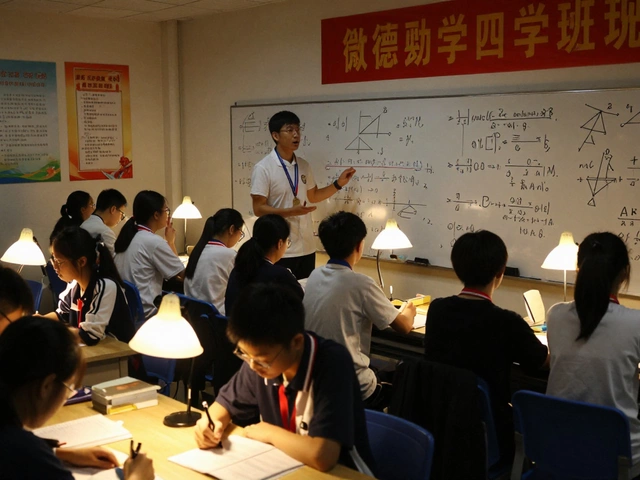
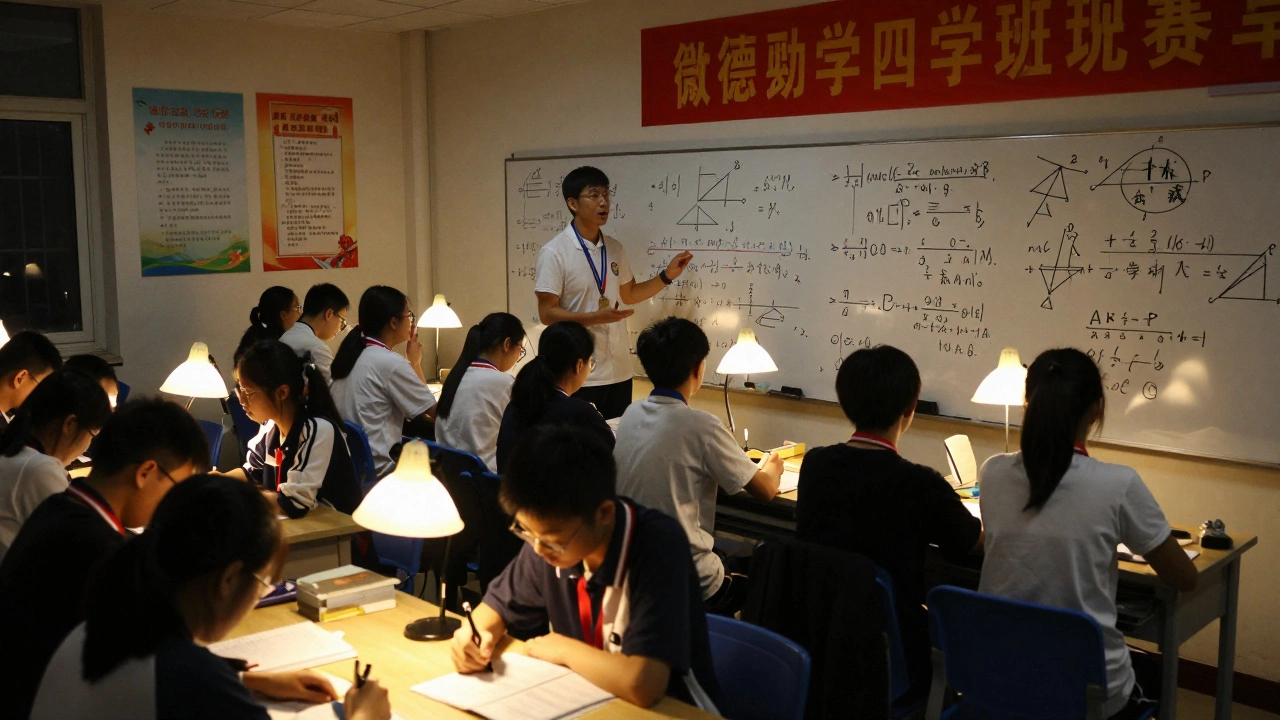
China has won the most gold medals at the International Mathematical Olympiad since the 1980s. In 2023, China took first place with six perfect scores out of six team members. That’s not luck-it’s the result of a highly structured training pipeline. Students who show early talent are pulled into specialized math schools, attend weekend boot camps, and train with former Olympiad winners as coaches. The competition is fierce: tens of thousands of students take qualifying exams just to make the national team.
But here’s the catch: the IMO measures elite problem-solving skill under extreme time pressure. It’s not the same as everyday math fluency. A student who can solve a complex geometry proof in 45 minutes might still struggle with balancing a budget or calculating interest on a loan. So while China leads in Olympiad rankings, that doesn’t automatically mean its entire population is better at math than others.
South Korea and Russia: Consistent Powerhouses
South Korea and Russia are right behind China in IMO standings. South Korea’s education system pushes math early and hard. Students spend hours after school in hagwons-private academies focused on math and science. The pressure is intense, but the results show: in 2022, South Korea had five students score perfectly on the IMO, and its average team score ranked #2 globally.
Russia has a deep tradition in mathematical thinking, dating back to Soviet-era math circles. These were informal clubs where gifted kids worked on unsolved problems with university professors. That culture still exists today. Russian students often win medals even when their national team is smaller than China’s or South Korea’s. Their strength lies in creativity and abstract reasoning, not just rote practice.
PISA Scores Show a Different Leader: Singapore
If you look at the Programme for International Student Assessment (PISA), which tests 15-year-olds on real-world math skills-like interpreting graphs, calculating taxes, or understanding probability-Singapore consistently ranks #1. In the 2022 PISA results, Singapore’s average math score was 575, far ahead of Japan (532) and Estonia (527). The U.S. scored 478, and the U.K. scored 505.
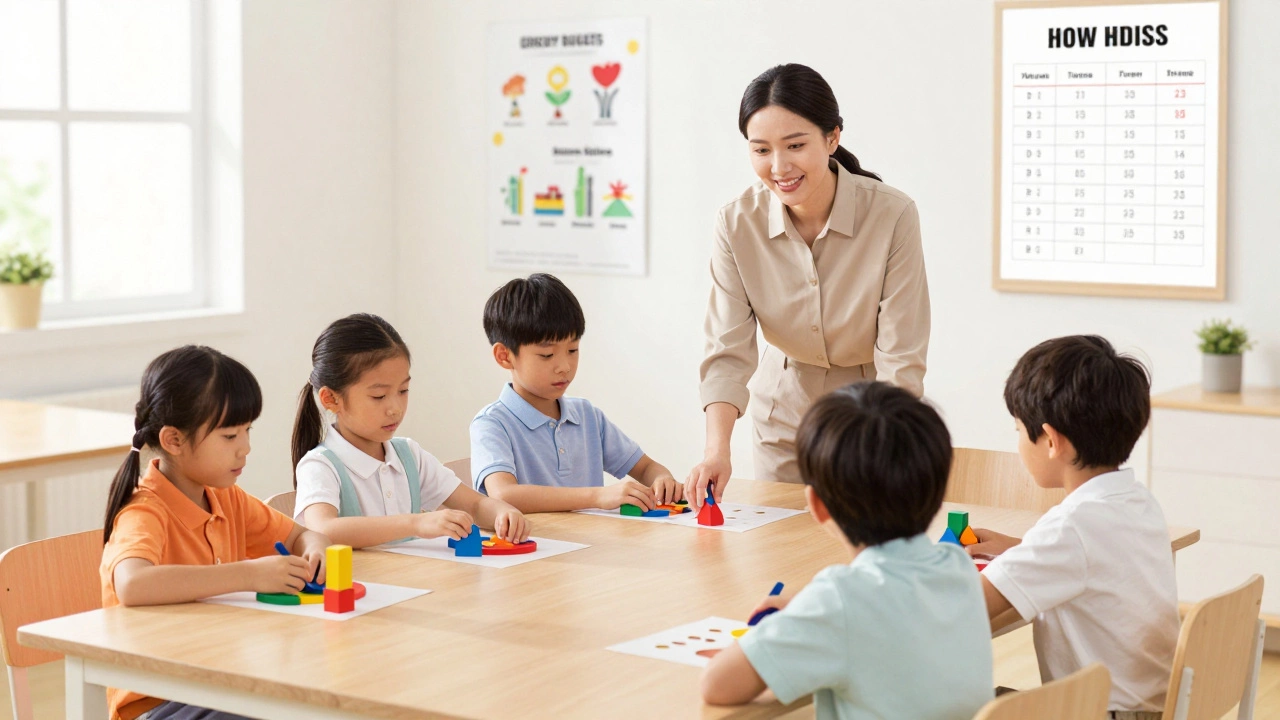
What makes Singapore different? Their curriculum is focused, clear, and builds step-by-step understanding. There’s no rushing through topics. Teachers spend weeks on a single concept like fractions, using visual models and real-life examples. Students don’t memorize formulas-they understand why they work. And there’s no tracking: every student gets the same high-quality instruction, regardless of background.
Why Finland and Canada Don’t Top the List
Finland and Canada often come up in conversations about top education systems. They score well on PISA, but not at the very top in math. Why? Because their systems prioritize well-being, creativity, and equity over competition. Finnish students have less homework, no standardized testing until age 16, and teachers are given enormous autonomy. Canadian schools vary by province, but overall, they avoid high-stakes math contests.
That doesn’t mean they’re bad at math. In fact, Canadian students perform above the OECD average. But their goal isn’t to produce math champions-it’s to produce confident, critical thinkers. The trade-off is clear: they don’t win as many Olympiad medals, but fewer students develop math anxiety.
What the Data Really Tells Us
There’s no single country that’s “best” at math across all measures. Here’s how the top performers break down:
| Measure | #1 Country | Average Score | Key Strength |
|---|---|---|---|
| International Math Olympiad (IMO) | China | 210/252 (2023) | Elite problem-solving, intensive training |
| PISA (Real-world math) | Singapore | 575 | Deep conceptual understanding, clear curriculum |
| OECD Average | - | 472 | Benchmark for developed nations |
| Top Western Nation (PISA) | Estonia | 527 | Strong teacher training, digital tools |
China dominates in high-stakes contests. Singapore leads in practical math skills. South Korea and Russia produce top-tier problem solvers with deep cultural support. The U.S. and U.K. lag in both areas, despite spending more per student.
What Makes a Country Excel in Math?
It’s not about money. It’s not about genius kids. It’s about three things:
- Early and consistent focus-Math isn’t treated as optional. From grade 1, students are expected to master foundational skills before moving on.
- High expectations for all-In Singapore and Japan, teachers believe every child can learn advanced math. They don’t sort students into “gifted” and “regular” tracks early on.
- Respect for teachers-In top-performing countries, math teachers are recruited from the top 10% of graduates. They get paid well, trained rigorously, and given time to plan lessons.
Compare that to countries where math teachers are underpaid, overworked, and seen as replaceable. No amount of fancy apps or online courses can fix that.
Why the U.S. and U.K. Struggle
The U.S. spends more on education than almost any country-but scores below the OECD average in math. Why? The system is fragmented. Each state sets its own standards. Textbooks vary wildly. Teachers are often assigned to subjects they didn’t major in. Many elementary teachers are uncomfortable with math themselves.
In the U.K., the curriculum jumped from basic arithmetic to abstract algebra too quickly in the 2010s. Students were pushed into formulas before understanding why they worked. The result? A generation of students who can pass exams but can’t apply math outside the classroom.
Neither country has a national strategy for math excellence. There’s no equivalent to Singapore’s “Concrete-Pictorial-Abstract” method or China’s nationwide Olympiad pipeline.
Can Any Country Stay #1 Forever?
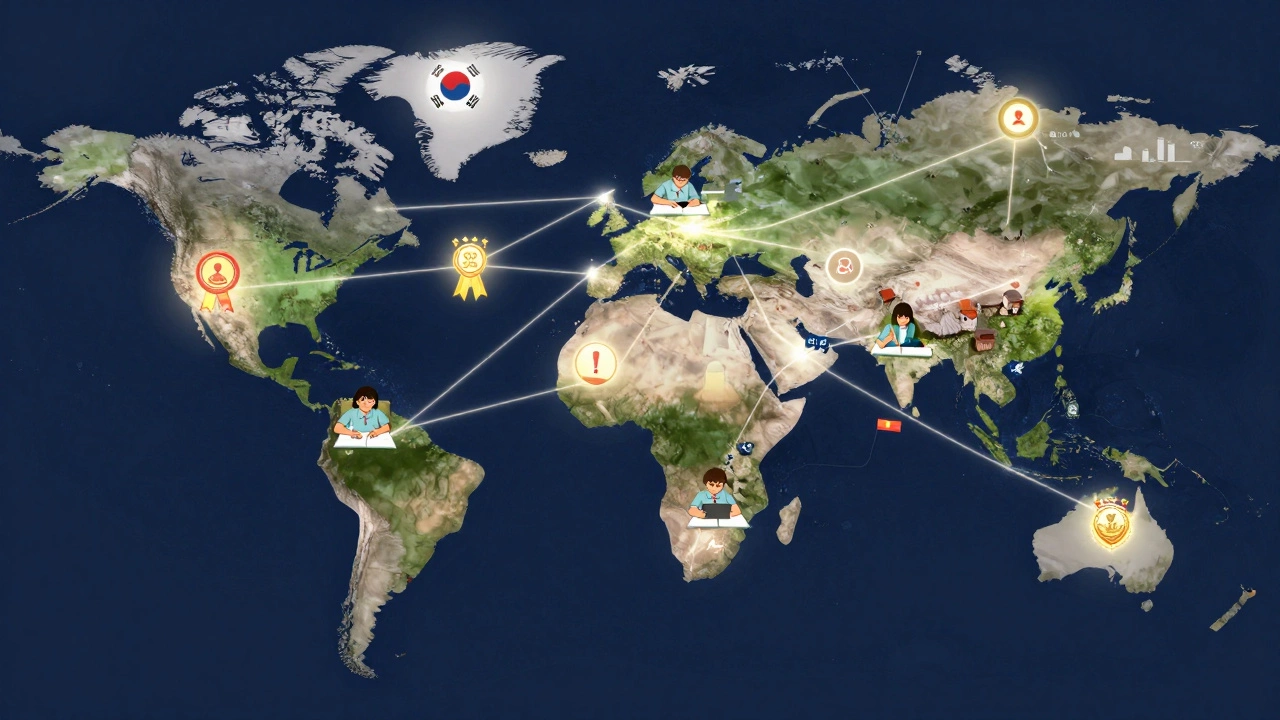
No. Math leadership shifts. Vietnam has risen fast in recent IMO competitions. Iran and Ukraine have strong traditions in mathematical thinking. Even countries like Poland and Romania regularly place in the top 10.
What’s changing? Access. More countries are investing in after-school math clubs, online problem-solving platforms, and teacher training. The internet has leveled the playing field. A kid in rural India can now watch lectures from MIT professors or join a global math forum.
The future of math excellence won’t belong to the country with the most funding-it’ll belong to the one that builds the most inclusive, thoughtful, and patient system for learning.
Is China really the best at math?
China leads in elite math competitions like the International Mathematical Olympiad, where students solve extremely difficult problems under pressure. But that doesn’t mean the average Chinese student is better at everyday math than students in Singapore or Japan. China’s strength is in training top-tier problem solvers, not necessarily in improving math literacy for all students.
Why does Singapore score so high on PISA?
Singapore’s math curriculum focuses on deep understanding, not memorization. Students spend more time on fewer topics, using visual tools and real-life examples. Teachers are highly trained, and every student is expected to master each concept before moving on. This approach builds strong foundations that show up in real-world math tasks.
Do math Olympiads measure true math ability?
Olympiads measure a very specific kind of math skill: solving unusual, complex problems quickly. They’re great at identifying elite talent, but they don’t test practical skills like budgeting, interpreting data, or using math in daily life. Many Olympiad winners struggle with applied math because they’ve never been taught to connect formulas to real situations.
Can the U.S. catch up in math education?
Yes-but only if it stops treating math as a subject for the “smart kids.” The U.S. needs consistent national standards, better teacher training, and a shift away from memorization toward understanding. Countries like Singapore show that even with limited resources, thoughtful teaching can produce outstanding results.
Is math talent genetic or learned?
Research shows math ability is mostly learned, not inherited. Children in countries with strong math education systems outperform those in weaker systems-even if they have similar genetics. The difference comes from teaching methods, expectations, and the amount of time spent practicing. Talent is sparked by environment, not DNA.
What’s Next for Global Math Leadership?
The next decade will see more countries investing in math education-not just for competition, but for economic survival. AI and automation are changing jobs. The demand for people who can think logically, solve problems, and interpret data is growing fast.
China might still win the Olympiad. Singapore might still lead PISA. But countries like Vietnam, Poland, and even Brazil are closing the gap. The real winner won’t be the country with the most medals-it’ll be the one that makes math accessible, meaningful, and enjoyable for every child.