
Interactive eLearning Project Planner
Stage 1: Analysis
Identify your audience, their needs, and the learning objectives before building anything.
Project Readiness Report
Calculate your readiness...
Have you ever clicked through an online course that felt like a disjointed mess? Maybe the video quality was poor, the quiz didn't match the lesson, or the final project seemed completely unrelated to what you learned. It’s frustrating, right? You’re not alone. Most bad online courses fail because they skipped the planning phase. They jumped straight into recording videos without mapping out the journey.
Good eLearning is digital education delivered via electronic media, often involving structured interactions and assessments doesn’t happen by accident. It follows a proven lifecycle. While there are many models in instructional design, the industry standard breaks down into four distinct stages: Analysis, Design, Development, and Evaluation. Think of it like building a house. You don’t just start laying bricks. You check the soil, draw the blueprints, build the structure, and then inspect the work.
Stage 1: Analysis - Knowing Your Audience and Goals
Before you write a single line of script or record a minute of video, you need to understand who you are teaching and why. This is the foundation. If this stage is weak, everything else crumbles. In the analysis phase, you answer three critical questions: Who are the learners? What do they already know? And what do they need to be able to do after the course?
Let’s say you are creating a compliance training module for healthcare workers. You can’t assume they all have the same background. Some might be nurses with ten years of experience; others might be new administrative staff. Their needs are different. The nurse needs updates on new protocols; the admin staff needs basic definitions. Mixing them into one generic video will bore the experts and confuse the beginners.
During this stage, you also identify constraints. Do the learners have access to high-speed internet? Are they using mobile devices or desktops? Is the training mandatory or voluntary? These details dictate your format. If your audience is on the factory floor with tablets, you need bite-sized, mobile-friendly content, not a two-hour lecture.
- Identify the gap: What is the difference between current performance and desired performance?
- Profile the learner: Age, tech-savviness, prior knowledge, and motivation levels.
- Define objectives: Use action verbs. Instead of "understand safety," use "demonstrate proper lifting techniques."
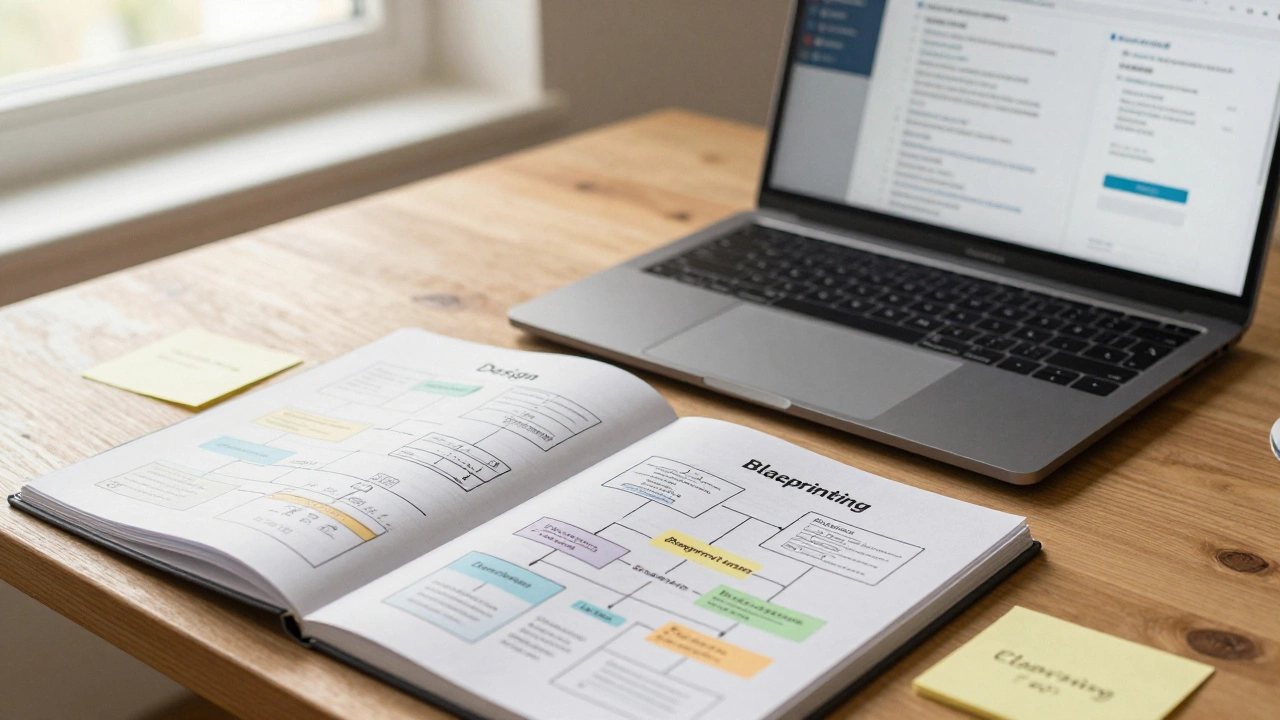
Stage 2: Design - Blueprinting the Experience
Now that you know who you are helping and what they need, it’s time to plan how you’ll get them there. The design stage is where you create the architecture of your course. This is not about making things look pretty yet; it’s about logic and flow. You are creating a roadmap.
In this phase, you develop the storyboard. A storyboard is more than just a script. It outlines every screen, every interaction, and every piece of media. It specifies when a button appears, what text is displayed, and how the user progresses. For example, if you are teaching software usage, the storyboard might show: "Screen 1: Video intro. Screen 2: Interactive demo of clicking 'Save'. Screen 3: Quiz question confirming the location of the 'Save' button." You also choose your instructional strategy here. Will you use gamification? Scenario-based learning? Or straightforward video lectures? Research from the Association for Supervision and Curriculum Development (ASCD) suggests that interactive scenarios lead to better retention than passive video watching. So, if your goal is behavior change, you design interactions, not just monologues.
This stage also involves selecting the technology stack. Will you use an authoring tool like Articulate Storyline or Adobe Captivate? Or will you code it from scratch using HTML5 and JavaScript? The choice depends on the complexity of interactions you designed in the storyboard.
Stage 3: Development - Building the Course
This is the stage most people think of when they hear "eLearning." It’s the production phase. Here, you take the blueprints from the design stage and turn them into a functional product. Developers, graphic designers, and voice-over artists come together to build the actual modules.
If your design called for animations, the motion graphics team creates them. If it required video, the camera rolls. The instructional designer ensures that the content matches the storyboard exactly. A common pitfall here is "scope creep." Someone might suggest, "Hey, let’s add a fun mini-game here." But if that game wasn’t in the design phase, it likely doesn’t support the learning objective. Stick to the plan. Every element must serve the goal defined in Stage 1.
Quality assurance (QA) happens during development. You test the course on different browsers and devices. Does the video play on an older Android phone? Do the buttons work on an iPad? Broken links or audio sync issues kill credibility instantly. You want the technology to be invisible so the learner focuses only on the content.
Stage 4: Evaluation - Measuring Success and Iterating
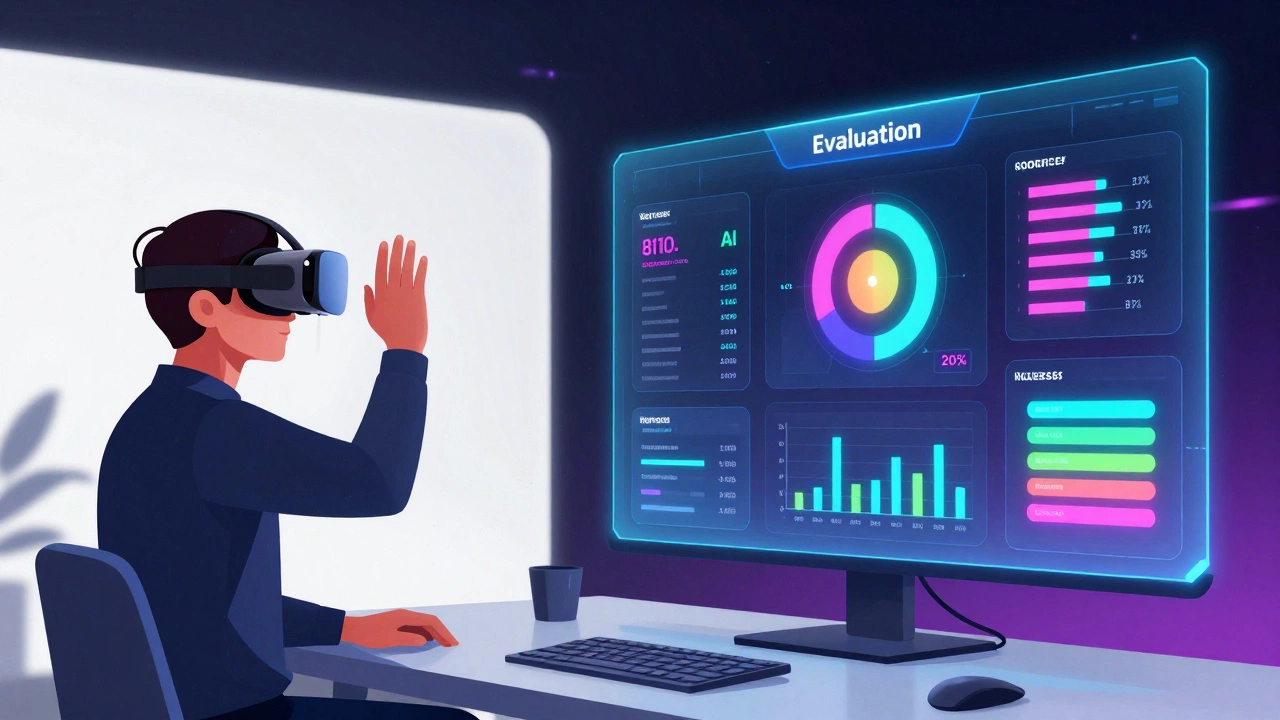
Launching the course isn’t the end; it’s the beginning of data collection. The evaluation stage determines if your eLearning actually worked. Did the learners achieve the objectives set in the analysis phase? There are two types of evaluation: formative and summative.
Formative evaluation happens throughout the process. You might run a pilot test with five users before the full launch. Their feedback helps you fix bugs and confusing instructions early. Summative evaluation happens after the course goes live. You look at completion rates, quiz scores, and post-training assessments.
But numbers aren’t enough. You need to measure impact. If you trained sales staff on a new pitch, did their revenue increase? If you trained warehouse staff on safety, did accidents decrease? This is where the real value lies. If the metrics show low engagement, you go back to the design stage to adjust. Maybe the content was too dense. Maybe the interface was clunky. The cycle repeats. Effective eLearning is never static; it evolves based on user data.
| Stage | Primary Goal | Key Deliverables | Common Tools |
|---|---|---|---|
| Analysis | Identify needs & audience | Needs assessment report, learner personas | Surveys, interviews, analytics dashboards |
| Design | Plan structure & strategy | Storyboard, prototype, visual mockups | Miro, Google Docs, PowerPoint |
| Development | Create content & assets | SCORM packages, videos, interactive modules | Articulate, Captivate, Camtasia |
| Evaluation | Measure effectiveness | Quiz results, feedback forms, ROI reports | LMS reports, Typeform, Google Analytics |
Why Skipping Stages Leads to Failure
Many organizations rush to skip the Analysis and Design phases. They want content fast. They hire a videographer and say, "Just record the expert talking." The result? A bloated, expensive course that no one watches. Without analysis, you miss the real pain points. Without design, you lack engagement strategies.
Consider the cost. Fixing a mistake in the storyboard costs almost nothing. Fixing a mistake after the video has been edited and the course published requires re-recording, re-editing, and re-uploading. That costs thousands of dollars and weeks of delay. Respecting these four stages saves money and time in the long run.
Modern Trends Shaping These Stages
The core four stages remain constant, but the tools and methods evolve. In 2026, artificial intelligence plays a huge role in the Analysis and Development stages. AI can analyze past course data to predict which topics learners struggle with. It can also generate draft storyboards or even create personalized learning paths dynamically.
Microlearning is another trend affecting the Design stage. Instead of one-hour modules, designers break content into three-minute chunks. This fits better into busy schedules and improves retention. However, microlearning requires rigorous analysis to ensure that breaking up the content doesn’t lose the context.
Virtual Reality (VR) and Augmented Reality (AR) are changing the Development stage for technical skills. Training someone to repair a jet engine via VR provides a safe, immersive environment that traditional video cannot match. But this increases the complexity and cost of the development phase significantly.
Next Steps for Your eLearning Project
If you are starting a new project, resist the urge to open your authoring tool immediately. Start with a whiteboard. Map out your learners. Define clear, measurable objectives. Create a simple storyboard. Get feedback early. Then, build. Finally, measure. By following these four stages, you transform eLearning from a checkbox exercise into a powerful tool for growth and improvement.
What is the most important stage of eLearning?
While all stages are crucial, the Analysis stage is often considered the most important. If you misunderstand your audience's needs or define incorrect objectives, the rest of the course will fail to deliver value, no matter how well-designed or developed it is.
How long does each stage of eLearning take?
The timeline varies greatly depending on complexity. A simple awareness course might take two weeks total. A complex simulation with VR elements could take six months. Generally, Development takes the longest, followed by Design. Analysis and Evaluation can be quicker but require focused effort.
Can I skip the Design stage?
Technically, yes, but it is highly discouraged. Skipping design leads to inconsistent content, poor user experience, and higher revision costs later. Even a rough sketch of your course flow serves as a vital design document.
What is the difference between formative and summative evaluation?
Formative evaluation occurs during the creation process to improve the product (e.g., beta testing). Summative evaluation occurs after launch to judge the overall effectiveness and impact (e.g., final quiz scores and behavioral changes).
Do these stages apply to self-paced online courses?
Yes. Whether the course is instructor-led or self-paced, the underlying principles of identifying needs, planning structure, creating content, and measuring outcomes remain the same for effective learning experiences.