CBSE Stream & Career Path Finder
How to use: Select a stream below to discover the core subjects you will study in Classes 11 & 12 and the professional career paths it opens up.
Medical
Non-Medical
Commerce
Arts
📚 Core Subjects
🚀 Career Paths
Please select a stream to view detailed information
Quick Takeaways for Students and Parents
- The CBSE syllabus is based on the NCERT framework, focusing on conceptual understanding over rote learning.
- Curriculum is split into three main stages: Primary, Middle, and Secondary.
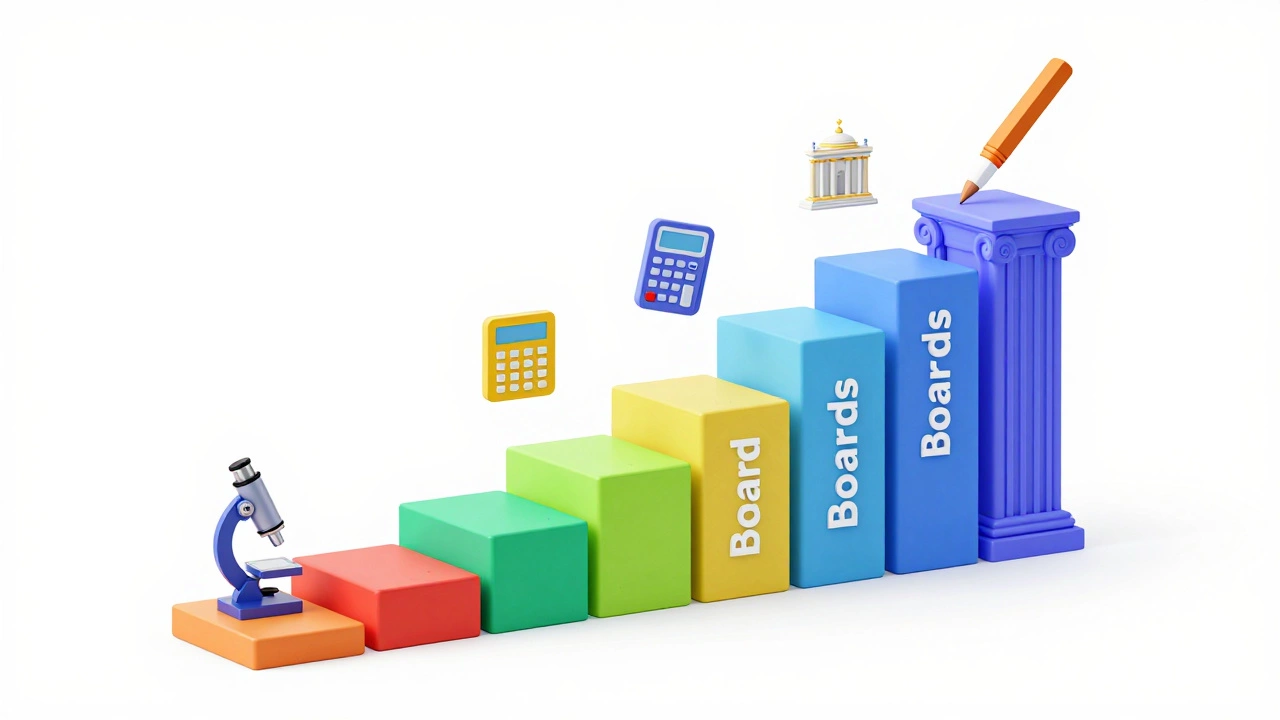
- Class 10 and 12 are the critical "Board" years with standardized national exams.
- The board frequently updates the syllabus to align with the National Education Policy (NEP) 2020.
- Internal assessments and practicals now carry significant weight alongside written tests.
What Exactly is the CBSE Framework?
To understand the syllabus, you first have to understand who is running the show. CBSE is the Central Board of Secondary Education, a national level board of education in India for public and private schools. It operates under the Ministry of Education, Government of India. Unlike state boards, which vary from one province to another, CBSE provides a uniform curriculum across the country. This is why it's the go-to choice for families who move frequently due to military or corporate jobs.
The actual content of the syllabus isn't written by the board itself, but by NCERT (National Council of Educational Research and Training). NCERT is the organization that develops the textbooks and pedagogical guidelines used by CBSE schools. If you're looking for the CBSE syllabus, you're essentially looking for the NCERT textbook list and the marking scheme provided by the board each year.
Breaking Down the Curriculum by Grade Level
The journey through a CBSE school is broken into distinct phases. You can't apply the same study habits in Class 3 that you'll need in Class 11. Here is how the focus shifts as a student grows.
The Primary Years (Classes 1 to 5)
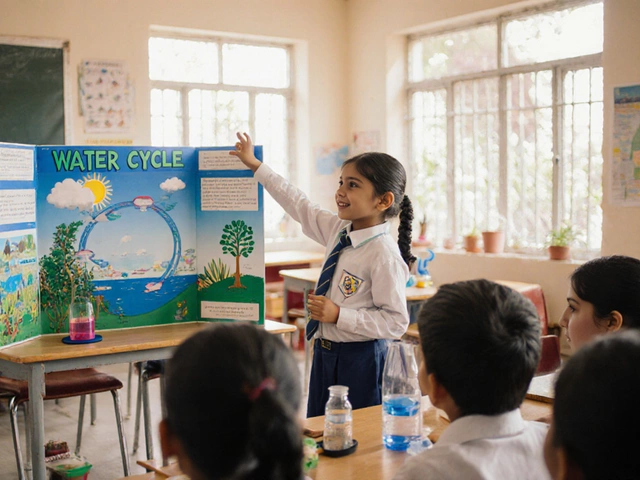
At this stage, the syllabus is all about curiosity and basic skills. The focus is on English, Mathematics, and Environmental Studies (EVS). There are no high-stakes exams here. Instead, the board emphasizes activity-based learning. For example, in EVS, students aren't just reading about plants; they are encouraged to grow a seed in a cup and observe it. The goal is to build a foundation in literacy and numeracy without causing burnout.
The Middle School Phase (Classes 6 to 8)
This is where things get a bit more serious. The "General Science" of primary school splits into Physics, Chemistry, and Biology, though they are still taught in one book. Social Science expands into History, Geography, and Political Science. This is also where third languages (like Sanskrit, French, or German) are often introduced. The syllabus starts introducing more formal logic and abstract mathematical concepts, like basic algebra and geometry, preparing students for the rigors of high school.
The Secondary Stage (Classes 9 and 10)
Class 10 is the first major milestone. The syllabus is designed to provide a comprehensive overview of all core subjects. Every student typically takes English, Mathematics, Science, and Social Science. However, the board allows for "skill subjects" like Artificial Intelligence, Information Technology, or Financial Markets. The CBSE syllabus for Class 10 is strictly followed in the board exams, and the marking scheme is very specific about how many points a student gets for a step-by-step math solution versus just the final answer.
The Senior Secondary Stage (Classes 11 and 12)
This is where the "one size fits all" approach ends. Students must choose a stream based on their career goals. This is a pivotal decision that determines their university options.
| Stream | Core Subjects | Common Career Paths | Difficulty Level |
|---|---|---|---|
| Science (Medical) | Physics, Chemistry, Biology, English | Medicine, Dentistry, Biotechnology | High |
| Science (Non-Medical) | Physics, Chemistry, Mathematics, English | Engineering, Architecture, Data Science | High |
| Commerce | Accountancy, Business Studies, Economics, English | CA, MBA, Finance, Banking | Moderate |
| Humanities/Arts | History, Political Science, Psychology, Sociology, English | Law, Journalism, UPSC, Psychology | Moderate |
The Impact of NEP 2020 on the Syllabus
If you're looking at a textbook from 2018, throw it away. The National Education Policy 2020 (or NEP 2020) is a comprehensive reform of the Indian education system to move away from rote memorization. This has fundamentally changed the CBSE syllabus in three ways.
First, there is a move toward Competency-Based Education. This means the board is less interested in whether you can recite a definition of "photosynthesis" and more interested in whether you can explain how a plant reacts when it's deprived of sunlight. You'll see more case-study questions and real-world application problems in the exams.
Second, the boundaries between streams are blurring. Under the new guidelines, a student in the Science stream might be able to take a course in Psychology or Fashion Studies. This flexibility acknowledges that a future engineer might also be a talented musician or historian.
Third, the syllabus has been "rationalized." The board realized that textbooks were becoming too bulky. They have removed redundant topics and overlapping chapters to reduce the cognitive load on students, focusing instead on the "core concepts" that actually matter for higher education.
How to Effectively Navigate the CBSE Syllabus
Knowing what is in the syllabus is one thing; conquering it is another. Many students make the mistake of buying expensive private guides and ignoring the NCERT books. That is a recipe for failure. The board exams are based almost exclusively on NCERT content.
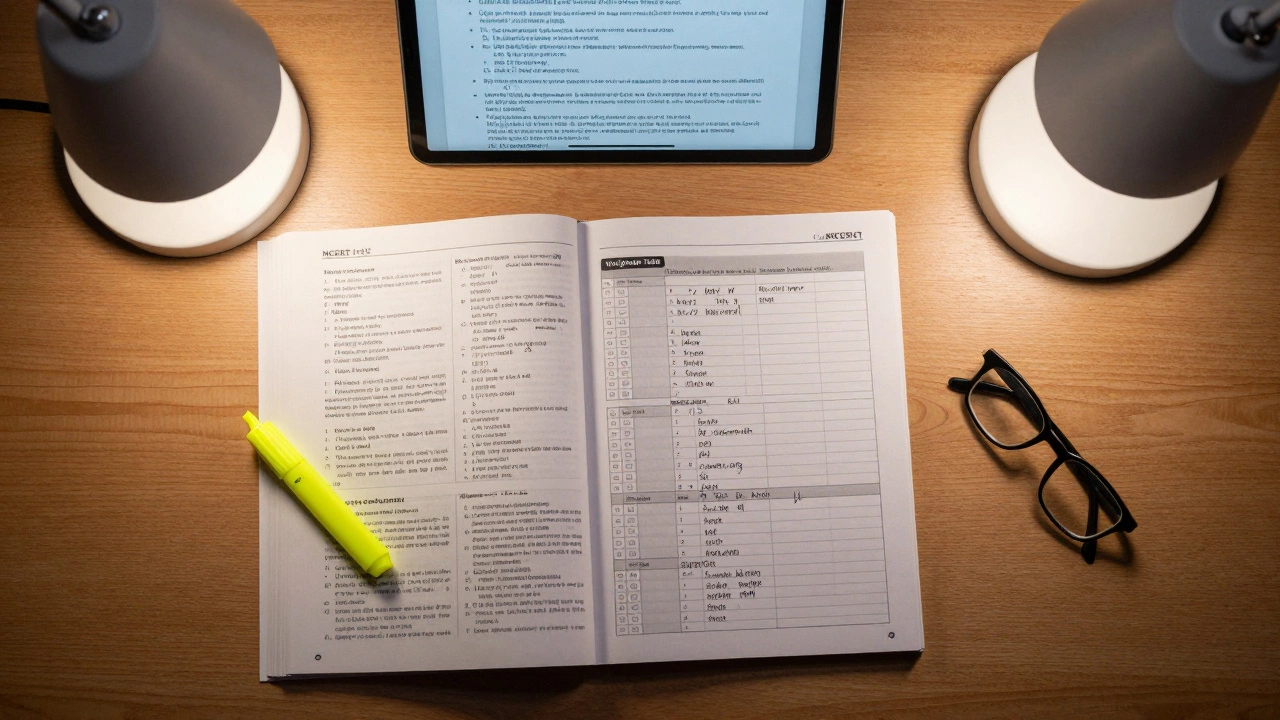
A smart way to approach the syllabus is to use the Weightage Table. Every year, CBSE releases a document showing how many marks are allocated to each chapter. If "Trigonometry" carries 12 marks and "Real Numbers" carries 6, it's a waste of time to spend an equal amount of energy on both. Focus your intensity where the marks are.
Also, don't ignore the Internal Assessment. The syllabus isn't just about the final three-hour exam. It includes periodic tests, practical files, and project work. In some subjects, these can account for 20% to 30% of your total grade. Missing a practical submission is like throwing away an easy 'A'.
Common Pitfalls and How to Avoid Them
One of the biggest traps students fall into is the "Sample Paper Obsession." They spend months solving previous years' papers without actually reading the syllabus chapters. While practice is key, the CBSE board often twists questions in the final exam. If you've only memorized a specific question from 2022, you'll struggle when the board asks the same concept from a different angle in 2026.
Another issue is ignoring the "Deleted Syllabus." Every year, the board issues a circular listing topics that will not be tested. Students often spend weeks studying these deleted sections because they are using old textbooks. Always check the official CBSE website for the most recent "curriculum rationalization" notice before you start a new chapter.
Is the CBSE syllabus harder than State Boards?
It depends on the state, but generally, CBSE is considered more geared toward national competitive exams like JEE or NEET. While the core concepts are similar, CBSE's focus on NCERT makes it more standardized and often more challenging in terms of conceptual application compared to some state boards that rely more on textbook memorization.
Can I change my stream after Class 11?
Yes, but it is difficult and usually must be done early in the academic session. You will need approval from your school principal and, in some cases, the board. Because the Class 11 syllabus is a prerequisite for Class 12, switching late means you'll have to catch up on a huge amount of missed foundational material.
What is the difference between the CBSE syllabus and the NCERT books?
Think of NCERT as the "content provider" (the books) and CBSE as the "examiner" (the syllabus). NCERT writes the textbooks, while CBSE decides which parts of those books will be tested, how the marks are distributed, and how the exam will be conducted.
Are practicals mandatory for all subjects in the CBSE syllabus?
Not for every subject, but they are mandatory for Science (Physics, Chemistry, Biology) and many vocational subjects. Even in some Humanities subjects, "project work" acts as the practical component. These are essential for your final grade.
How often does the CBSE syllabus change?
Major overhauls happen every few years (like with NEP 2020), but minor updates, such as removing a few chapters or changing the marking scheme, happen almost every academic year. Always check the official board circulars in March or April.
Next Steps for Success
If you're just starting your academic year, don't try to swallow the whole syllabus at once. Start by downloading the official curriculum PDF from the CBSE website. Map out your chapters against the number of months left before your exams. If you're a student, prioritize your weak subjects first-don't spend all your time on the subject you already love. If you're a parent, focus on ensuring your child has the latest NCERT editions, as older versions may contain outdated information that will only confuse them during the board exams.