
Professional Exam Difficulty Calculator
Compare the study hours and pass rates of the USMLE, Bar Exam, and CPA to determine which path aligns with your strengths.
Analysis Results
Recommended Study Time:
Average First-Time Pass Rate:
Primary Challenge:
Your Preparedness Level:
There is no single answer to what is the toughest American exam, but if you are looking for the ones that break people, it comes down to three heavy hitters: the United States Medical Licensing Examination (USMLE), the Uniform Bar Examination (UBE), and the Uniform Certified Public Accountant (CPA) Exam. These aren't just tests; they are gatekeepers for some of the most respected and high-stakes careers in the country.
When we talk about "tough," we usually mean two things: the sheer volume of information you have to memorize and the psychological toll of the failure rate. A test with a 90% pass rate might be hard, but it’s not "terrifying." The exams below sit in a different league. They demand years of preparation, thousands of dollars, and an emotional resilience that many students don’t realize they need until they are staring at the computer screen on test day.
The United States Medical Licensing Examination (USMLE)
For decades, Step 1 was scored numerically, creating a cutthroat competition where a difference of five points could determine whether a med student matched into a prestigious residency program or ended up in a less desirable one. In January 2022, the Federation of State Medical Boards (FSMB) changed the scoring to Pass/Fail. While this removed the stress of chasing a perfect number, it didn’t make the content easier. If anything, the pressure shifted entirely to your clinical rotations and Step 2 CK (Clinical Knowledge).
Why is it so brutal? Because the scope is impossible. You are expected to know everything from molecular biology and genetics to pharmacology and pathology. Imagine trying to memorize how every drug interacts with every organ system, while also understanding the genetic markers for hundreds of diseases. Students spend six months to a year studying full-time for this. The average study time is around 600 hours. That’s like working a second job for half a year, just to prepare for one eight-hour block of questions.
The mental health impact is real. Burnout among medical students peaks during Step 1 prep. The isolation, the endless practice questions (UWorld is the gold standard here), and the fear of failing can lead to anxiety disorders. Yet, the national pass rate hovers around 94-95%. Why is it still called the toughest? Because the cost of failure is catastrophic. Failing means delaying graduation, losing funding, and facing intense scrutiny from residency programs.
The Uniform Bar Examination (UBE)
If medicine is about knowing facts, law is about applying logic under extreme pressure. The Uniform Bar Examination is a standardized test used by 23 U.S. jurisdictions to assess whether candidates possess the minimum competence to practice law.
The Bar Exam is unique because it isn't just multiple choice. It includes essays and performance tests (PTs). The PT simulates a real legal task, like drafting a memo or a brief, using a library of laws and facts provided in a closed book. You have 150 minutes to read through pages of dense legal text, identify the issues, and write a coherent argument. There are no "right" answers in the traditional sense; there are only better and worse arguments.
The difficulty varies wildly by state. California has its own bar exam, which is notoriously difficult, with pass rates often dipping below 40% for first-time takers. The UBE, used in states like New York, Florida, and Texas, generally sees higher pass rates (around 70-80%), but the workload is immense. Law graduates typically spend 8-10 weeks preparing for the Bar, studying 10-12 hours a day. This period is known as "Bar Hell" for a reason.
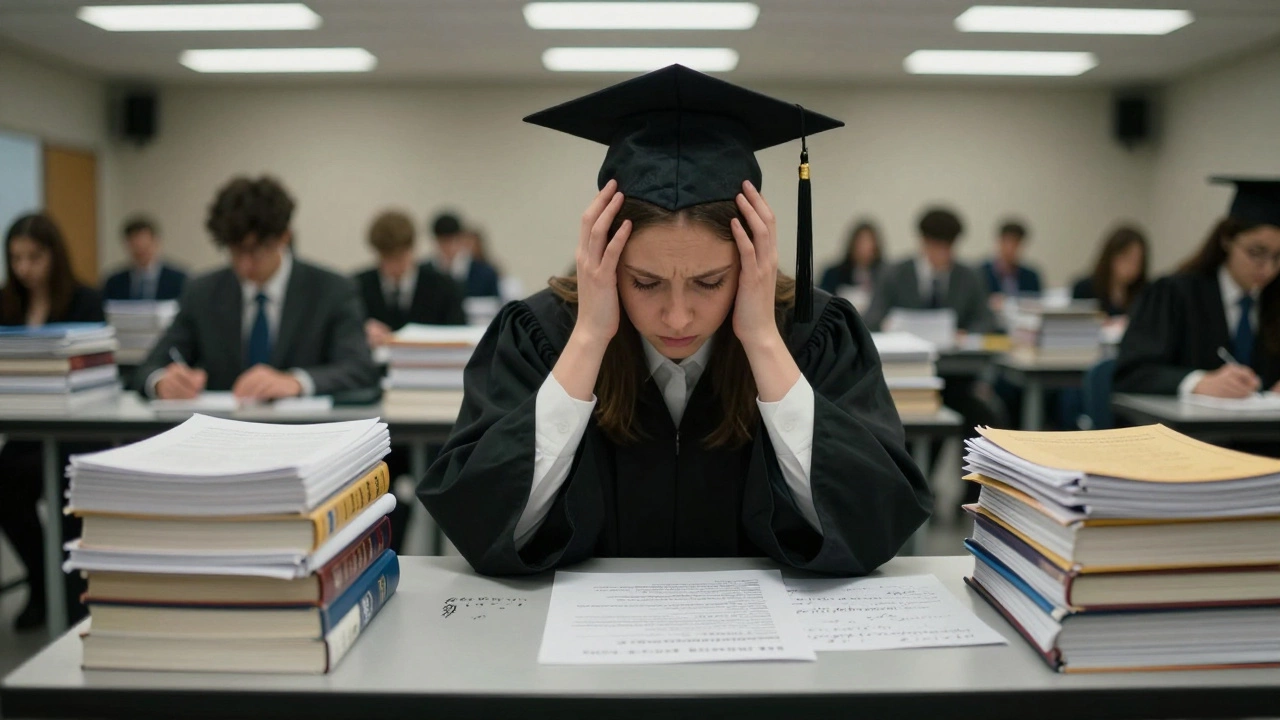
The stress comes from the ambiguity. In medical school, a broken bone is a broken bone. In law, a contract dispute depends on interpretation, precedent, and jurisdiction. You have to think like a lawyer, not just remember the law. The financial stakes are also high. Law school tuition averages over $50,000 per year. Failing the Bar means you cannot practice, rendering that massive investment nearly worthless unless you pivot careers.
The Uniform CPA Exam
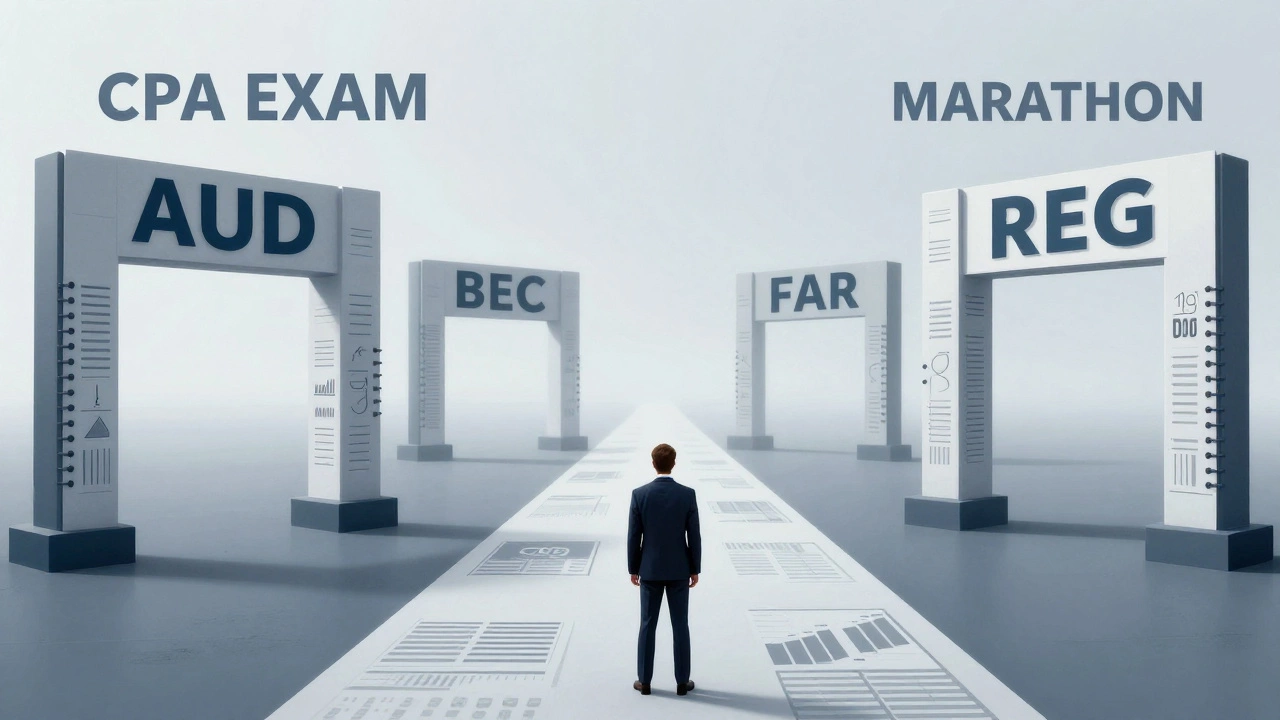
Don’t let the accountants fool you into thinking their exam is easy. The Uniform CPA Exam is a four-part test administered by the AICPA to certify individuals as Certified Public Accountants in the United States. It is a marathon, not a sprint.
The exam consists of four sections: Auditing and Attestation (AUD), Business Environment and Concepts (BEC), Financial Accounting and Reporting (FAR), and Regulation (REG). Each section is four hours long, featuring multiple-choice questions and task-based simulations. You must pass all four within an 18-month window. If you fail one section, the clock keeps ticking on the others. This creates a "use-it-or-lose-it" pressure that is uniquely stressful.
FAR is often cited as the hardest section because of its depth. You need to understand complex accounting standards, including those for non-profit organizations, government entities, and international reporting. The volume of material is staggering. Candidates spend an average of 300-400 hours studying for each section. That’s 1,200+ hours total. For context, that’s more study time than many undergraduate degrees require.
The pass rates tell the story. Historically, the overall pass rate for the CPA Exam hovers between 45% and 50% per sitting. FAR often has the lowest pass rate, sometimes dipping below 40%. Unlike the Bar, where you can retake failed sections immediately, the CPA has strict scheduling windows. Missing a window can delay your certification by months, impacting your career progression and salary potential.
Comparing the Titans: Which is Actually Harder?
To determine the "toughest," we need to look at metrics beyond just pass rates. We need to consider study time, content breadth, and format complexity.
| Exam | Average Study Time | Format | First-Time Pass Rate (Approx.) | Primary Challenge |
|---|---|---|---|---|
| USMLE Step 1 | 600+ hours | Multiple Choice | ~94% | Breadth of Basic Science |
| Uniform Bar Exam (UBE) | 400-500 hours | MCQ + Essays + PT | ~75% | Application & Ambiguity |
| CPA Exam (All 4 Parts) | 1,200+ hours total | MCQ + Simulations | ~45-50% per section | Volume & Time Pressure |
If you define "tough" by the amount of memorization required, USMLE Step 1 wins. The density of information is unmatched. If you define it by the lowest chance of success, the CPA Exam takes the crown due to its cumulative pass rate requirements. If you define it by the psychological stress of open-ended evaluation, the Bar Exam is the worst.
Honorable Mentions: Other Brutal Tests
While the Big Three dominate the conversation, other exams deserve a nod for their specific difficulties.
- GRE Subject Tests: Particularly in Mathematics and Physics, these tests are incredibly deep. They are designed to distinguish top graduate applicants, so the questions are often research-level problems.
- CFA Level III: For finance professionals, the Chartered Financial Analyst designation is grueling. Level III requires essay-style responses and portfolio construction tasks. The global pass rate is often around 35-40%.
- Series 7: While easier than the above, this securities licensing exam has a vast scope of regulations and products. First-time pass rates are around 60%, but the volume of rules is dizzying for beginners.
How to Survive the Toughest Exams
No matter which path you choose, the strategy for conquering these exams is similar. Here is what actually works, based on data from top performers.
- Active Recall Over Passive Reading: Don’t just re-read your notes. Use flashcards (Anki is popular among med students) and practice questions. Your brain needs to retrieve information, not just recognize it.
- Simulate Test Conditions: Take full-length practice exams under timed conditions. This builds stamina. Sitting for four hours straight is a physical challenge. Train your body to handle it.
- Manage Your Mental Health: Sleep is not optional. Studies show that sleep deprivation reduces cognitive function equivalent to being drunk. Prioritize 7-8 hours of sleep during prep.
- Find a Community: Isolation kills motivation. Join study groups or online forums. Sharing struggles normalizes the stress and provides practical tips.
The "toughest" exam is subjective. It depends on your strengths. Are you a memorizer? Go for Med School. Are you a logical debater? Law is your game. Are you a detail-oriented analyst? Accounting awaits. But whichever you choose, respect the process. These exams are designed to filter out those who aren’t committed. Show up, stay consistent, and trust your preparation.
Is the MCAT harder than the USMLE?
The MCAT (Medical College Admission Test) is generally considered less difficult than the USMLE Step 1. The MCAT tests foundational knowledge in biology, chemistry, physics, and psychology, along with critical analysis. The USMLE Step 1 goes much deeper into pathology, pharmacology, and clinical correlations. However, the MCAT is highly competitive because your score determines admission to medical school, whereas USMLE is a licensing requirement after you are already in school.
Which state has the hardest Bar Exam?
California consistently has the lowest pass rates for its bar exam, often hovering around 40-45% for first-time takers. New York and Florida also have challenging exams with lower pass rates compared to the national average. The Uniform Bar Examination (UBE) used by many other states tends to have higher pass rates, typically above 70%.
How much does it cost to take the CPA Exam?
The cost varies by state, but on average, candidates pay between $1,000 and $1,500 for exam fees alone. When you add review course materials (which can cost $2,000-$3,000) and application fees, the total investment can exceed $4,000. Retaking failed sections adds significantly to this cost.
Can I self-study for the USMLE Step 1?
Yes, many students self-study using resources like UWorld, First Aid for the USMLE Step 1, and Pathoma. However, given the volume of material, most successful candidates use a structured schedule and often supplement with question banks and video lectures. Pure self-study without active recall tools is rarely successful.
What happens if I fail the Bar Exam?
If you fail the Bar Exam, you can retake it in the next available testing window, usually six months later. Multiple failures can raise red flags for employers and may require additional documentation or interviews during character and fitness reviews. Some states limit the number of attempts.