If you're preparing for a competitive exam like UPSC, SSC, NEET, or CAT, you're probably spending hours every day studying. But not all study time is equal. The right app can turn scattered notes into a structured plan, turn passive reading into active recall, and turn frustration into progress. The wrong app? It just eats up time and leaves you feeling more overwhelmed.
There are hundreds of apps out there claiming to be the best. But most are cluttered with ads, outdated content, or designed for casual learners-not serious aspirants. So what actually works in 2025? It’s not about having the most features. It’s about having the right ones for your exam, your learning style, and your schedule.
What makes an app truly useful for competitive exams?
Not every app that says "exam prep" is built for the real grind. Top apps for competitive exams share a few non-negotiable traits:
- Up-to-date syllabus alignment-Exams change. A 2022 syllabus won’t help you crack a 2025 paper.
- High-quality practice questions-Thousands of questions mean nothing if they’re recycled or poorly written. Real exam patterns matter.
- Performance tracking-You need to know where you’re weak, not just how many tests you’ve taken.
- Offline access-Not everyone has stable internet. The best apps let you download lectures and quizzes.
- Minimal distractions-No pop-ups, no push notifications for unrelated products. Just focus.
Apps that ignore these basics are just digital notebooks with flashy logos. The ones that get them right become part of your daily routine.
Top apps for UPSC and civil services prep
UPSC aspirants need more than just static PDFs. They need daily current affairs, answer-writing practice, and mock interviews-all in one place.
Drishti IAS stands out because it doesn’t just feed you news. It filters the noise. Every morning, you get a 5-minute digest of what actually matters for the mains and interview. The answer-writing module lets you submit responses and get feedback from past toppers. It’s not free, but for serious candidates, the cost is justified by the structure it brings to chaos.
BYJU’S IAS offers video lectures from experienced faculty and integrates with their test series. The interface is clean, and the AI-driven revision planner adjusts based on your performance. If you’re visual learner who learns better by watching than reading, this is one of the strongest options.
Unacademy UPSC has a massive library of free content, especially for prelims. Their live doubt-clearing sessions with subject experts happen daily. The downside? The free tier is packed with ads. But if you’re on a tight budget and disciplined, you can still get 80% of what you need.
Best apps for SSC, RRB, and banking exams
These exams are more about speed and accuracy than depth. Quant, reasoning, English, and general awareness are the big four. Time management is everything.
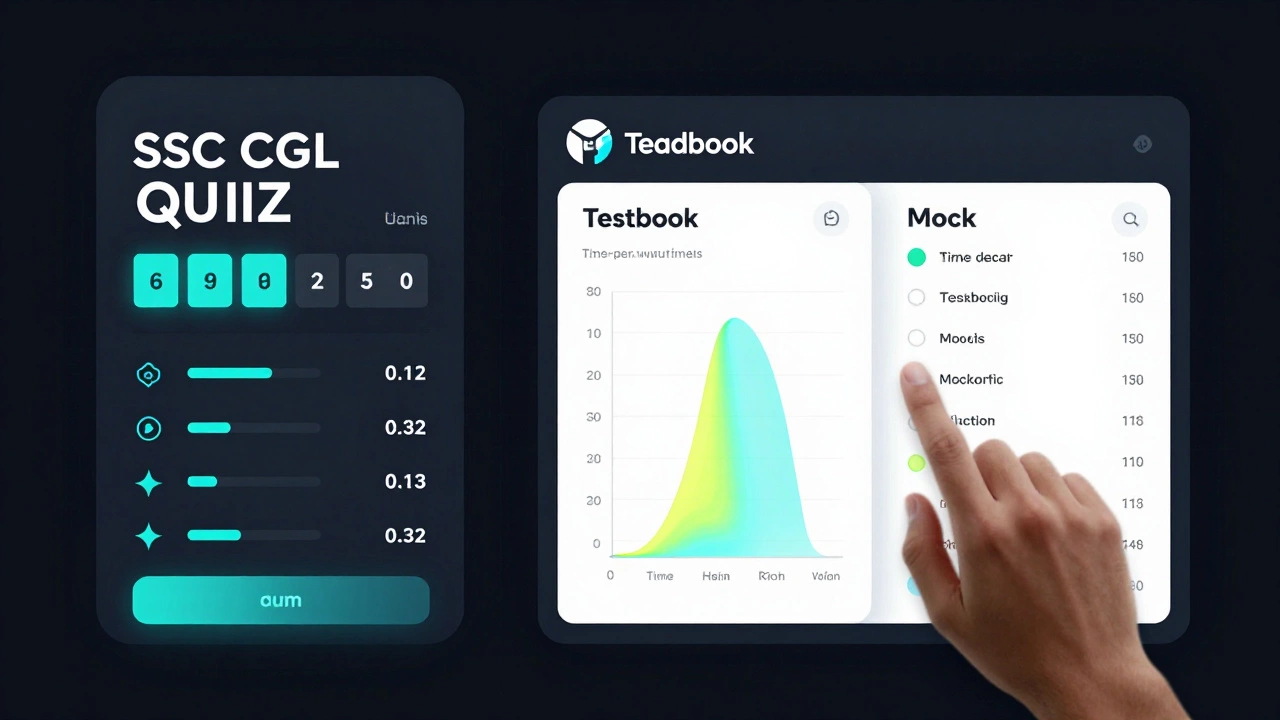
Gradeup (now BYJU’S Exam Prep) is the go-to for millions. It offers daily quizzes with a timer-just like the real exam. The question bank has over 100,000 questions tagged by difficulty and topic. You can sort by exam: SSC CGL, IBPS PO, RRB NTPC. The analytics show your accuracy trend over time, so you know if you’re improving or just spinning wheels.
Testbook is a close second. Its strength is in its mock tests. Each one mirrors the exact pattern, time limits, and even the interface of the actual exam. After each test, you get a detailed breakdown: which section you lost time on, which question types you keep missing, and how you compare to thousands of other test-takers.
Both apps have strong free tiers. But if you’re serious about cracking the cutoff, spending ₹500-800 on their premium plans gives you access to live classes, previous year papers with solutions, and personalized study plans.
Apps that dominate for NEET and medical entrance exams
NEET is all about mastering biology, chemistry, and physics at a high volume. Memorization is key-but not mindless. You need spaced repetition and active recall.
NeetPrep is built by former NEET toppers. It uses spaced repetition algorithms to show you flashcards just before you’re about to forget them. The app has over 50,000 high-yield facts tagged to NCERT chapters. You can mark concepts as "weak," and the app will auto-generate daily revision sets.
Physics Wallah has exploded in popularity because of its free, no-nonsense video lectures. Alakh Pandey’s teaching style cuts through the fluff. The app includes chapter-wise MCQs with video solutions. Many students use it alongside their coaching, not instead of it. The offline mode works flawlessly-even on low-end phones.
One thing to watch: some apps overload you with too many videos. Stick to one or two sources. Depth beats breadth every time in NEET prep.
Apps for CAT, XAT, and MBA entrance exams
MBA exams test logic, verbal ability, and data interpretation-not rote learning. You need to think fast and adapt.
Handa Ka Funda is the quiet favorite among self-studiers. Its CAT-specific question bank is curated from actual past papers. The verbal ability section includes reading comprehension passages from real CAT sources. The analytics show your speed in DI sets and accuracy in LR puzzles-two areas where most candidates fail.
Career Launcher’s MBA Prep App offers adaptive learning. It starts with a diagnostic test and then builds a custom plan. If you’re weak in quant, it pushes more practice on algebra and geometry. If your RC accuracy is low, it gives you 3 passages a day with timed drills.
Don’t waste time on apps that promise "crack CAT in 30 days." Real progress comes from daily consistency, not shortcuts.
What to avoid in exam prep apps
Not all apps are created equal. Here’s what to skip:
- Apps with too many ads-If you’re getting interrupted every 3 minutes, you’re losing focus. Ads aren’t just annoying-they break your study rhythm.
- Apps with outdated content-Check the last update date. If it’s from 2022 and your exam is in 2025, move on.
- Apps that promise "guaranteed success"-No app can guarantee a rank. If it sounds too good to be true, it is.
- Apps that don’t let you download content-What if your internet cuts out during a mock test? You need offline access.
- Apps that don’t track your progress-If you can’t see your improvement over weeks, you’re just going through the motions.
Stick to apps that treat you like a serious candidate-not a target for upsells.
How to pick the right app for you
There’s no single "best" app. The best one is the one you’ll actually use.
Ask yourself:
- What exam are you taking? (UPSC, NEET, SSC, CAT?)
- What’s your biggest weakness? (Time management? Weak in biology? Poor accuracy in quant?)
- How much time can you commit daily? (30 minutes? 2 hours?)
- Do you learn better by watching, reading, or doing?
If you’re weak in current affairs for UPSC, go for Drishti IAS. If you need daily timed quizzes for SSC, pick Gradeup. If you’re drowning in NEET syllabus, NeetPrep’s flashcards will help you reclaim control.
Try the free versions first. Most apps offer 7-14 days of premium access. Use that time to test the interface, question quality, and analytics. Don’t buy anything until you’ve seen how it fits into your actual routine.
Final tip: Combine apps, don’t collect them
Don’t download five apps and use none of them. Pick one primary app for your main subject and one secondary for current affairs or revision.
Example: Use Gradeup for daily SSC practice and Inshorts for 60-second current affairs updates. That’s it. Two apps. One focused on practice. One on awareness.
Overloading yourself with tools is a form of procrastination. The real work happens when you open your app, start a quiz, and finish it without distractions-not when you’re scrolling through ten different apps looking for the "perfect" one.
The best app won’t make you pass. But the right one will make your effort count.
Which app is best for UPSC preparation?
Drishti IAS is widely regarded as the best for UPSC because of its daily current affairs digest, answer-writing practice with feedback from toppers, and structured revision modules. BYJU’S IAS and Unacademy UPSC are strong alternatives, especially if you prefer video-based learning or need free content.
Is Gradeup better than Testbook for SSC exams?
Both are excellent, but they serve slightly different needs. Gradeup has a larger question bank and better daily quizzes with timers, making it ideal for building speed. Testbook excels in mock tests that closely mimic the actual SSC exam interface and pattern. If you’re strong on basics but weak on test-day nerves, go with Testbook. If you need daily practice to stay sharp, choose Gradeup.
Can I prepare for NEET using only an app?
Yes, many students crack NEET using just apps like NeetPrep and Physics Wallah. These apps offer NCERT-aligned content, high-yield flashcards, and video solutions to past papers. But success depends on discipline. You need to treat app study like a full-time job-daily practice, timed tests, and active revision. Apps can replace coaching, but not your effort.
Are free exam prep apps worth it?
Absolutely-if you use them right. Free apps like Unacademy UPSC, Physics Wallah, and Gradeup offer 70-80% of the content you need. The catch? They’re ad-supported and may limit access to mock tests or live classes. If you’re self-disciplined and can filter out distractions, free apps are more than enough to clear most exams. Pay only when you need advanced analytics, personalized plans, or doubt-clearing sessions.
How do I know if an app is updated for 2025 exams?
Check the app’s description on Google Play or Apple App Store for mentions of the latest exam pattern or syllabus changes. Look for release notes-apps that update monthly are more reliable. Avoid apps that haven’t been updated in over a year. Also, look for user reviews mentioning "new questions" or "updated current affairs"-that’s a good sign.