Learning Platform Selector
Find Your Ideal Learning Platform
What's your primary learning goal?
What's your budget like?
How much time can you commit?
Do you need recognized credentials?
Your Recommended Platform
Coursera
Ideal for career advancement with university-backed credentials
If you’ve ever stared at a screen full of online course options and felt overwhelmed, you’re not alone. With so many platforms promising to teach you everything from Python to project management, choosing the right one isn’t just about price-it’s about what actually works for your goals. The best learning platform for online courses isn’t the same for everyone. It depends on what you want to learn, how you learn best, and what you plan to do with that knowledge after.
What Makes a Learning Platform Actually Good?
Not all platforms are built the same. Some feel like digital libraries with a few videos thrown in. Others feel like classrooms with real feedback, deadlines, and community. The best platforms don’t just host content-they create progress.
Here’s what separates the good from the great:
- Course quality: Are instructors industry professionals or just enthusiastic amateurs?
- Structure: Is there a clear path from beginner to advanced, or just a pile of random videos?
- Interaction: Can you ask questions, get feedback, or work with others?
- Credentials: Will completing this course mean anything to employers or schools?
- Access: Can you download materials? Watch offline? Keep access after payment ends?
Many platforms check one or two of these boxes. Only a few nail all five.
Coursera: For Career-Driven Learners
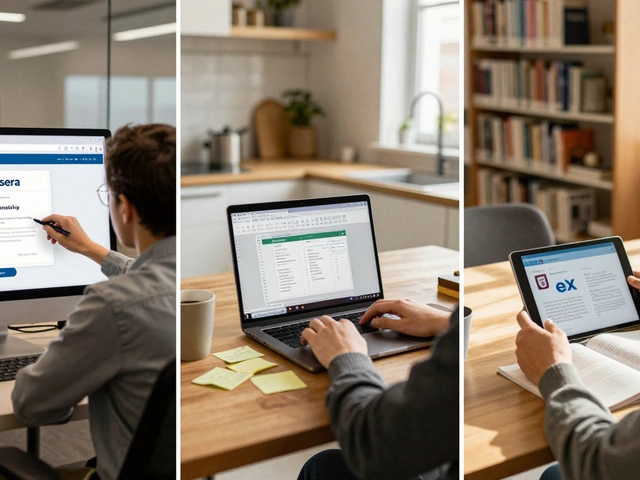
If you’re learning to get a job, switch careers, or earn a promotion, Coursera is the most reliable choice. It partners with top universities like Stanford, Yale, and the University of London, and companies like Google and IBM.
Its Specializations and Professional Certificates are designed with industry input. For example, the Google Data Analytics Certificate takes six months to complete, includes hands-on projects using real tools like Tableau and R, and ends with a credential you can add to your LinkedIn profile. Employers recognize it. Recruiters search for it.
Unlike some platforms, Coursera lets you audit courses for free-meaning you can watch lectures without paying. But if you want graded assignments, feedback, or a certificate, you pay. Prices range from $39 to $99 per month for subscriptions, or $49-$79 for individual certificates.
It’s not perfect. Some courses feel outdated. The interface can be clunky. But if your goal is to build a resume-worthy skill, Coursera still leads the pack.
Udemy: For Practical, On-Demand Skills
Udemy is the Amazon of online learning. Anyone can create a course. That means you get a massive library-over 215,000 courses covering everything from knitting to cryptocurrency trading.
It’s ideal if you want to learn something specific and fast. Need to learn Excel pivot tables? There’s a 45-minute course for $12. Want to build a Shopify store? There’s a 12-hour bootcamp. Sales happen constantly-courses often drop to $10-$15, even if they’re originally priced at $200.
But here’s the catch: quality varies wildly. A course with 10,000 students and a 4.7 rating might be excellent. Another with 500 students and the same rating could be a waste of time. You have to read reviews carefully. Look for instructors with real-world experience, not just “gurus.”
Udemy doesn’t offer accredited certificates. No employer will recognize it as a formal credential. But if you’re learning for personal use, side hustles, or to fill a skill gap, it’s unbeatable for price and variety.
edX: For Academic Rigor and Free Learning
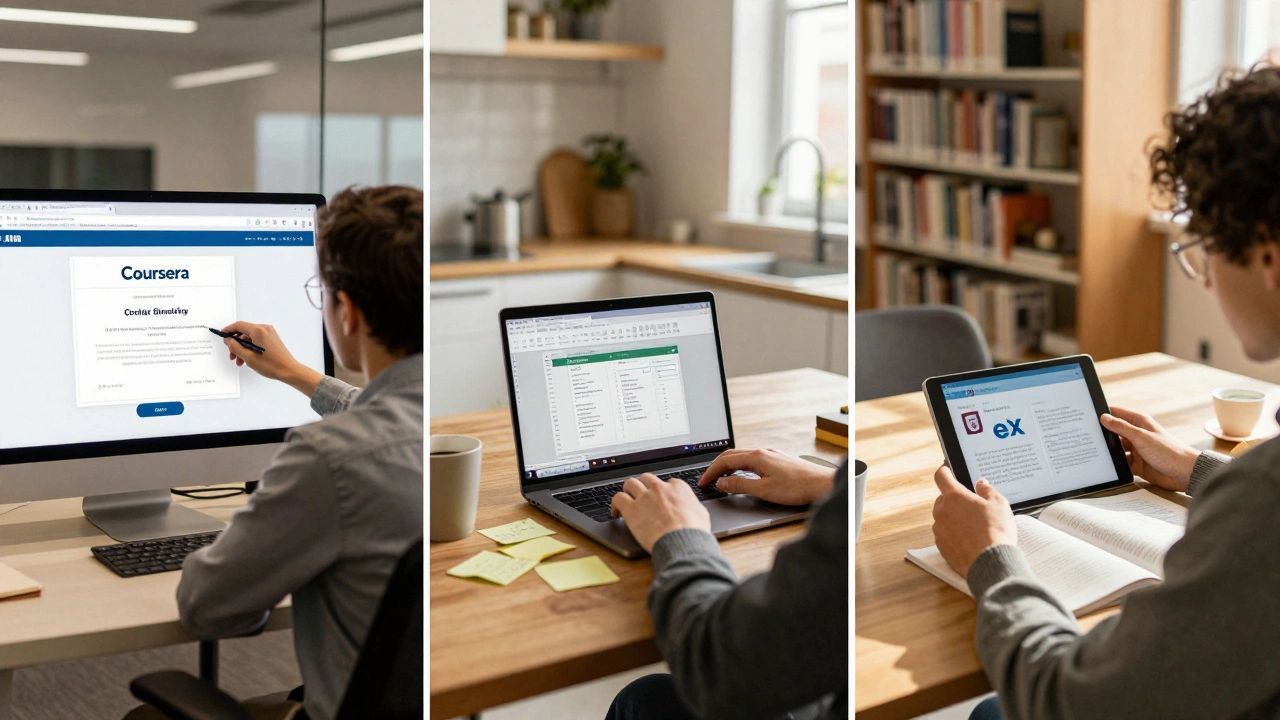
Founded by Harvard and MIT, edX feels more like a university portal than a marketplace. It offers free access to full university-level courses-from computer science to philosophy.
Its MicroMasters programs are serious credentials. For example, the MIT MicroMasters in Supply Chain Management requires five graduate-level courses, a final exam, and a capstone project. Completing it can earn you credit toward a full master’s degree at top universities.
Unlike Coursera, edX gives you free access to course materials. You only pay if you want a verified certificate. That makes it perfect for students on a budget or people who just want to learn without pressure.
It’s not the best place to learn how to use Canva or write a sales email. But if you want to understand the theory behind machine learning, economics, or public health, edX delivers depth you won’t find elsewhere.
LinkedIn Learning: For Professionals Already on LinkedIn
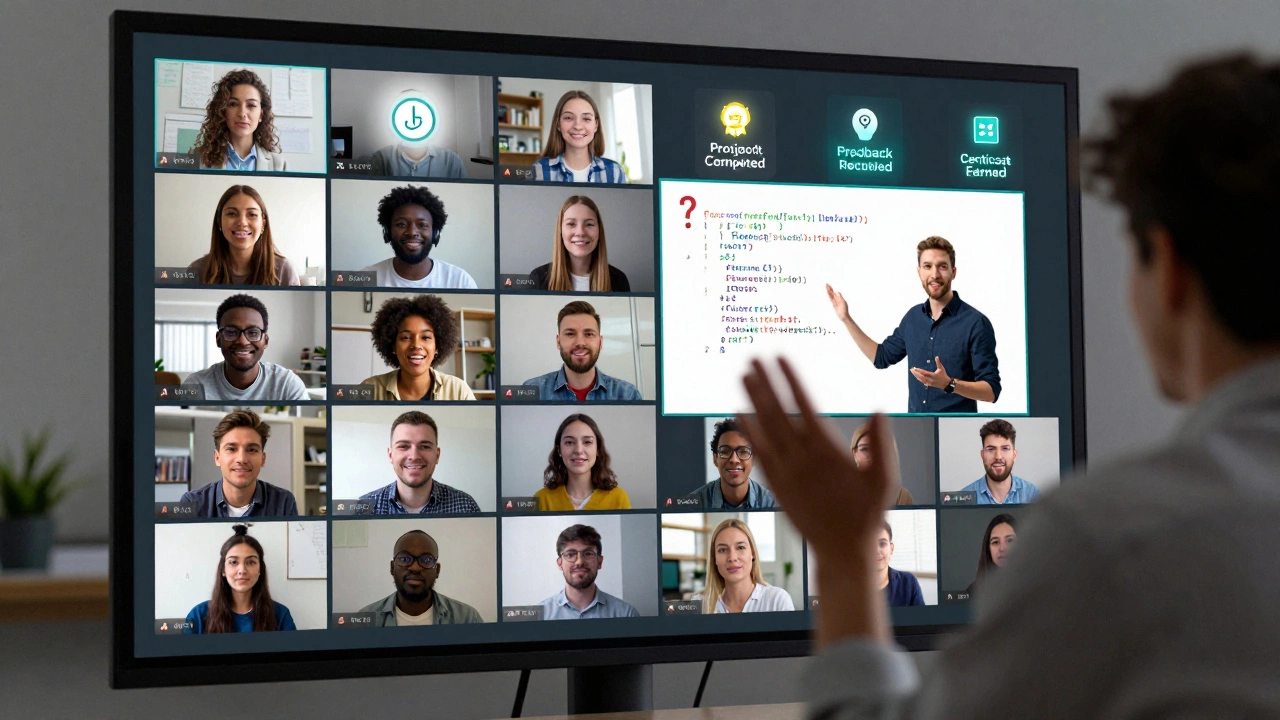
If you’re already spending time on LinkedIn-checking updates, connecting with colleagues, applying for jobs-LinkedIn Learning fits right in. It’s owned by Microsoft, and its content is curated for working professionals.
The library has strong offerings in business skills: leadership, communication, data analysis, and software like Microsoft Teams, Power BI, and Azure. Courses are short (2-10 minutes), easy to digest, and often include downloadable exercise files.
Here’s the real advantage: your completed courses show up on your LinkedIn profile. Recruiters see them. It’s passive career-building.
It costs $39.99/month or $299.99/year. If you’re already paying for LinkedIn Premium, it’s included. For corporate users, many companies license it for employees. If you’re in a corporate job, check with HR before paying yourself.
MasterClass: For Inspiration, Not Skill-Building
MasterClass isn’t about learning how to do something. It’s about learning from someone who’s mastered it.
You get Gordon Ramsay teaching you how to cook a perfect steak. Serena Williams breaking down her serve. Neil Gaiman explaining how to write a story. The production quality is cinematic. The instructors are celebrities.
But don’t expect hands-on practice. There are no quizzes. No assignments. No feedback. You’re watching a show, not taking a class.
It’s $180/year for unlimited access. Great if you want motivation, storytelling, or to peek behind the curtain of greatness. Terrible if you want to build a skill you can apply tomorrow.
How to Pick the Right One for You
Here’s a simple decision tree:
- Do you want a certificate employers recognize? → Go with Coursera or edX.
- Do you need to learn something specific, fast, and cheap? → Go with Udemy.
- Are you a professional who uses LinkedIn daily? → Try LinkedIn Learning.
- Do you want to learn like a college student, without paying? → Use edX’s free courses.
- Are you looking for inspiration, not instruction? → MasterClass.
Most people benefit from using more than one. Take a free edX course to understand the theory. Then use Udemy to practice the tools. Finally, earn a Coursera certificate to show on your resume.
What to Avoid
Not all platforms are worth your time. Stay away from:
- Platforms with no instructor credentials listed
- Courses with no reviews or only 5-star reviews (they’re fake)
- Those promising “get rich quick” results
- Services that charge monthly without a clear refund policy
Also, avoid buying courses just because they’re on sale. Ask yourself: Will I actually use this in the next 6 months? If not, skip it.
Final Tip: Start Free, Then Pay
Almost every platform offers free trials or free course audits. Use them. Spend a week trying out one course on Coursera, one on Udemy, and one on edX. See which interface feels natural. Which instructor speaks to you? Which assignments make you think?
Learning isn’t about the platform. It’s about consistency. The best platform is the one you’ll actually use.
Is Coursera worth the money?
Yes, if you’re aiming for career advancement. Coursera’s certificates from top universities and companies like Google are recognized by employers. The cost is justified if you’re using the credential to land a job or promotion. For casual learners, auditing courses for free might be enough.
Can I get free courses with certificates?
Most platforms charge for certificates. But edX and Coursera let you audit courses for free-you can watch all the videos and read materials. If you need the certificate, you’ll pay. Some financial aid options exist on Coursera for those who qualify.
Which platform is best for coding?
For structured coding paths with projects and certificates, Coursera’s IBM or Google IT Support Certificates are strong. For hands-on practice and quick tutorials, Udemy has hundreds of coding bootcamps at low prices. FreeCodeCamp (not listed here) is also a top free alternative for coding.
Do I need to pay monthly for online courses?
No. Udemy and MasterClass offer one-time payments. Coursera and LinkedIn Learning use subscriptions, but you can cancel anytime. edX lets you pay only for certificates. Choose based on how many courses you plan to take. If you’re doing just one or two, pay per course. If you’re learning constantly, a subscription saves money.
Are online course certificates valuable?
It depends. Certificates from universities (Coursera, edX) or big tech companies (Google, IBM) carry weight. Certificates from unknown instructors on Udemy or random platforms? Not so much. Employers care more about skills than badges. But a verified certificate helps you pass HR filters and stand out in applications.
Next Steps
Don’t wait for the perfect platform. Start with one free course today. Pick a skill you’ve been putting off-maybe Excel, public speaking, or basic accounting. Find a short course on edX or Udemy. Spend 20 minutes. Then decide: Do you want more? If yes, invest in a certificate. If not, try something else.
The goal isn’t to find the best platform. It’s to find the one that gets you learning-and keeps you going.