
CBSE School Suitability Analyzer
There is no single "number one" CBSE school. Use this tool to evaluate how well a specific school matches your child's needs based on the criteria that actually matter.
There is no single "number one" CBSE school in India. If you are looking for a definitive list that names one institution as the absolute best, you will be disappointed. The Central Board of Secondary Education (CBSE) does not publish an official ranking of its affiliated schools. Instead, it releases pass percentages and board results annually. Many private agencies and media outlets create their own lists, but these rankings often rely on outdated data or subjective criteria like infrastructure rather than actual teaching quality.
Finding the right school is less about chasing a title and more about matching your child’s needs with a school’s specific strengths. One school might be unbeatable in science labs, while another excels in sports or arts. This article breaks down how to evaluate CBSE schools effectively, identifies consistently high-performing institutions, and helps you avoid common pitfalls in the selection process.
Why Official Rankings Don't Exist
The Central Board of Secondary Education is the national council for school education in India that sets curriculum standards and conducts board exams. Its primary role is regulation and standardization, not competition between schools. When the CBSE releases annual reports, they highlight aggregate performance metrics, such as the percentage of students scoring above 90% in Class 10 and Class 12 exams. However, they do not rank individual schools from first to last.
This lack of official hierarchy exists because educational outcomes depend on many variables beyond just test scores. A school in a rural area might have lower average marks due to resource constraints but could offer exceptional personal attention and community values. Conversely, a prestigious city school might have high averages but suffer from intense pressure and burnout among students. Relying solely on board exam percentages gives you an incomplete picture of a school’s ecosystem.
Instead of looking for a "top" label, parents should look for consistency. Schools that maintain high pass rates year after year, regardless of minor fluctuations in question paper difficulty, demonstrate strong pedagogical foundations. Look for schools that publish transparent results and engage actively with parents, rather than those that hide behind vague marketing claims.
Criteria That Actually Matter
When evaluating which CBSE school is best for your child, shift your focus from fame to functionality. Here are the concrete factors that determine a school’s true quality:
- Teacher Retention and Qualifications: High turnover rates are a red flag. A school with experienced teachers who stay for decades provides continuity in learning. Check if teachers have specialized training in modern pedagogy, not just subject mastery.
- Student-Teacher Ratio: The ideal ratio for effective learning is between 1:25 and 1:30. Larger classes make it difficult for teachers to address individual learning gaps. Smaller ratios allow for personalized feedback and better classroom management.
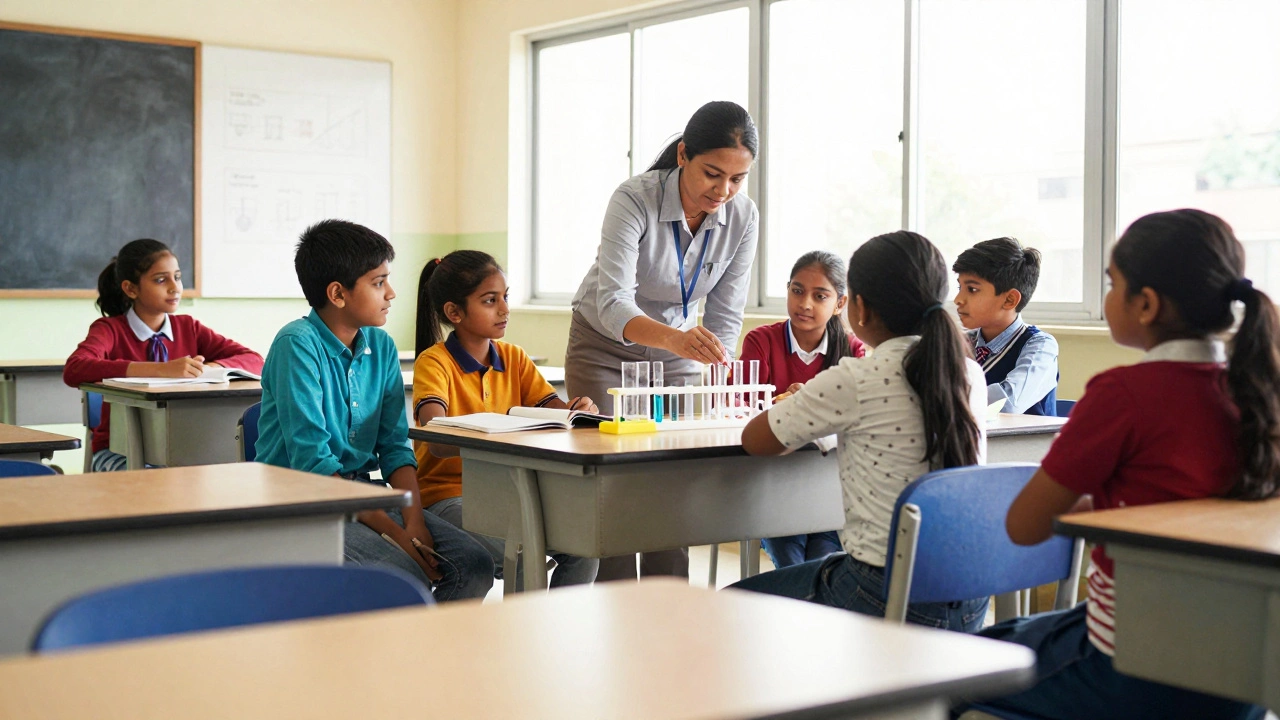
- Infrastructure vs. Usage: A fancy library means nothing if it is closed most days. Visit the school during active hours. Are the science labs being used for experiments, or are they just display rooms? Is the sports ground well-maintained and accessible?
- Holistic Development Programs: Does the school offer clubs, debates, theater, and sports alongside academics? Top-performing students often thrive in environments that balance academic rigor with extracurricular engagement.
- Parental Involvement Policies: Schools that encourage regular parent-teacher meetings and provide clear communication channels tend to have better student outcomes. Look for transparency in fee structures and disciplinary policies.
These criteria provide a realistic framework for assessment. A school that scores high on these practical measures will likely deliver better long-term results than one that simply boasts about past toppers.
Consistently High-Performing CBSE Schools
While there is no official number one, certain schools have built reputations for excellence over decades. These institutions frequently appear in independent surveys and are known for producing students who excel in competitive exams like JEE, NEET, and international competitions. Note that "best" here refers to consistent academic output and holistic development, not a guaranteed ranking.
| School Name | Location | Key Strengths | Notable Features |
|---|---|---|---|
| Kendriya Vidyalaya Sangathan (KVS) Schools | Pan-India | Standardized quality, affordable fees | Government-run, serves defense and central employees' children |
| Delhi Public School (DPS) Network | Multiple Cities | Strong alumni network, balanced curriculum | One of the largest school networks in India with consistent results |
| Sanskriti School | New Delhi | Academic rigor, small batch sizes | Known for high percentage of students in top IITs and medical colleges |
| Birla Vidya Niketan | New Delhi | Innovation-focused, strong STEM emphasis | Part of the Birla Group, integrates technology in learning |
| Carmel Convent School | Ranchi/New Delhi | Discipline, value-based education | Long-standing reputation for character building alongside academics |
It is important to understand that admission to these schools is highly competitive. They often use lotteries, interviews, or entrance tests for younger grades. For higher grades, transfer certificates are rarely available unless there are exceptional circumstances. Therefore, planning ahead is crucial if you aim for these institutions.
Regional Variations in School Quality
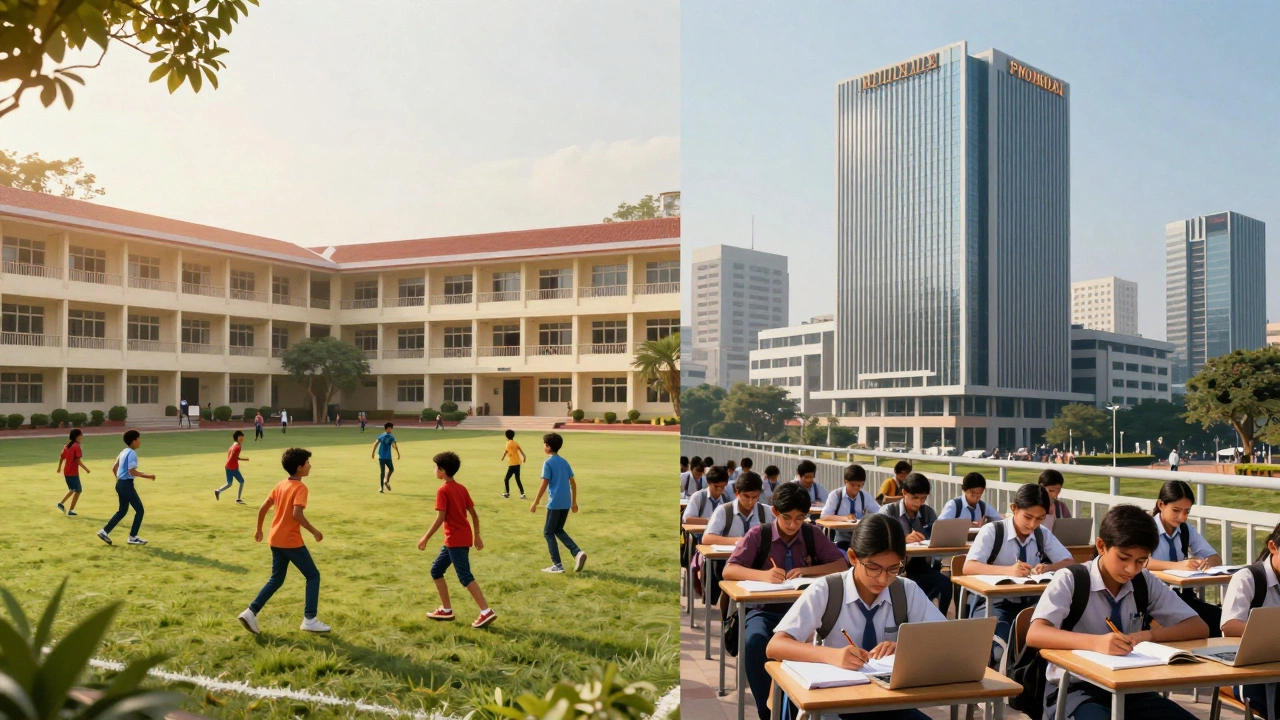
The concept of a "top" school varies significantly by region. A school considered elite in a tier-2 city might not compete academically with a mid-tier school in Mumbai or Bangalore. Urban centers generally have more resources, better-trained teachers, and greater access to coaching institutes for competitive exams.
In metropolitan areas like Delhi, Mumbai, and Chennai, the competition is fierce. Parents often supplement school education with external coaching for subjects like Mathematics and Science. In contrast, schools in smaller towns may offer a more relaxed environment with less pressure, which can benefit students who struggle with high-stress academic cultures.
Consider your lifestyle and commute when choosing a school. A top-rated school that requires a two-hour daily commute can lead to fatigue and reduced study time for your child. Proximity to home is often a underrated factor in overall well-being and academic performance.
Common Myths About CBSE Rankings
Misinformation spreads quickly in the education sector. Let’s debunk some common myths that influence parental decisions:
- Myth: Higher Fees Equal Better Education. While expensive schools often have better infrastructure, they do not guarantee better teaching. Some low-cost government or aided schools produce outstanding results through dedicated teachers and disciplined environments.
- Myth: Only Board Exam Results Matter. Board exams are important, but they are just one milestone. Schools that focus only on rote learning for boards often fail to develop critical thinking skills needed for university and beyond.
- Myth: Private Schools Are Always Superior. Many Kendriya Vidyalayas and Navodaya Vidyalayas outperform private schools in national-level assessments. These government initiatives provide high-quality education at minimal cost.
- Myth: Admission Guarantees Future Success. Getting into a famous school is not enough. Student effort, parental support, and peer influence play larger roles in determining long-term success.
Avoid making decisions based on hearsay or social status. Visit multiple schools, talk to current parents, and observe classroom interactions before committing.
How to Evaluate a School Yourself
You don’t need an expert consultant to assess a school. Follow this step-by-step approach to make an informed decision:
- Check Official CBSE Records: Visit the CBSE website to verify the school’s affiliation status and recent board results. Look for trends over the last five years, not just the latest year.
- Visit During School Hours: Schedule a visit when classes are in session. Observe student engagement, teacher demeanor, and campus atmosphere. Are students curious? Do they ask questions?
- Talk to Current Parents: Connect with parents of older students. Ask about homework load, teacher responsiveness, and extracurricular opportunities. Their firsthand experience is invaluable.
- Review the Curriculum Beyond Textbooks: Ask about project-based learning, field trips, and skill-development workshops. A good CBSE school integrates practical applications into theoretical concepts.
- Assess Safety and Discipline: Ensure the school has robust safety protocols, including CCTV surveillance, trained staff, and clear anti-bullying policies.
This hands-on approach gives you a realistic view of the school’s culture and operational efficiency. Trust your instincts-if something feels off during the visit, it probably is.
Alternative Options for High-Quality Education
If top CBSE schools are inaccessible due to location or admission constraints, consider alternative pathways. Many state boards and international curricula offer comparable or superior education depending on your goals.
For instance, the Indian Certificate of Secondary Education (ICSE) is known for its detailed syllabus and emphasis on language skills. International boards like IB (International Baccalaureate) or Cambridge IGCSE focus on critical thinking and global perspectives. However, if your goal is preparation for Indian competitive exams like JEE or NEET, CBSE remains the preferred choice due to its alignment with these tests.
Additionally, online learning platforms and hybrid models are emerging as viable supplements. Schools that integrate digital tools effectively can provide personalized learning experiences even in larger classes. Look for institutions that embrace technology without replacing human interaction.
Final Thoughts on Choosing the Right Fit
There is no universal "best" CBSE school. The right school depends on your child’s learning style, your family’s values, and your logistical constraints. Focus on schools that prioritize holistic development, maintain transparent communication, and demonstrate consistent academic performance. Avoid being swayed by flashy brochures or aggressive marketing tactics. Instead, invest time in visiting campuses, talking to stakeholders, and understanding the school’s philosophy.
Remember, education is a partnership between the school, the student, and the parents. A supportive home environment combined with a competent school system yields the best results. Start your search early, remain open-minded, and choose a school where your child will feel happy, safe, and inspired to learn.
Does CBSE release an official list of top schools?
No, the CBSE does not publish an official ranking of schools. It only releases aggregate board exam results and pass percentages. Any list claiming to be an official CBSE ranking is unofficial and created by third-party organizations.
What is the difference between KVS and DPS schools?
Kendriya Vidyalaya Sangathan (KVS) schools are government-run institutions primarily for children of central government employees, offering standardized education at low cost. Delhi Public School (DPS) is a private trust-managed network with higher fees, broader infrastructure, and a large alumni base. Both follow the CBSE curriculum but differ in management, accessibility, and resource allocation.
Are expensive CBSE schools always better?
Not necessarily. While higher fees often correlate with better facilities, teaching quality and student outcomes depend on teacher dedication, curriculum implementation, and student engagement. Many affordable schools produce excellent results through disciplined environments and focused instruction.
How can I check a school's past performance?
You can check a school's past performance by visiting the official CBSE website for board result statistics, reviewing the school's annual report, and speaking with current parents. Look for consistent trends in pass rates and top scorers over several years rather than isolated successes.
Is CBSE better than ICSE for competitive exams?
CBSE is generally considered more aligned with Indian competitive exams like JEE and NEET due to its concise syllabus and pattern similarity. ICSE offers a broader and deeper curriculum, which is beneficial for general knowledge and language skills but may require additional preparation for engineering and medical entrance tests.