
IIT Bombay Admission Chance Estimator
Enter your details below to see realistic admission probabilities for various IIT Bombay programs based on recent trends.
| Branch Type | Examples | Typical Closing Rank (Gen) | Your Chance |
|---|
Strategic Advice
You just checked your JEE Advanced score, and the number staring back at you is around 5000. Your heart sinks a little because everyone told you that getting into IIT Bombay requires a top-1000 rank. But here’s the truth nobody puts in bold letters: yes, you can get into IIT Bombay with a 5000 rank, but it depends entirely on which door you’re trying to walk through. The main campus in Powai isn’t just one monolithic block of computer science seats; it’s a sprawling ecosystem of departments, interdisciplinary programs, and dual-degree tracks that have wildly different cutoffs.
If you are aiming for the traditional Computer Science and Engineering (CSE) seat, a 5000 rank is likely out of reach unless you belong to a reserved category with specific state quotas. However, if you look at the broader landscape-including Electrical, Mechanical, Civil, or newer interdisciplinary courses-your chances jump significantly. This guide breaks down exactly where a 5000 rank fits in the IIT Bombay hierarchy, what branches are realistic, and how to navigate the JoSAA counseling process without wasting a single option.
The Reality Check: What Does a 5000 Rank Actually Mean?
First, let’s clear up the confusion between All India Rank (AIR) and Category Rank. A general category student with an AIR of 5000 faces a very different reality than an OBC-NCL or SC/ST candidate with the same number. For general category students, the competition for core engineering branches like CSE, EE, and ME is brutal. Historically, closing ranks for these streams hover well within the first 1000-1500 positions.
But here is where most aspirants panic unnecessarily. IIT Bombay offers over 30 undergraduate programs. While the "big three" (CSE, EE, ME) are saturated, other robust disciplines often close much later. Furthermore, the introduction of new programs like Data Science, Artificial Intelligence, and Environmental Engineering has shifted the cutoff dynamics. These newer courses, while prestigious, sometimes see slightly lower initial demand compared to legacy branches, creating windows of opportunity for candidates in the 3000-6000 range.
| Program Type | Branch Examples | Realistic Rank Range | Chance at 5000 |
|---|---|---|---|
| Core Engineering | CSE, EE, ME | < 1500 | Very Low |
| Interdisciplinary | AI, DS, MetE | 1500 - 4000 | Moderate/Low |
| Traditional Non-Core | Civil, Chemical, Metallurgy | 2000 - 6000 | High |
| Newer/Niche Programs | Environmental Engg, Textile | 4000 - 8000+ | Very High |
Branches Within Reach for a 5000 Rank
Let’s get specific. If you are a general category candidate with an AIR of 5000, you should stop dreaming about sitting in the CSE lecture halls immediately. Instead, look at these high-value alternatives that carry the same IIT Bombay brand tag:
- Chemical Engineering: Often closes between ranks 3000 and 5000. It is a rigorous program with strong industry connections in petrochemicals and pharmaceuticals.
- Metallurgical Engineering and Materials Science: A solid choice with closing ranks frequently touching 4500-5500. Research opportunities here are abundant, especially in nanomaterials.
- Civil Engineering: Depending on the year, this can fluctuate. In some years, it stays under 4000; in others, it slips past 6000. Keep it as a backup, not a primary hope.
- Engineering Physics: Sometimes overlooked by those who think it’s too theoretical. It actually has excellent placement records in tech and finance sectors. Ranks here can be tricky, often overlapping with the 3000-5000 zone.
- Textile Technology: Unique to IIT Bombay among older IITs. It’s niche, but placements are surprisingly good due to limited supply of graduates.
Notice a pattern? These aren't "lesser" degrees; they are just less hyped. The curriculum quality, faculty access, and campus facilities remain identical to those enjoyed by CSE students. You still get the IIT Bombay alumni network, which is arguably the strongest in India for job referrals.
The Dual Degree Advantage (B.Tech + M.Tech)
Here is a strategic hack many forget: Dual Degree Programs often have lower cutoffs than their B.Tech-only counterparts. Why? Because students worry about the five-year commitment. They fear being locked in if they want to switch careers early. But if you are serious about research or higher studies, this is a goldmine.
A 5000 rank might not get you B.Tech CSE, but it could easily secure you a B.Tech + M.Tech in a related field like Industrial Design or Energy Engineering. These programs save you time (no separate entrance exam for masters) and money. Plus, employers value the depth of knowledge gained from a master’s thesis. If you are open to staying longer, prioritize these options in your preference list.
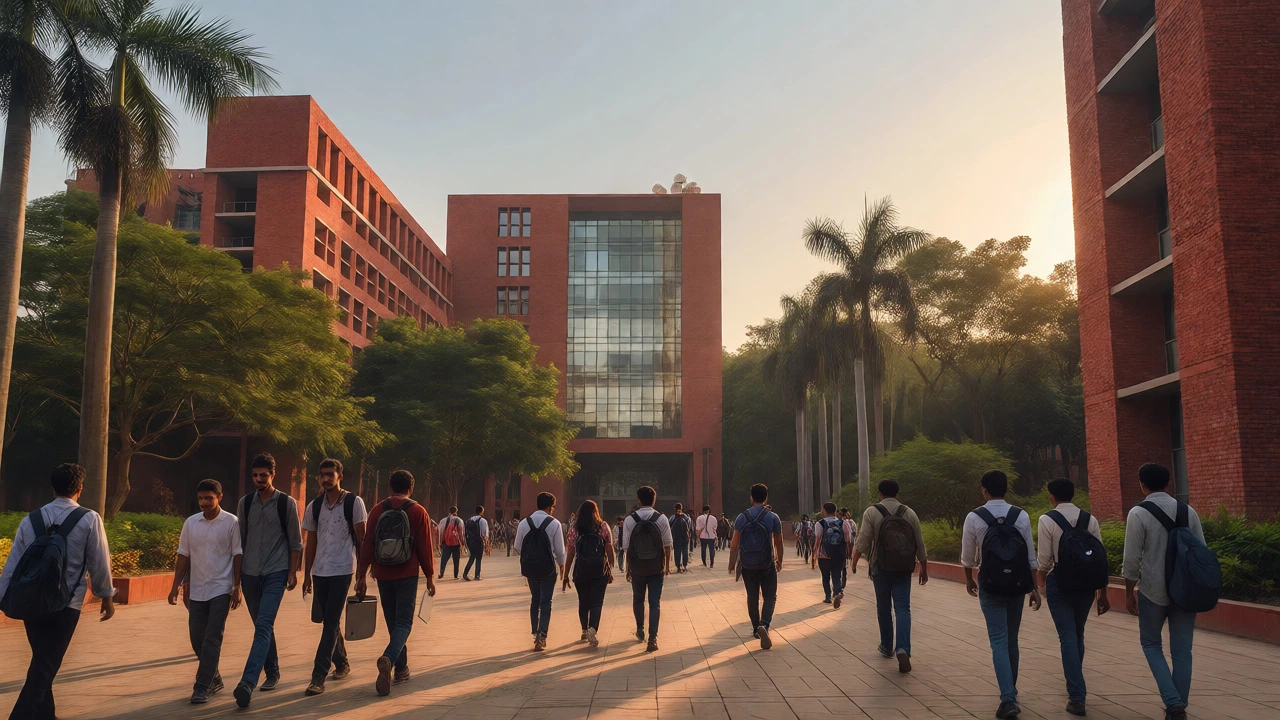
How Category and Home State Quotas Change the Game
Your identity matters more than you think. If you are an OBC-NCL candidate, a 5000 rank opens doors to CSE and EE. The reservation policy allocates roughly 27% of seats to OBC-NCL, significantly widening the eligibility window. Similarly, SC and ST candidates with a 5000 rank have excellent prospects for almost any branch, including the coveted CSE.
Don’t ignore the home state quota either. Maharashtra residents benefit from additional seats allocated specifically for them in certain programs. If you live in Mumbai or Pune, check the specific allocation tables for your category. This local advantage can sometimes pull a borderline rank into a safer bracket.
Navigating JoSAA Counseling: Strategy Over Luck
Getting the rank is half the battle; filling choices correctly is the other half. Many students with a 5000 rank end up with no IIT seat because they listed only top-tier branches and ignored the rest. Here is how to structure your JoSAA choice filling:
- List Dream Options First: Put CSE, EE, and ME at the top. Worst case? You don’t get them. Best case? A miracle happens.
- Add Interdisciplinary Courses: Include AI, Data Science, and Engineering Physics next. These are high-growth fields.
- Include Core Backups: Add Chemical, Metallurgy, and Civil. Do not skip these just because they sound "old school."
- Dual Degrees: Insert all available dual degree options before moving to other IITs.
- Other IITs: Only after exhausting IIT Bombay options, list IIT Delhi, Madras, Kanpur, and Kharagpur.
Remember, locking your choices doesn’t mean you lose the chance to upgrade. The system runs multiple rounds. If you get Chemical Engineering in Round 1, you can float and try for Metallurgy in Round 2. Never freeze unless you are happy with the current allotment.

What If You Don’t Get IIT Bombay?
Suppose you play it safe and still miss the cutoff. Is it game over? Absolutely not. With a 5000 rank, you are a prime candidate for top branches at other premier institutes. Consider these alternatives:
- IIT Delhi: Might get you non-core branches or dual degrees.
- IIT Madras: Strong in mechanical and civil; often accessible at this rank.
- NIT Trichy/Warangal/Surathkal: You will likely get CSE or EE here. Some argue NIT CSE beats IIT non-core for coding jobs.
- IIIT Hyderabad: Through UGEE/JEE Main combined merit, IIIT-H’s CSE is elite. Check their specific criteria.
It’s worth weighing the trade-off: Would you rather do Civil Engineering at IIT Bombay or CSE at NIT Trichy? If your goal is software development, the latter might offer better immediate ROI. If you want the IIT tag for MBA or government exams, stick with Bombay.
Final Verdict: Should You Aim for IIT Bombay?
Yes, aim for it. But adjust your expectations. A 5000 rank is not a ticket to the front row of Computer Science, but it is a valid entry pass to the IIT Bombay campus. You will study in the same library, eat in the same mess, and compete for the same internships. The label "IIT Bombay" carries weight regardless of whether you studied metallurgy or code.
Focus on building skills outside the classroom. Join clubs, participate in hackathons, and pursue online certifications. By the time you graduate, your portfolio will matter more than your branch name. So, fill those forms, keep your options wide, and don’t let the rank number define your entire future.
Can I get Computer Science at IIT Bombay with a 5000 rank?
For general category students, it is highly unlikely. The closing rank for CSE usually remains below 1500. However, if you belong to OBC-NCL, SC, or ST categories, a 5000 rank gives you a decent chance, especially in later counseling rounds or through home state quotas.
Which branches are easiest to get at IIT Bombay with a 5000 rank?
Branches like Chemical Engineering, Metallurgical Engineering, Civil Engineering, and Textile Technology are the most realistic options for general category students with a 5000 rank. Newer interdisciplinary programs may also fall within this range depending on yearly demand fluctuations.
Is it worth joining IIT Bombay for a non-core branch?
Yes, if you value the brand name, campus culture, and alumni network. IIT Bombay allows branch changes after the first year based on CGPA, giving you a second shot at switching to CS or EE. Additionally, placements for non-core branches are still robust due to the institute's reputation.
How does the home state quota affect my chances?
If you are a resident of Maharashtra, you have access to additional seats in various programs. This can effectively lower the required rank for admission. Always check the specific seat matrix for your category and state during the JoSAA choice filling phase.
Should I choose NIT Trichy CSE over IIT Bombay Civil?
This depends on your career goals. If you want to work in software or tech startups immediately, NIT Trichy CSE is often preferred due to specialized curriculum and strong coding culture. If you plan for higher studies, government jobs, or value the IIT tag for long-term networking, IIT Bombay Civil is a stronger choice.