
Self-Study Strategy Quiz
Think you know how to learn English effectively? Take this quick quiz based on the practical guide to see if your study habits align with proven methods.
Loading question...
Quiz Complete!
Analyzing your results...
Quick Recap of Key Concepts:
- Input Hypothesis: Consume content slightly above your level (i+1).
- Spaced Repetition: Review words just before forgetting them.
- Shadowing: Mimic native audio for better pronunciation.
- Consistency: Daily practice beats weekend cramming.
Most people think you need a classroom, a teacher, and a heavy textbook to learn English. They are wrong. Some of the best speakers I know never set foot in a formal language school. They learned on their own time, using tools they already had. If you have internet access and a bit of discipline, you can reach fluency without spending a fortune on courses. The secret isn't magic; it's consistency and smart habits.
Self-directed language learning is the process of acquiring a second language through autonomous study methods, utilizing digital resources, immersion techniques, and structured practice without direct instructor supervision. Unlike traditional schooling, this approach lets you control your pace, choose relevant content, and focus on specific weaknesses like pronunciation or grammar gaps.
Why Self-Study Works (If You Do It Right)
Traditional classes often fail because they move at one speed. You might get bored waiting for others to catch up on basic verbs, or you might feel lost when the class rushes through complex tenses. Self-study fixes this. You decide what to study today. Maybe you need help with business emails? Focus on that. Want to understand movie slang? Do that instead.
But here is the catch: freedom requires structure. Without a plan, you will likely skip days, then weeks, and eventually quit. To succeed, you need a system that fits your life, not a rigid schedule that breaks it. Think of it like going to the gym. You don't need a personal trainer every day, but you do need a routine that makes showing up easy.
Build Your Input Engine: Listening and Reading
You cannot speak what you haven't heard. This is called input hypothesis, a concept popularized by linguist Stephen Krashen. Simply put, you need massive amounts of understandable content. But "understandable" doesn't mean simple children's books if you are an adult. It means content slightly above your current level, where you understand about 80% of what is happening.
Start with podcasts. Apps like BBC Learning English or dedicated channels like "All Ears English" offer short, focused episodes. Listen while you commute or cook. Don't worry about understanding every word. Focus on the gist. After a few weeks, switch to native-level content. Try listening to news clips from CNN or BBC News. If you find standard news too fast, try YouTube channels like Vox or TED Talks, which use clear speech and visual aids to help context.
Reading complements listening. Use graded readers-books specifically written for learners. Publishers like Oxford and Cambridge produce these series. They range from A1 (beginner) to C2 (mastery). Once you finish a graded reader, move to young adult novels. Books like "Harry Potter" or "The Hunger Games" are great because the plot is engaging, and the language isn't overly academic. When you encounter new words, don't stop to look up every single one. Guess the meaning from context first. Only look it up if the word repeats frequently.
Activate Your Output: Speaking and Writing
This is where most self-learners stall. They consume hours of media but never open their mouths. You must produce language to make it stick. Speaking feels scary because you fear mistakes. But mistakes are data. They tell you what you don't know yet.
One powerful technique is shadowing. Play a short audio clip-a sentence from a podcast or a line from a movie. Listen once. Then play it again and repeat immediately, mimicking the speaker's speed, tone, and rhythm. Do this for ten minutes a day. It trains your mouth muscles and improves intonation faster than any grammar drill.
If you have no conversation partner, talk to yourself. Narrate your day. "I am making coffee now. The water is boiling." It sounds silly, but it forces your brain to retrieve vocabulary quickly. For writing, keep a daily journal. Write three sentences about your day. Use a tool like Grammarly or LanguageTool to check errors later. Don't correct them while writing; let the flow happen. Reviewing errors after helps you spot patterns, like consistently missing articles or prepositions.
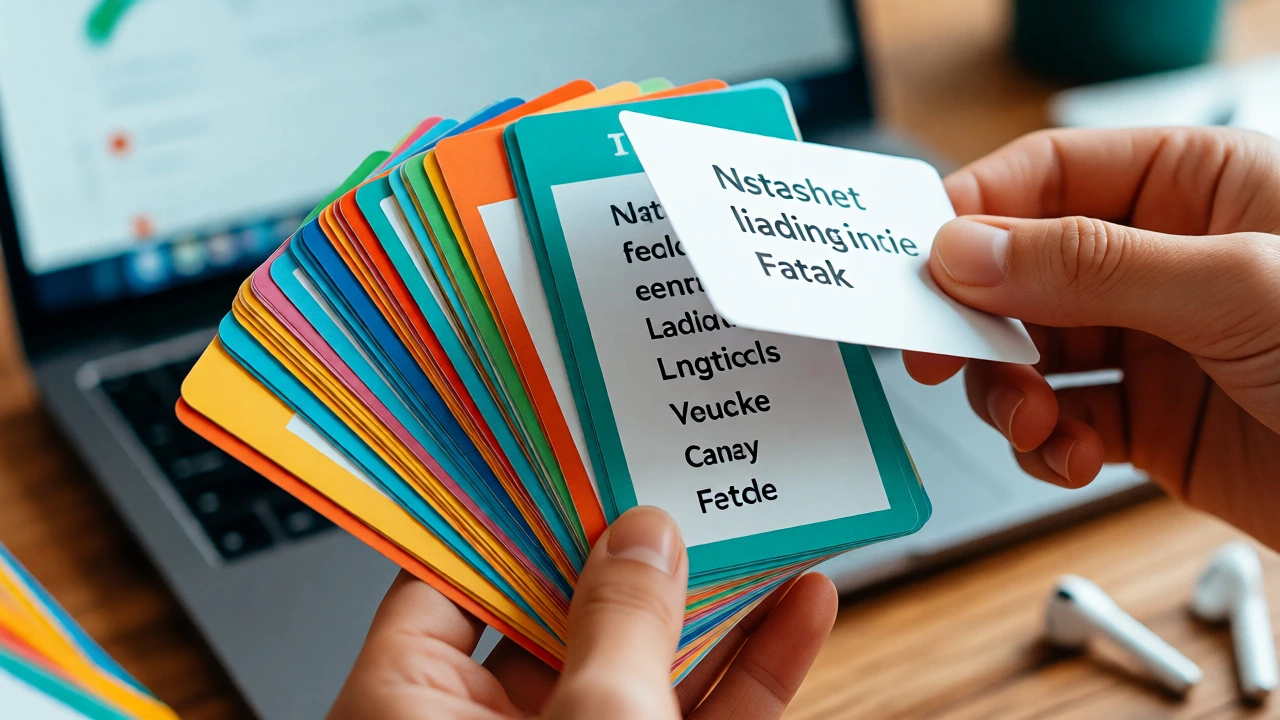
Master Vocabulary with Spaced Repetition
Memorizing lists is boring and ineffective. You forget words quickly because your brain discards information it deems unimportant. Spaced Repetition Systems (SRS) fix this by showing you flashcards just before you are likely to forget them.
Apps like Anki or Quizlet are industry standards. Create your own decks based on words you encountered during reading or listening. Context matters. Don't just write "apple = manzana." Write a sentence: "I ate a red apple." When the app shows you the card, you recall the usage, not just the translation. This method leverages the psychological spacing effect, ensuring long-term retention with minimal effort.
| Tool Type | Best For | Cost | Key Feature |
|---|---|---|---|
| Anki | Vocabulary retention | Free (Android/Desktop), $25 (iOS) | Customizable spaced repetition algorithms |
| Duolingo | Habit building | Free / Subscription | Gamified daily streaks |
| HelloTalk | Speaking practice | Free / Premium features | Exchange messages with native speakers |
| BBC Learning English | Listening & Grammar | Free | Short, structured lessons with transcripts |
Create an Immersion Environment
You don't need to live in London or New York to immerse yourself. Change your phone's language settings to English. Switch your social media feeds to follow English-speaking accounts. If you watch Netflix, turn off subtitles in your native language. Use English subtitles only if necessary, and eventually turn them off completely.
Think in English. When you see a dog, don't translate the word in your head. Associate the image directly with the English label. This reduces processing time and makes you sound more natural. Start small. Name objects in your room. Describe your actions. Over time, your internal monologue will shift entirely to English.

Track Progress and Stay Motivated
Progress in language learning is slow and non-linear. You might feel stuck for months, then suddenly understand a joke you missed last year. To stay motivated, track micro-wins. Did you understand a full song lyric? Celebrate it. Did you order food without pointing? Win.
Set specific goals. Instead of "I want to be fluent," try "I want to read a Harry Potter book in six months." Break it down. Read one chapter per week. Use a habit tracker app to mark off days you studied. Seeing a chain of completed days creates psychological momentum. If you miss a day, don't break the chain. Just restart. Consistency beats intensity every time.
Frequently Asked Questions
How many hours a day should I study?
You don't need five hours. Even 15-30 minutes of focused study daily yields better results than one four-hour session on weekends. The key is daily exposure so your brain stays engaged with the language.
Do I need to buy textbooks?
No. Most high-quality resources are free online. Websites like British Council, BBC Learning English, and various YouTube channels provide comprehensive grammar and vocabulary lessons. Textbooks can be helpful for structure, but they are not mandatory.
How do I improve my accent?
Focus on listening and shadowing. Mimic native speakers' rhythm and intonation, not just individual sounds. Record yourself speaking and compare it to the original audio. Accent reduction takes time, but clarity is more important than sounding exactly like a native.
Is it better to learn American or British English?
Pick one and stick with it initially to avoid confusion with spelling and vocabulary differences. However, both are mutually intelligible. Choose the variety that aligns with your career goals or the media you enjoy consuming.
What if I lose motivation?
Switch your activities. If you are bored with grammar drills, watch a funny comedy series. If you are tired of reading, listen to a podcast. Keep the engagement high by varying the type of input and output you practice.