Want to speak English confidently but don’t want to spend a dime? You’re not alone. Millions of people around the world are learning to speak English for work, travel, or personal growth - and they’re doing it without paying for expensive classes. The truth is, you don’t need a tutor or a paid course to start talking fluently. All you need is the right mix of tools, habits, and consistent practice. Here’s where to start - all for free.
Use language learning apps with real speaking practice
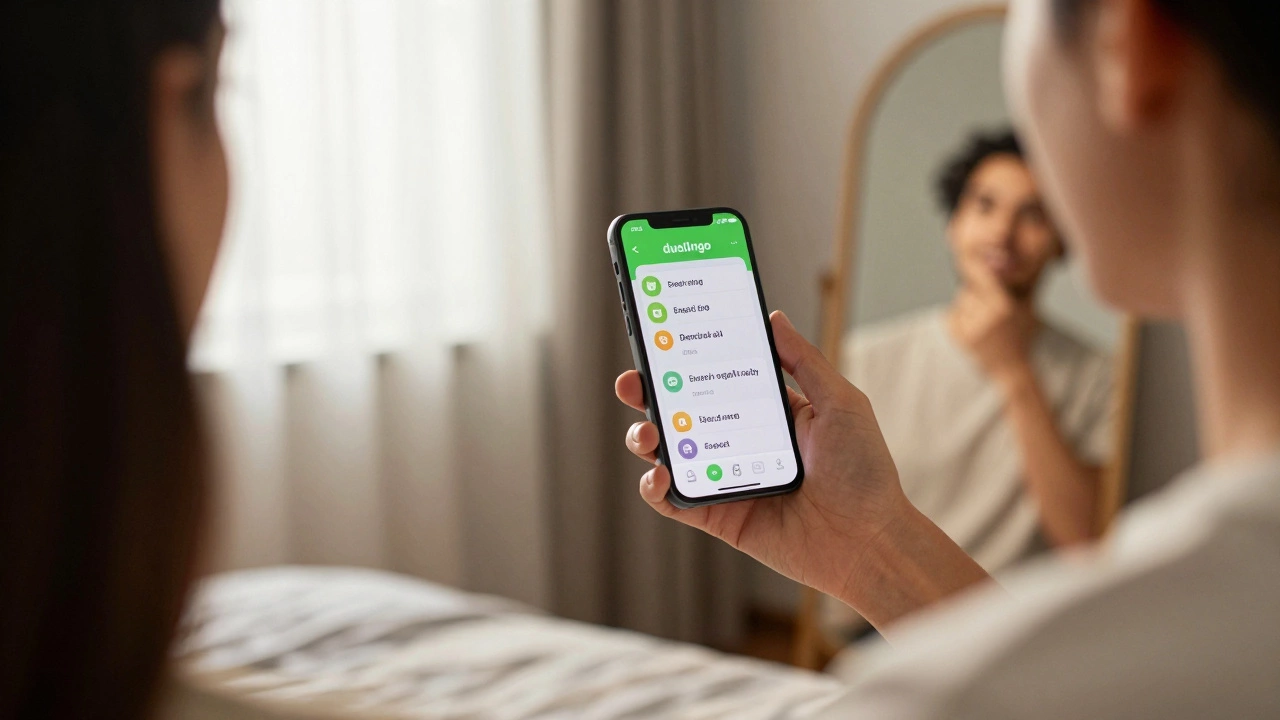
Apps like Duolingo a gamified language learning platform that offers speaking exercises, listening tasks, and daily practice routines and Busuu a language learning app that includes voice recording and feedback from native speakers aren’t just for vocabulary. They have built-in speech recognition that lets you practice pronunciation and get instant feedback. Duolingo’s speaking exercises simulate real conversations - like ordering coffee or asking for directions - so you’re not just memorizing phrases, you’re training your mouth to produce them naturally.
But here’s the key: don’t just complete the exercises. Repeat them. Do the same speaking task three times in a row. Record yourself. Listen back. Notice where you stumble. That’s how real speaking skills are built - not by watching videos, but by doing.
Watch YouTube channels designed for learners
YouTube is full of free English speaking lessons, but not all of them help you actually talk. Skip the grammar lectures and go straight to channels that focus on conversation. English Addict with Mr Steve a popular YouTube channel that teaches conversational English through casual, real-life dialogues talks like a friend, not a teacher. He uses everyday phrases, slang, and natural pacing. Watch one video a day. Pause it. Repeat what he says out loud. Shadow his speech - match his rhythm, his pauses, his intonation.
Another great option is Learn English with Emma a YouTube channel focused on practical English speaking, pronunciation, and common mistakes. She breaks down tricky sounds like "th" and "r", and shows you how native speakers link words together. You’ll start hearing these patterns in movies and podcasts - and soon, you’ll start using them yourself.
Join free online conversation groups
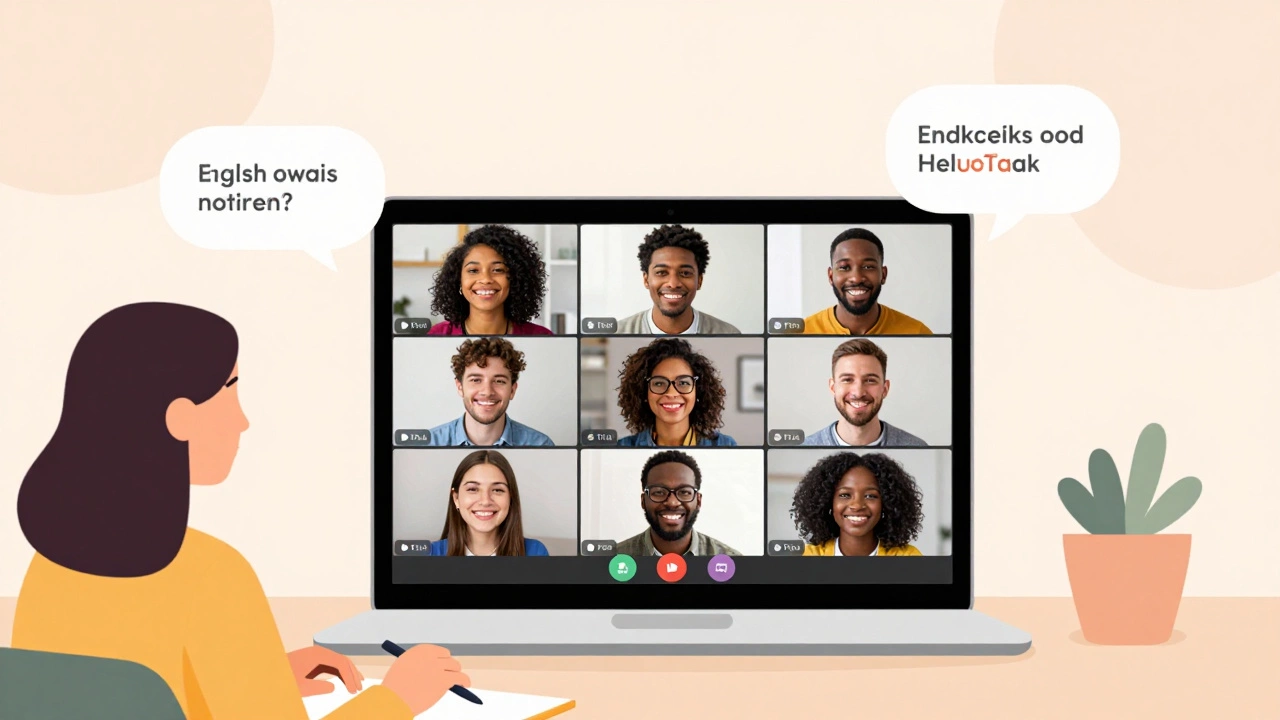
Reading and listening won’t turn you into a speaker. You need to talk. And the best place to do that for free is on platforms like Tandem a language exchange app that connects learners with native speakers for mutual practice and HelloTalk a mobile app that pairs language learners with native speakers for text, voice, and video chats.
You don’t need to be perfect. Just show up. Say: "Hi, I’m learning English. Can we chat for 15 minutes?" Most people are happy to help. You’ll find partners from Brazil, Japan, Germany - all learning your language. Swap 15 minutes of English for 15 minutes of your native tongue. It’s fair. It’s real. And it’s the fastest way to lose your fear of speaking.
Listen and repeat: the power of shadowing
Shadowing is a technique used by professional interpreters and actors. It’s simple: play a short audio clip - a TED Talk, a podcast, a scene from a movie - and repeat it out loud, right as you hear it. Try to copy the speaker’s voice, speed, and emotion. Don’t worry about understanding every word. Focus on sounding like them.
Start with slow, clear content. BBC Learning English a free resource offering videos, audio clips, and lessons designed for English learners has short clips with transcripts. Play one. Pause. Repeat. Then play again without pausing. Do this for 10 minutes a day. In two weeks, you’ll notice your accent softening and your fluency improving. It’s not magic - it’s muscle memory.
Practice daily with real-life scenarios
Think about the situations where you’ll need to speak English. Job interviews? Ordering food? Asking for help at the airport? Don’t wait until you’re "ready." Practice those exact moments now.
Stand in front of a mirror and pretend you’re checking into a hotel. Say: "I have a reservation under Smith." Then, change the name. Do it again. Now pretend you’re asking a stranger for directions. Use Google Maps to pick a random location. Say: "Excuse me, how do I get to Central Park?" Record yourself. Play it back. Fix the parts that sound awkward.
These aren’t classroom drills. They’re real rehearsals. The more you simulate real conversations, the less nervous you’ll feel when you actually have to speak.
Use free speaking challenges
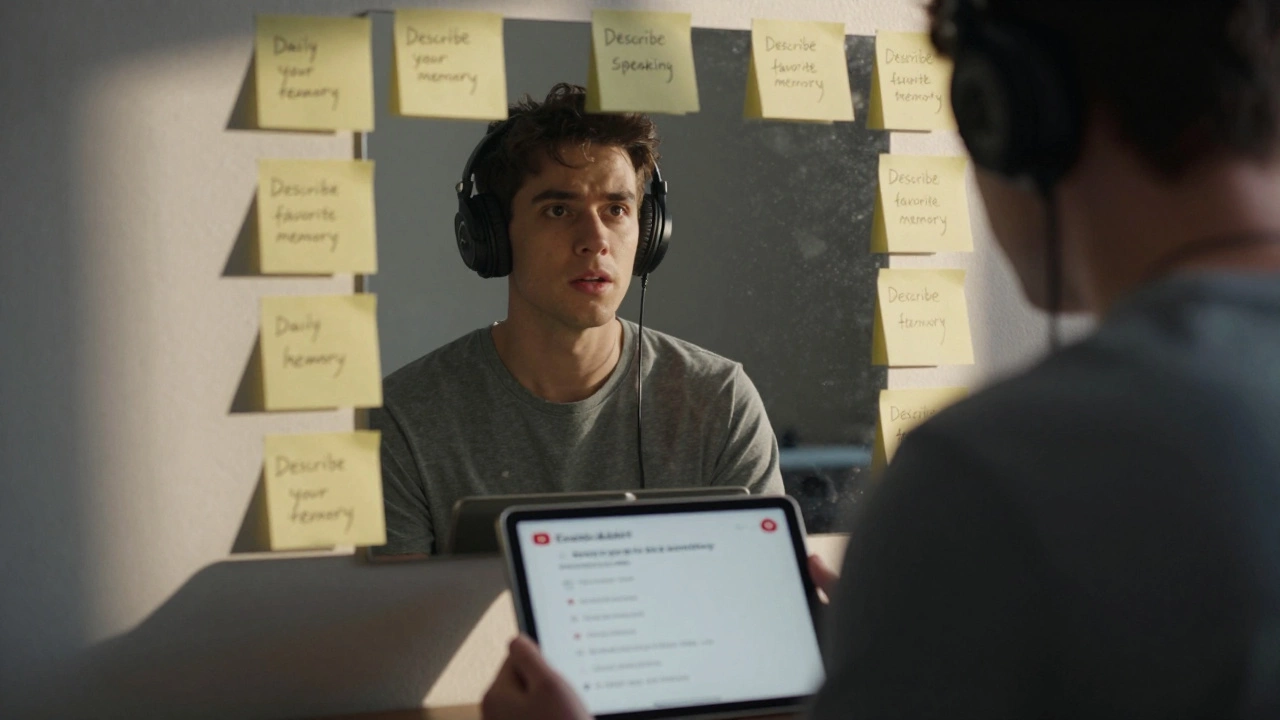
There are free 30-day speaking challenges online that give you a daily prompt. One popular one is the Speak English Now Challenge a free online program that encourages daily English speaking practice through structured prompts. Each day, you get a topic: "Describe your favorite childhood memory," or "Explain why you want to learn English." You speak for 2 minutes. No writing. Just talking.
Do it out loud. Even if you’re alone. Even if you’re shy. The goal isn’t perfection - it’s consistency. After 30 days, you’ll have spoken for over an hour. That’s more than most people do in a year of traditional classes.
Turn your phone into a speaking lab
Every time you unlock your phone, you have a chance to practice. Set your voice assistant to English. Ask Siri or Google Assistant questions: "What’s the weather today?" "Tell me a joke." "How do I say ‘thank you’ in Spanish?"
Listen to how it responds. Then say it back. Try asking the same question in different ways. "Is it going to rain?" "Will I need an umbrella?" This trains you to think in English, not translate from your native language.
Why most people fail - and how to avoid it
People think they need to learn grammar first. Or that they need perfect pronunciation. Or that they need a teacher. None of that is true. The biggest blocker is fear. Fear of sounding silly. Fear of making mistakes. Fear of being judged.
The solution? Make mistakes on purpose. Say something wrong. Then fix it. Say it again. The more you mess up, the faster you improve. Every native speaker once said, "I have a car" when they meant "I drive a car." That’s normal. That’s how learning works.
Don’t wait for confidence. Build it by speaking - even badly - every single day. Ten minutes counts. Five minutes counts. Even one minute, if it’s real.
What to do next
Start today. Pick one thing from above - one app, one YouTube channel, one conversation partner - and stick with it for 7 days. Don’t jump around. Depth beats variety. After a week, add another. In a month, you’ll notice a difference. In three months, people will ask you, "Where did you learn English?" And you’ll smile, because you know the answer: everywhere - and for free.
Can I really learn to speak English for free without a tutor?
Yes. Many people become fluent using only free resources. The key isn’t having a teacher - it’s practicing speaking regularly. Apps like Duolingo and Tandem, YouTube channels like English Addict with Mr Steve, and daily shadowing exercises give you the tools. What you need is consistency, not cash.
How long does it take to become fluent in spoken English with free resources?
It depends on how much you practice. Someone who speaks for 20 minutes a day, 6 days a week, can reach an intermediate level in 6-8 months. Fluency - speaking smoothly in most situations - usually takes 12-18 months. The difference between progress and stagnation isn’t the resource - it’s the time you put in.
Are free apps as good as paid courses?
For speaking practice, often yes. Paid courses focus on structure and theory. Free apps like Tandem and HelloTalk give you real conversations with native speakers - something most paid courses don’t offer. If your goal is to talk, not just pass a test, free tools can be more effective.
What if I’m too shy to speak with strangers?
Start by talking to yourself. Practice out loud while brushing your teeth. Record yourself answering simple questions. Then try voice messages on HelloTalk - no video needed. Most people are supportive. You don’t need to be perfect. You just need to start.
Do I need to learn grammar to speak English well?
Not at first. You learn to speak your native language without studying grammar rules. The same applies to English. Focus on listening, repeating, and using phrases in context. Grammar will click naturally as you hear more. You can always look up rules later - but don’t let them stop you from speaking now.
Can I improve my accent with free resources?
Absolutely. Shadowing - repeating what native speakers say - is the most effective way to reduce an accent. Use BBC Learning English or YouTube channels like Learn English with Emma. Focus on sounds you struggle with. Record yourself. Compare. Adjust. It takes time, but your accent will soften with consistent practice.