Exam Success Probability Calculator
Compare your chances of success in India's three toughest exams. Enter your rank or percentile to see your estimated probability of selection.
This calculator estimates your probability of selection based on official exam statistics. Enter your rank or percentile for each exam to see your chances.
IIT JEE
1.5 million applicants | 15,000 seats | 1% success rate
NEET
2.3 million applicants | 100,000 seats | 4.3% success rate
UPSC CSE
1.1 million applicants | 1,000 seats | 0.09% success rate
When people ask about the toughest exams in India, they’re not just looking for a list-they want to understand why these exams break people down, rebuild them, and still leave millions trying every year. These aren’t just tests. They’re gatekeepers to careers, social mobility, and national prestige. And out of dozens of competitive exams, three stand above the rest: IIT JEE, NEET, and UPSC CSE.
IIT JEE: The Engineering Gauntlet
IIT JEE-Joint Entrance Examination-isn’t just an exam. It’s a nationwide pressure cooker. Over 1.5 million students take it every year. Only about 15,000 get into one of the 23 IITs. That’s a 1% selection rate. And the syllabus? It covers physics, chemistry, and math at a level most universities in the world don’t even teach until second year.
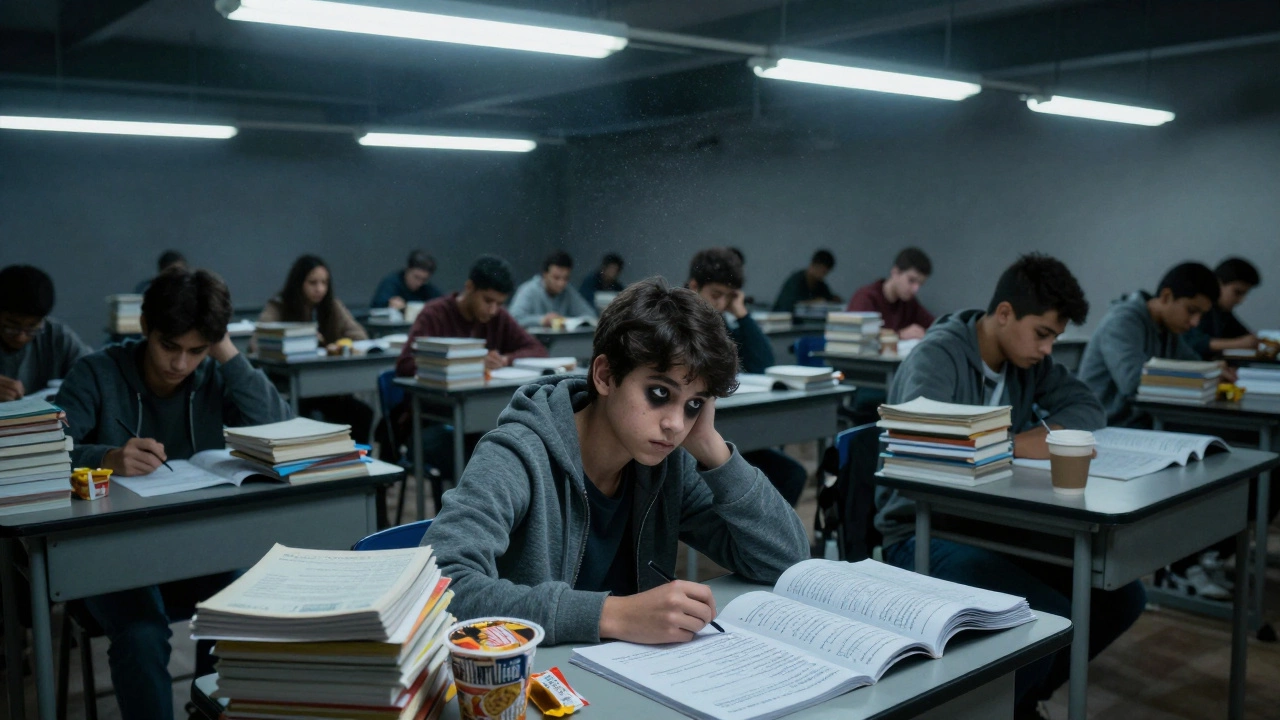
Students start preparing as early as Class 8. Many drop out of regular school to join coaching centers in Kota, where 500,000+ aspirants live in tiny rooms, study 14-hour days, and survive on instant noodles and caffeine. The paper itself has two stages: Main and Advanced. Main filters out 90% of candidates. Advanced is where the real battle begins. Questions aren’t just hard-they’re designed to trick you. A single misread word or wrong sign can cost you a seat.
What makes it brutal? The stakes. An IIT degree doesn’t just mean a good job-it means instant respect, high starting salaries (often over ₹15 lakh/year), and a lifetime of opportunities. But for every success story, there are five students who spent two years trying, failed, and had to restart their lives.
NEET: The Medical Maze
If IIT JEE is about brains, NEET-National Eligibility cum Entrance Test-is about endurance. Every year, more than 2.3 million students compete for around 100,000 MBBS and BDS seats in India. That’s a 4.3% success rate. And unlike IIT JEE, which focuses on problem-solving, NEET demands perfect recall.
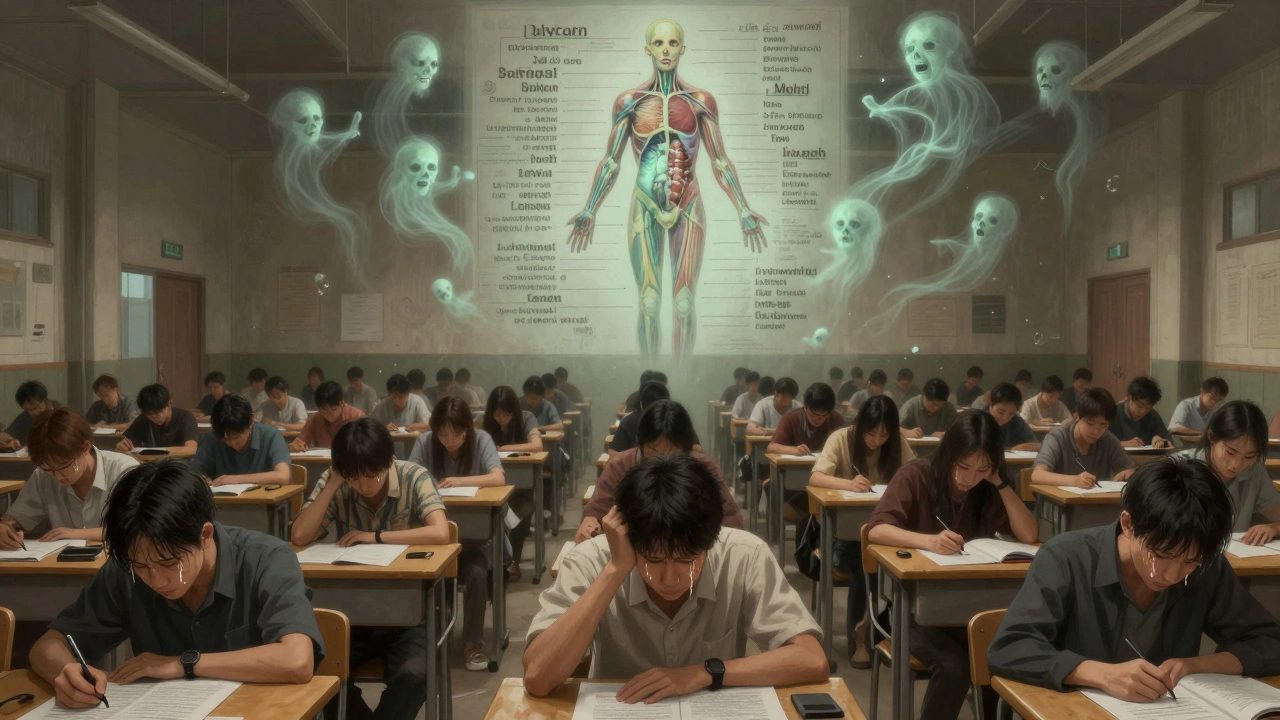
The syllabus? 100% from Class 11 and 12 biology, chemistry, and physics. But here’s the catch: you need to remember every detail. A single wrong option in a 180-question paper can drop you 100 ranks. Biology alone has over 1,200 diagrams, 300+ processes, and thousands of Latin names you must memorize. One student told me he spent six months just learning the names of human bones.
There’s also the fairness issue. In 2024, over 12,000 candidates were disqualified for alleged malpractice. Coaching centers in cities like Delhi, Lucknow, and Hyderabad charge ₹3 lakh per year. Meanwhile, rural students prepare with old textbooks and YouTube videos. The exam doesn’t care. Your score is your score. No exceptions.
And the pressure? Parents sell land. Families take loans. Students suffer anxiety so severe they drop out of exams entirely. The National Medical Commission reports that 1 in 7 NEET aspirants shows signs of clinical depression.
UPSC CSE: The Ultimate Test of Will
UPSC CSE-Union Public Service Commission Civil Services Examination-is the only exam in India that can make you a district collector, an IAS officer, or even the next Cabinet Secretary. It’s not just hard. It’s designed to break you over 18 months.
The process has three stages: Prelims (objective), Mains (written), and Interview. Prelims alone has 200 questions in two papers. One wrong answer in Paper II can disqualify you. Mains requires you to write nine 3-hour essays on topics like international relations, ethics, disaster management, and rural development. You don’t just need knowledge-you need perspective. One 2023 topper wrote 1,800 pages across eight papers.
Success rates? Less than 0.2%. Out of 1.1 million applicants, only 1,000 get selected. Most toppers are 28-32 years old. Why? Because they’ve tried 3-4 times before. The average candidate spends 18-24 months preparing. Many quit jobs, move to Delhi, live on ₹8,000/month stipends, and study 12 hours a day.
And the interview? It’s not a Q&A. It’s a psychological test. A panel of seven experts will grill you on your hobbies, your hometown, your opinions on climate policy, and your stance on caste reservation. One candidate was asked: “If you were the Prime Minister for one day, what would you do about farmer suicides?” There’s no right answer. They’re testing your calm, clarity, and character.
Why These Three? The Hidden Pattern
What connects IIT JEE, NEET, and UPSC CSE? It’s not just difficulty. It’s scale, stakes, and structure.
- Scale: Each draws over a million applicants. No other exam in India comes close.
- Stakes: They determine your entire career path-engineering, medicine, or public service.
- Structure: Each has multiple stages, high failure rates, and requires years of preparation.
Other exams like CLAT (law), CAT (management), or GATE (engineering) are tough too. But they don’t have the same national obsession. They don’t define entire generations the way these three do.
There’s also a cultural layer. In India, these exams aren’t just about merit. They’re about legacy. A child’s success in IIT JEE or UPSC CSE is seen as a family’s triumph. That pressure doesn’t exist in the same way anywhere else.

What No One Tells You
Most people think the toughest part is the exam paper. It’s not. It’s the loneliness. The sleepless nights. The guilt when your sibling gets into a state college while you’re stuck in a Kota hostel. The fear that after all this, you might still fail.
There’s no official data, but interviews with psychologists suggest that 60% of IIT JEE and NEET aspirants experience panic attacks. One in four UPSC candidates report suicidal thoughts during their preparation.
And yet, every year, millions sign up again.
Why? Because in a country of 1.4 billion, these are the few doors that open to everyone-regardless of caste, religion, or income. A boy from a village in Bihar can become an IAS officer. A girl from a slum in Mumbai can become a doctor. That’s the dream. And it’s worth every tear, every failure, every sleepless night.
Final Reality Check
If you’re preparing for one of these exams, know this: you’re not alone. But you’re also not special. Everyone here is grinding. Everyone is scared. Everyone is tired.
Success doesn’t come from genius. It comes from consistency. From waking up at 5 a.m. for three years. From reviewing your mistakes every week. From not giving up when your mock score drops below 50%.
There’s no shortcut. No trick. No secret coaching. Just work. And more work.
The toughest exam isn’t the paper. It’s staying in the game.
Is IIT JEE tougher than UPSC?
It depends on what you mean by "tough." IIT JEE is harder in terms of technical depth-you need to solve complex physics and math problems under extreme time pressure. UPSC CSE is harder in terms of volume and endurance. You have to master 15+ subjects, write 9 long essays, and survive a psychological interview. IIT JEE is a sprint with spikes. UPSC is a marathon with cliffs.
Can a student crack all three exams?
Yes, but it’s extremely rare. A few students have cleared IIT JEE and then gone on to crack UPSC CSE. NEET and IIT JEE overlap in subjects, so some students take both. But cracking all three? That’s like winning three lotteries. Most who clear one choose to focus. The mental toll of preparing for all three is unsustainable.
Why is NEET so competitive?
Because there are far too many students and too few seats. India produces over 2 million Class 12 science graduates every year. But only 100,000 MBBS seats exist. The government hasn’t scaled medical colleges fast enough. Private colleges charge ₹15-20 lakh/year, so public seats are the only affordable option. That creates a massive bottleneck. The exam isn’t hard-it’s overcrowded.
What’s the success rate for UPSC CSE?
In 2023, around 1.1 million candidates applied. Only 1,000 were selected. That’s a 0.09% success rate. But that number is misleading. Many applicants are repeat candidates. The real success rate for first-time takers is closer to 0.2%. Still, it’s the lowest of any major exam in the world.
Do toppers have special coaching?
Some do, but many don’t. A 2022 study of 120 UPSC toppers found that 42% prepared entirely on their own. They used NCERT books, free YouTube lectures, and online test series. Coaching helps with structure, but not with mindset. The real differentiator is self-discipline, not coaching fees.