
TV Series Learning Level Checker
Not sure which show is right for you? Take this quick check to find your level and get personalized recommendations.
Recommended Shows
Study Tip for Your Level
You sit down on the couch, ready to relax after a long day. You pick up your remote, but instead of just watching mindlessly, you decide to use that time to get better at English. It sounds like a smart move, right? Watching TV is fun, and it feels less like studying than sitting in a classroom. But here is the catch: not every show will help you learn. If you pick something too fast or too slang-heavy, you might end up frustrated rather than fluent.
Choosing the right series depends entirely on your current level and what kind of English you want to speak. Do you need formal business English? Or do you want to understand how people actually talk in casual settings? The good news is that there are specific shows designed for different stages of learning. Let’s look at which ones work best and how to watch them effectively so you actually retain what you hear.
Why TV Shows Work for Language Learning
Language isn't just about grammar rules; it's about context. When you read a textbook, you see words in isolation. When you watch a TV series is a form of visual media that provides contextual clues through facial expressions, tone of voice, and situational awareness., you see how those words fit into real life. This helps your brain connect meaning with sound.
Research in second-language acquisition supports this. Studies suggest that comprehensible input-content that is slightly above your current level but still understandable-is key to progress. TV shows provide this by repeating vocabulary in different scenarios. You hear "appointment" in a doctor's office, then later in a business meeting. Your brain starts to recognize the pattern without you forcing yourself to memorize flashcards.
Moreover, shows expose you to natural speech patterns. Textbooks often teach perfect, slow English. Real people mumble, interrupt each other, and use contractions. By watching native speakers interact, you train your ear to handle the messy reality of conversation. This builds confidence because when you finally speak to someone, their speed won't shock you.
Starting Out: Sitcoms for Beginners
If you are new to English, avoid complex dramas or fast-paced action movies. They move too quickly, and the vocabulary is often too specialized. Instead, start with sitcoms (situation comedies). These shows usually take place in familiar settings like homes, offices, or coffee shops. The topics are everyday things: cooking, dating, work problems, and family dynamics.
Friends is a classic American sitcom set in New York City that follows six friends navigating adulthood. It remains one of the most popular choices for learners. Why? Because the dialogue is clear, the accents are relatively standard American, and the situations are relatable. You’ll hear phrases like "How you doin'?" or "We were on a break!" which are culturally iconic and linguistically useful. The humor is also based on character interactions, so even if you miss a joke, the context usually explains it.
Another great option is The Big Bang Theory is a comedy about four scientists and their neighbor, mixing scientific jargon with everyday social awkwardness. While it has some science terms, the core conversations are about daily life. It’s excellent for hearing how nerdy or academic language mixes with casual slang. Just be prepared for some rapid-fire jokes that might require a second viewing.
| Show Title | Accent Type | Vocabulary Level | Key Benefit |
|---|---|---|---|
| Friends | General American | A2-B1 | Clear enunciation, everyday idioms |
| The Big Bang Theory | General American | B1-B2 | Mix of technical and casual speech |
| Modern Family | Varied (US) | B1 | Diverse family dynamics, mockumentary style |
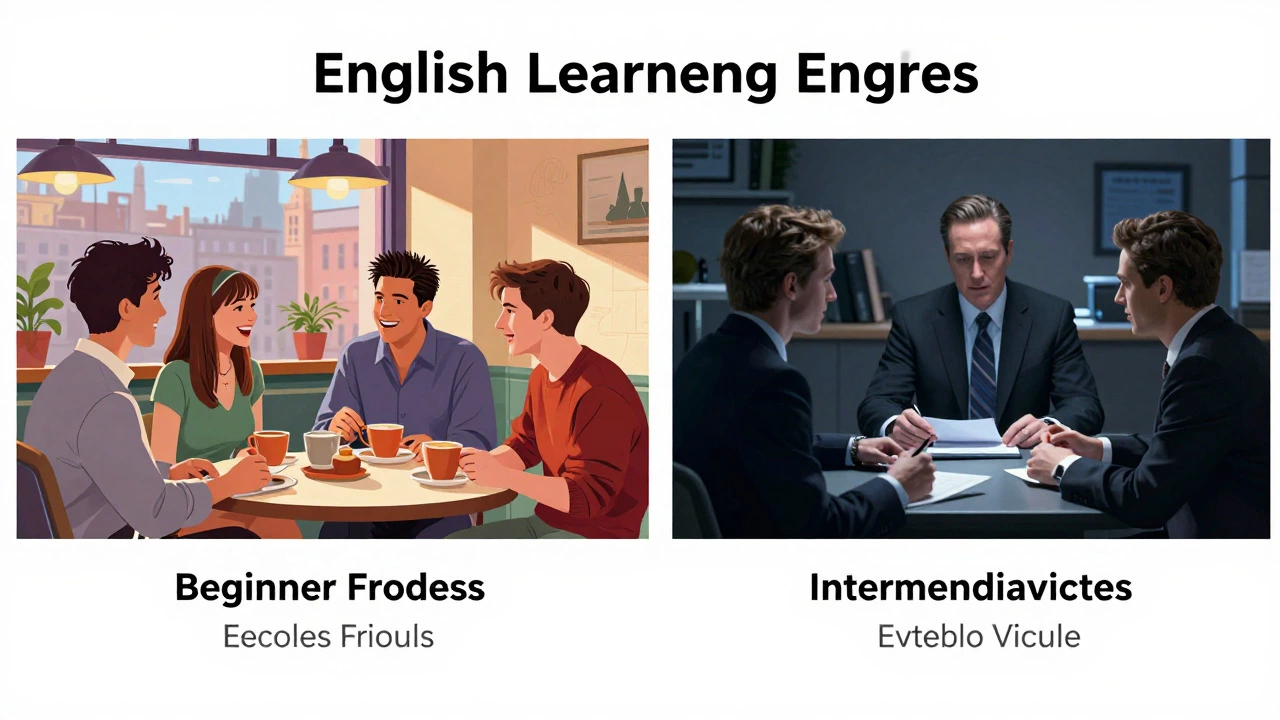
Intermediate Learners: Drama and Workplace English
Once you can follow a sitcom without constant pausing, it’s time to step up. Intermediate learners (B1-B2 level) should try shows with more complex plots and professional settings. This is where you start picking up formal vocabulary and nuanced emotional expression.
Grey's Anatomy is a medical drama set in a Seattle hospital, featuring high-stakes personal and professional conflicts. Medical dramas are fantastic for learning specific terminology, but more importantly, they show how professionals communicate under pressure. You’ll hear doctors explaining conditions to patients, which is a great model for clear, empathetic communication. The accents are mostly American, but you’ll encounter diverse backgrounds within the cast.
For business English, Suits is a legal drama focusing on corporate law, known for its sharp dialogue and professional attire. The characters speak quickly and confidently. You’ll learn phrases like "close the deal," "due diligence," and "negotiation tactics." It’s intense, but it mirrors the pace of actual business meetings. If you work in an office, this show will help you sound more polished in emails and presentations.
Don’t ignore British English either. Downton Abbey is a period drama set in the early 20th century, showcasing formal British etiquette and class distinctions. While the setting is historical, the language is incredibly precise and polite. It’s perfect for learners who need to master formal correspondence or understand upper-class British manners. The pacing is slower than modern shows, giving you time to process the vocabulary.
Advanced Learners: Slang, Accents, and Nuance
At the advanced level (C1+), your goal shifts from understanding words to understanding culture. You want to grasp sarcasm, irony, regional slang, and subtle social cues. This is where generic learning materials fail, and authentic content shines.
Game of Thrones is a fantasy epic with multiple dialects and archaic language styles. It challenges you to distinguish between different fictional accents and older forms of English. It’s tough, but it trains your ear to adapt to unfamiliar sounds. Plus, the plot is engaging enough to keep you motivated despite the difficulty.
For contemporary slang, try Euphoria is a teen drama that reflects current youth culture, music trends, and modern slang. The dialogue is raw and unfiltered. You’ll hear how teenagers actually speak today, including internet slang and rapid code-switching. It’s not for everyone due to mature themes, but linguistically, it’s a goldmine for staying current.
If you’re interested in Australian English, since I’m writing this from Wellington, let me recommend Heartbreak High is an Australian teen drama that captures local slang and school culture. It’s lighter than Euphoria and gives you a taste of Aussie lingo like "arvo" (afternoon) or "brekkie" (breakfast). Understanding these variations makes travel or remote work with international teams much smoother.

How to Watch Effectively: The Active Method
Watching passively won’t make you fluent. You need a strategy. Here is a simple workflow that works for most learners:
- First Watch (No Subtitles): Try to understand as much as you can from context alone. Don’t pause yet. Just get a feel for the scene.
- Second Watch (Native Subtitles): Turn on English subtitles. Note down words you didn’t catch. Look up their meanings immediately.
- Shadowing: Pick a short clip (30 seconds). Pause after each sentence and repeat it exactly as the actor said it. Mimic their intonation, speed, and emotion. This builds muscle memory in your mouth.
- Review: Keep a small notebook or digital doc of new phrases. Review them weekly. Use them in your own sentences.
Avoid using subtitles in your native language unless you are a complete beginner. Relying on them prevents your brain from processing the English audio directly. Over time, wean yourself off subtitles entirely. Aim to watch at least 15-20 minutes a day consistently rather than binge-watching once a week.
Common Pitfalls to Avoid
One mistake many learners make is choosing shows that are too difficult. If you understand less than 60% of the dialogue, you’ll get bored and quit. Start easier and build up. Another error is ignoring pronunciation. You might know the word "comfortable," but if you pronounce it "com-for-ta-ble" instead of "comf-tul," natives might struggle. Pay attention to how sounds blend together in connected speech.
Also, don’t expect perfection overnight. Language learning is a marathon, not a sprint. Some days you’ll understand everything; other days, you’ll feel lost. That’s normal. Stick with it, and you’ll notice gradual improvements in your listening and speaking confidence.
Should I use subtitles when watching TV to learn English?
Yes, but use English subtitles, not your native language. English subtitles help connect spoken words with their written form, reinforcing vocabulary. Native subtitles distract your brain from processing the audio. As you improve, try turning them off to challenge your listening skills.
What is the best TV show for absolute beginners?
For absolute beginners, animated shows like Peppa Pig or SpongeBob SquarePants are surprisingly effective. The language is simple, clear, and repetitive. For slightly older learners, Friends is the go-to choice because the dialogue is conversational and the contexts are familiar.
Can I learn British English from American TV shows?
You can understand the vocabulary, but the accent and idioms will differ. To learn British English specifically, choose UK-produced shows like Black Mirror, Doctor Who, or Downton Abbey. This ensures you hear the correct pronunciation and cultural references.
How many hours a week should I watch TV to improve?
Consistency matters more than volume. Aim for 15-30 minutes daily. This adds up to 2-4 hours a week, which is sufficient for noticeable improvement if you practice actively (shadowing, note-taking) rather than just watching passively.
Is it better to watch movies or TV series for learning?
TV series are generally better because they offer repeated exposure to the same characters and voices over time. This helps your brain recognize speech patterns and vocabulary in different contexts. Movies are one-off experiences, making it harder to build familiarity.