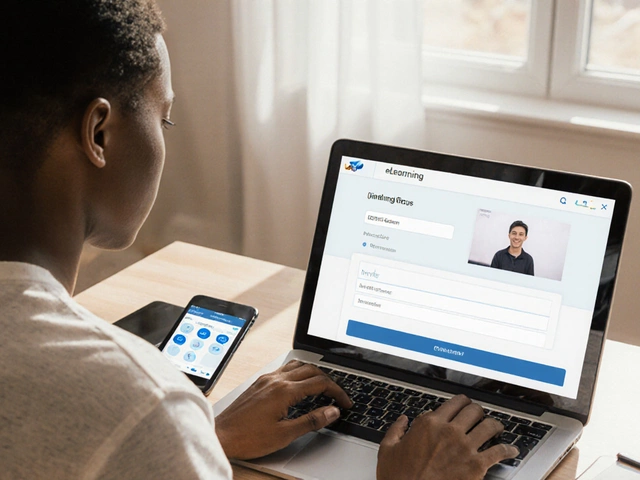
eLearning Model Selector
Answer these questions to discover which of the 5 major eLearning frameworks fits your current project.
You’re staring at a dashboard full of course modules, wondering if you should force everyone into the same digital box or let them roam free. It’s a common headache for educators and corporate trainers alike. The truth is, there isn’t one "best" way to teach digitally. Instead, successful programs rely on specific eLearning models that match the content, the audience, and the tech stack. If you pick the wrong model, your engagement drops faster than a lead balloon.
Think about it: teaching coding requires immediate feedback loops, while history lectures might benefit from deep, asynchronous reading. Mixing these up creates confusion. To help you navigate this, we’ve broken down the five dominant frameworks used in modern education. These aren’t just academic theories; they are the blueprints behind the platforms you use every day.
The Self-Paced Asynchronous Model
This is probably what pops into your head when you hear "online course." In the Self-Paced Asynchronous Model, learners consume content on their own schedule without real-time interaction with instructors or peers. You hit play on a video, read a PDF, take a quiz, and move on. No meetings, no time zones, no pressure.
Why does it work? Because life happens. A student in Wellington might study at midnight, while their peer in London studies at noon. This flexibility is the model's superpower. However, it demands high self-discipline. Without external structure, completion rates can plummet. Platforms like Coursera or Udemy often lean heavily on this approach. If you’re using this model, you need robust progress tracking to keep learners honest. Gamification elements-badges, streaks, leaderboards-help combat the isolation factor.
But don’t mistake "asynchronous" for "lonely." Good implementations include discussion boards where students reply to prompts days later. The key is designing content that stands alone. If a video relies on a live Q&A session to make sense, your asynchronous course will fail. Keep lessons modular and self-contained.
The Synchronous Online Model
Now, flip the script. What if you need real-time connection? Enter the Synchronous Online Model. This replicates the traditional classroom but through a screen. Everyone logs in at the same time. The instructor talks, students raise virtual hands, and chat windows buzz with instant reactions.
This model shines when social presence matters. Think language classes, debate clubs, or leadership workshops where body language and immediate correction are crucial. Tools like Zoom or Microsoft Teams become the campus. The downside? Time zone hell and technical glitches. If your internet cuts out during a critical explanation, you lose momentum fast.
To make this work, you must break up long lectures. Attention spans on screens are shorter than in person. Use breakout rooms for small group discussions every 15 minutes. Polls and quick quizzes keep passive watchers active. Remember, synchronous doesn’t mean lecture-heavy. It means interactive. If you’re just talking *at* the camera for an hour, you’re wasting bandwidth and patience.
The Blended Learning Model
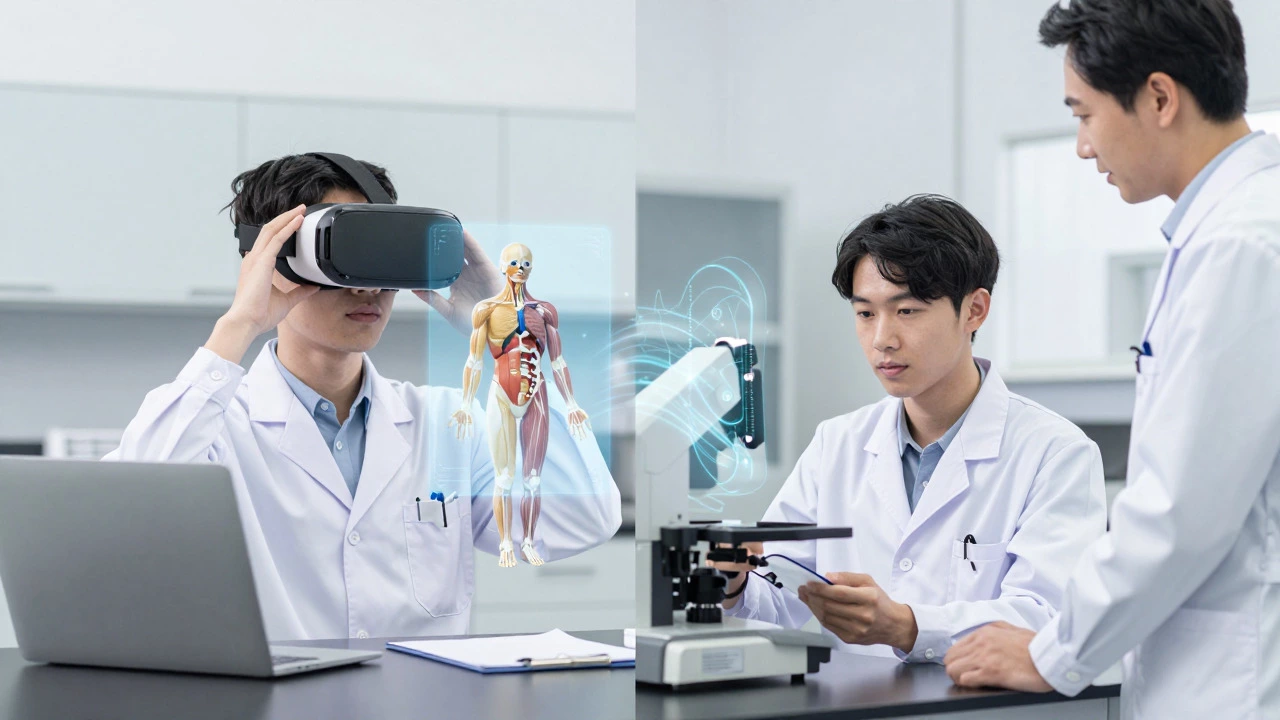
Here’s where things get interesting for institutions with physical campuses. Blended Learning mixes face-to-face instruction with online activities. It’s not just adding videos to homework; it’s flipping the classroom. Students watch lectures at home (asynchronously) and use class time for problem-solving, labs, or debates (synchronously/in-person).
This model respects the strengths of both worlds. Digital tools handle content delivery efficiently, freeing up valuable human time for mentorship and complex interaction. For example, a medical school might use VR simulations for anatomy practice online, then bring students into the lab for hands-on dissection. The online part prepares them; the offline part solidifies skills.
Success here depends on seamless integration. If the online platform doesn’t talk to the in-person curriculum, students feel whiplash. Ensure that online assignments directly feed into classroom discussions. If a student skips the pre-reading, the in-class activity falls flat. Clear communication of expectations is vital here.
The Mobile Microlearning Model
Forget hour-long sessions. Mobile Microlearning delivers bite-sized content designed for smartphones. We’re talking 3-5 minute videos, quick infographics, or short quizzes optimized for vertical screens. This model targets "in-the-moment" learning needs.
Imagine a sales rep needing a quick refresher on a product feature before a client call. They don’t have time for a module. They open an app, watch a 90-second clip, and get the answer. This approach reduces cognitive load and fits into fragmented schedules. Companies like Duolingo mastered this by turning language learning into daily 5-minute habits.
However, microlearning isn’t for deep conceptual understanding. You won’t learn quantum physics in three-minute bursts. Use it for reinforcement, compliance updates, or skill drills. The content must be hyper-focused. One idea per asset. If you cram too much info into a tiny screen, users swipe away instantly. Design for thumbs, not keyboards.

The Adaptive Personalized Model
This is the frontier of ed-tech. Adaptive Learning uses algorithms to customize the path for each learner. If you ace a quiz, the system skips ahead. If you struggle, it offers remedial resources. No two students see the exact same sequence of content.
Platforms like Knewton or DreamBox power this model. It mimics one-on-one tutoring at scale. For large organizations with diverse skill levels, this saves massive amounts of time. Senior staff breeze through basics; new hires get extra support without feeling judged. The data generated is gold for administrators, showing exactly where knowledge gaps exist across teams.
The catch? High implementation costs and complexity. Setting up adaptive rules requires careful mapping of learning objectives. If the algorithm misinterprets a wrong answer as a lack of effort rather than a misunderstanding, it might skip necessary reviews. Always start with a pilot group before rolling out adaptive paths company-wide.
| Model | Interaction Type | Best For | Key Challenge |
|---|---|---|---|
| Self-Paced Asynchronous | Learner vs. Content | Scalable training, flexible schedules | Low completion rates |
| Synchronous Online | Learner vs. Instructor/Peers | Discussion-heavy subjects, community building | Time zone conflicts |
| Blended Learning | Mixed (Online + Face-to-Face) | Complex skills requiring practice | Curriculum alignment |
| Mobile Microlearning | Learner vs. Short Content | Just-in-time info, habit formation | Lack of depth |
| Adaptive Personalized | Learner vs. Algorithm | Diverse skill levels, efficiency | High setup cost |
How to Choose Your Model
So, which one do you pick? Start with the outcome. Do you need certification (likely asynchronous)? Do you need behavioral change (blended or synchronous)? Do you need quick reference (microlearning)?
- Audience Tech Literacy: If your users struggle with apps, avoid complex adaptive systems. Stick to simple LMS interfaces.
- Budget Constraints: Synchronous requires more instructor hours. Asynchronous has higher upfront production costs but lower ongoing fees.
- Content Complexity: Deep theoretical topics rarely survive in microlearning chunks. Save those for blended or synchronous formats.
Don’t fall into the trap of thinking you must choose just one. Many successful programs hybridize these approaches. You might use microlearning for weekly tips, asynchronous modules for core theory, and monthly synchronous webinars for Q&A. The mix depends on your specific goals, not industry trends.
Remember, the model is just the vehicle. The driver is your instructional design. Even the best adaptive AI fails if the content is boring. Focus on clarity, relevance, and engagement first. Then, select the model that supports those qualities most effectively.
Is blended learning better than fully online?
Not necessarily. Blended learning is superior for skills requiring physical practice or strong social bonding. Fully online is better for scalability, geographic reach, and cost-efficiency. The "better" option depends entirely on your learning objectives and resource constraints.
Can I switch eLearning models mid-course?
Yes, but communicate changes clearly. Switching from asynchronous to synchronous can disrupt learners' schedules. Use transition periods to adjust expectations. Some advanced LMS platforms allow dynamic switching based on learner performance data.
Which model has the highest completion rates?
Synchronous and Blended models typically have higher completion rates due to accountability and social pressure. Purely asynchronous courses often suffer from lower completion unless gamified or incentivized strongly. Microlearning also sees high engagement due to low commitment barriers.
Do I need expensive software for adaptive learning?
Traditionally, yes. Adaptive engines require sophisticated backend logic. However, newer AI-driven LMS platforms are lowering entry costs. Start with rule-based branching (if X, show Y) before investing in machine-learning adaptation.
Is microlearning effective for complex topics?
No, not on its own. Microlearning works best for reinforcement, review, or simple procedural tasks. Complex concepts require sustained attention and deeper processing, which suit asynchronous modules or synchronous discussions better.