
Best for Phonetic Accuracy. Use this if you feel people struggle to understand your accent. It uses AI to show you exactly where your tongue should be.
Best for Conversational Flow. Use these to find language exchange partners. Start with voice notes to practice 'asynchronous speaking' before live calls.
Best for Listening & Mimicking. Use this to learn real-world expressions from clips rather than outdated textbook phrases.
Best for Vocabulary Habit. Great for absolute beginners to get a feel for sentence structure and basic words.
Quick Wins for Fluent Speaking
- Duolingo: Great for building a basic vocabulary habit.
- HelloTalk: Best for finding real people to talk to via voice notes.
- Cake: Excellent for learning real-world phrases from YouTube clips.
- ELSA Speak: The gold standard for fixing your accent and pronunciation.
- Tandem: A high-quality community for language exchange partners.
The Problem with 'Gamified' Learning
Most people start with Duolingo is a gamified language learning platform that uses bite-sized lessons and streaks to keep users engaged. It is fantastic for learning that 'the apple is red,' but it won't help you handle a spontaneous conversation at a coffee shop. Why? Because there is a massive difference between recognizing a word and recalling it in real-time. To speak English fluently, you have to move from passive learning (reading and listening) to active production (speaking and writing). If you only play games, you will develop 'silent fluency'-where you understand everything but freeze up the moment you open your mouth.
Mastering Your Accent with AI
If you are worried that people can't understand your accent, you need an AI coach. ELSA Speak is an AI-powered pronunciation app that provides instant feedback on English speech sounds. Unlike a human teacher who might be too polite to correct every mistake, ELSA tells you exactly where your tongue should be. For example, if you struggle with the 'th' sound, the app highlights the specific phoneme you missed in red. The free version offers a limited number of daily lessons, but those few minutes of focused drills are more valuable than an hour of mindless scrolling. It turns your phone into a mirror for your voice.
| App | Primary Strength | Free Tier Limit | Best For |
|---|---|---|---|
| HelloTalk | Real Human Interaction | Limited daily translations | Conversational Flow |
| Cake | Natural Expressions | Ad-supported / Daily limits | Listening & Mimicking |
| ELSA Speak | Phonetic Accuracy | Daily lesson cap | Accent Reduction |
| Tandem | Cultural Exchange | Limited search filters | Long-term Partnerships |

Connecting with Real Humans via Language Exchange
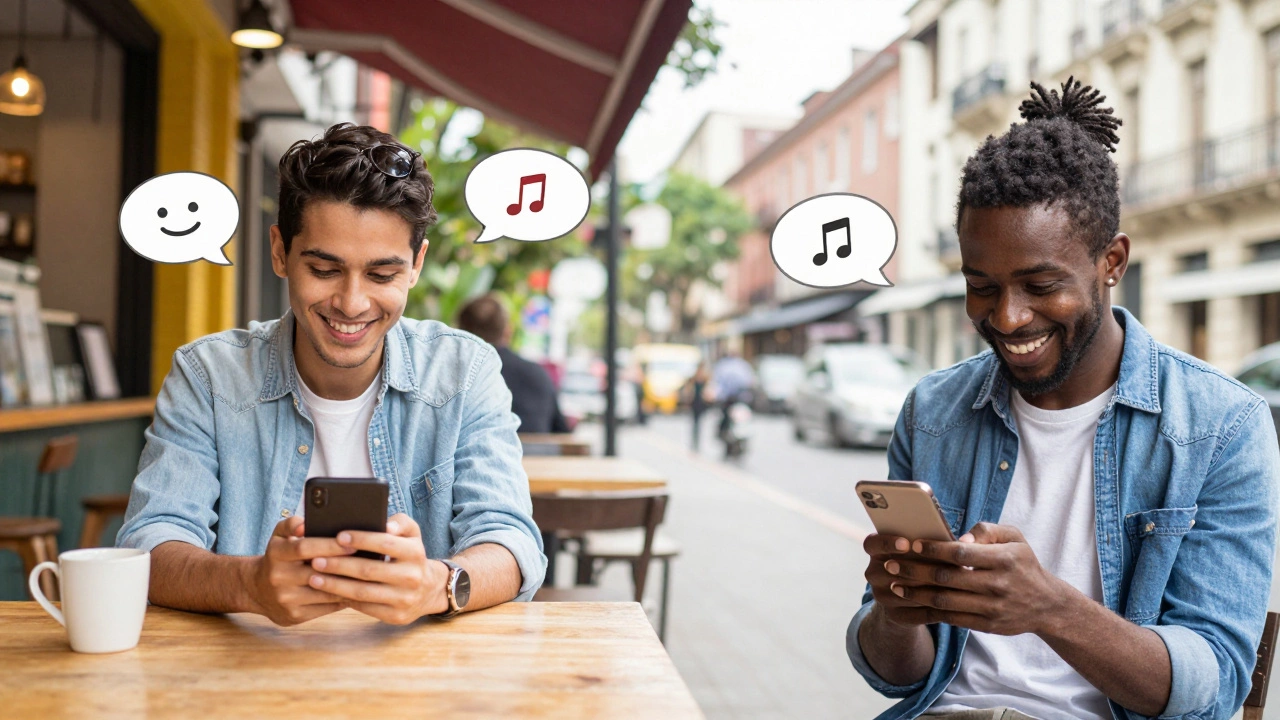
The fastest way to fluency is talking to someone who actually needs you. This is where HelloTalk and Tandem come in. These aren't 'courses' in the traditional sense; they are social networks for learners. You find a partner who speaks English and wants to learn your native language. You spend 30 minutes speaking English, then 30 minutes speaking your language. This creates a mutual incentive. When you use a voice note on HelloTalk, you are practicing 'asynchronous speaking,' which gives you a moment to think before you talk-a perfect stepping stone before jumping into a live Zoom call.
Learning from Real-World Content
Textbooks are often 20 years behind how people actually talk. To sound natural, you need to see how English is used in the wild. Cake is a brilliant tool because it strips short clips from movies, vlogs, and interviews. Instead of learning 'Hello, how are you?', you learn phrases like 'I'm beat' or 'Let's call it a day.' The app encourages you to record yourself mimicking the speaker. If the AI doesn't recognize your recording, you just try again. This process, known as shadowing, helps you pick up the rhythm, stress, and intonation of native speakers without needing to live in an English-speaking country.
Avoiding the Common Fluency Traps
A lot of learners fall into the 'grammar hole.' They spend three years studying the difference between the present perfect and the past simple, but they can't order a pizza. Fluency is about communication, not perfection. If you say 'I go to store yesterday,' a native speaker still knows exactly what you mean. The goal should be 'comprehensible output.' Use your apps to build a foundation, but don't let the fear of a grammar mistake stop you from hitting the record button. The more you make mistakes in a safe environment like a language app, the fewer you will make in a high-stakes environment like a job interview.
Building a Daily Speaking Routine
Consistency beats intensity. Spending five hours on an app once a week is useless compared to 20 minutes every single day. Here is a simple blueprint you can follow: spend 10 minutes on ELSA Speak to warm up your mouth muscles, 10 minutes on Cake to learn one new natural phrase, and then send three voice notes to a partner on Tandem. This approach covers all bases: pronunciation, vocabulary, and real-time application. By treating your phone as a portable language lab, you remove the excuse of 'not having anyone to practice with.'
Can I really become fluent using only free apps?
Yes, but with a caveat. Apps provide the tools and the partners, but fluency comes from the volume of speaking you do. You can't just 'use' an app; you have to actively engage. If you use a combination of AI for pronunciation and language exchange for conversation, you can reach a high level of fluency without spending a dime.
Which app is best for absolute beginners?
Start with Duolingo to get a feel for the sentence structure and basic words. Once you can form simple sentences, move to Cake to hear how those words sound in real life. Don't jump into HelloTalk or Tandem until you have enough vocabulary to at least introduce yourself and ask basic questions.
How do I find a reliable language partner on Tandem or HelloTalk?
Look for users who have completed their profiles and have a history of activity. Write a clear bio stating your goals-for example, 'I want to practice business English for 15 minutes a day.' Be specific. This attracts people with similar goals rather than those who are just browsing.
Is ELSA Speak better than a human tutor for pronunciation?
For the technical side of pronunciation (where to put your tongue and how to shape your lips), ELSA is often better because it uses precise AI analysis. However, a human tutor is better for teaching you 'social' pronunciation, like how to sound more polite or assertive. Using both is the ideal strategy.
How long does it take to see results with these apps?
If you practice 30 minutes a day, you will notice a difference in your confidence within 30 days. Significant fluency-where you can hold a complex conversation without struggling for words-usually takes 6 to 12 months of consistent, active speaking practice.
What to do when you get stuck
If you hit a plateau where you feel you aren't improving, change your input. Stop using the same app for a month and switch to a different method. If you've been focusing on AI, switch to real humans. If you've been chatting with partners, spend some time recording yourself and playing it back to find your own mistakes. The moment you feel bored is the moment your brain stops learning. Keep the challenge level high by trying to talk about topics that actually make you struggle, like politics, philosophy, or your specific professional field.