Daily Speaking Practice Timer
The article suggests short, frequent bursts are better than marathon sessions. Choose a technique below to start your daily practice.
You’ve probably heard it a thousand times: "Just watch movies in English." But let’s be honest-passively binge-watching Netflix with subtitles on rarely translates into actually being able to order coffee without stuttering. If you want to improve your English speaking skills fast, you need active engagement, not passive consumption. The good news? You don’t need an expensive tutor or a plane ticket to London to get there. Your living room is actually the best laboratory for rapid improvement if you know how to use it.
The Myth of Passive Listening
Most learners think listening is enough. They listen to podcasts while commuting or music while cooking. Sure, that helps with comprehension and vocabulary recognition, but speaking is a motor skill. It requires your tongue, lips, and jaw to move in specific ways. Think of it like learning to play the guitar. You can listen to Jimi Hendrix all day, but until you press those strings, your fingers won’t know what to do. To speed up progress, you must shift from input-only to output-heavy practice.
Here is the harsh truth: your brain optimizes for efficiency. If you only listen, your brain gets lazy about producing sounds. It recognizes words but doesn’t know how to assemble them quickly under pressure. That’s why many people understand 90% of a conversation but can only reply with "Yes," "No," or awkward silence. We need to break that cycle by forcing production.
Mastering the Shadowing Technique
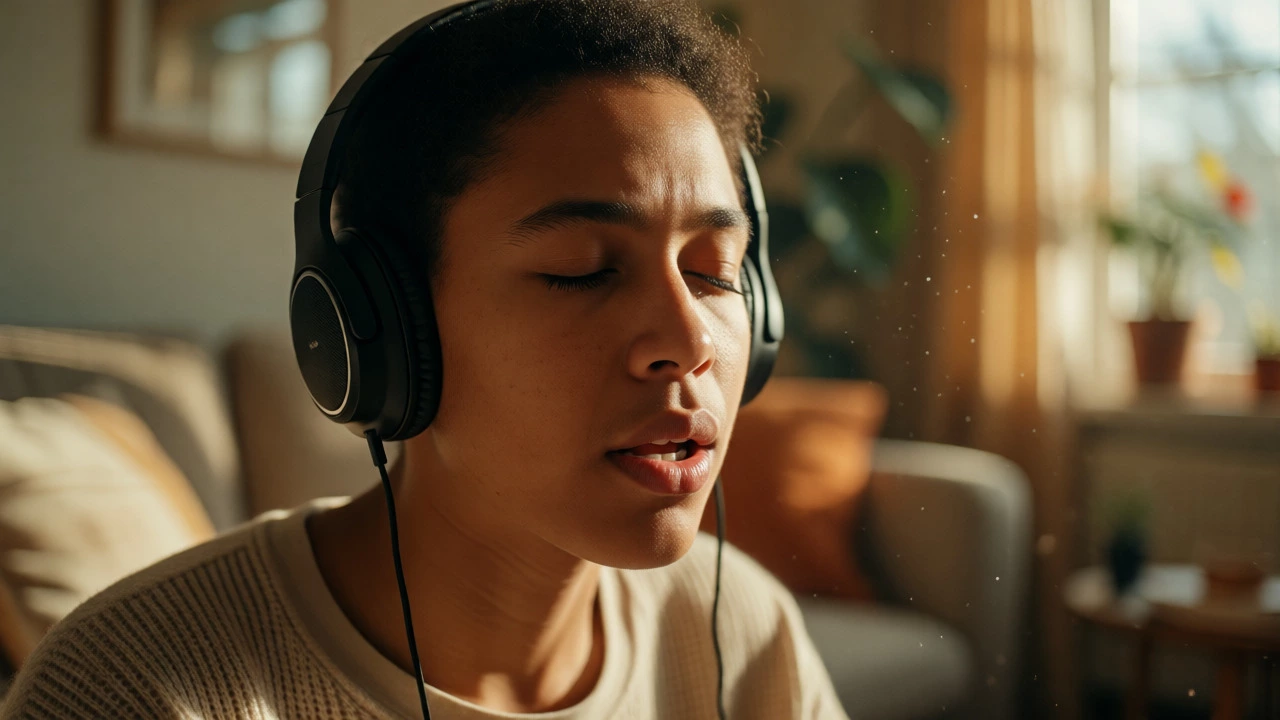
If there is one method that works faster than any other, it’s Shadowing. This isn’t just repeating words; it’s mimicking the rhythm, intonation, and speed of a native speaker simultaneously. Developed by Professor Alexander Arguelles, this technique trains your mouth muscles and your brain’s auditory processing at the same time.
Here’s how to do it properly:
- Pick short audio clips: Choose TED Talks, news segments, or audiobooks where the speaker speaks clearly. Avoid heavy slang or extremely fast rap initially.
- Listen once: Understand the meaning first. Don’t try to speak yet.
- Speak along: Play the audio again and speak immediately after the speaker, with only a half-second delay. Do not pause the audio.
- Mirror the emotion: If they sound excited, you sound excited. If they whisper, you whisper. This captures the "music" of English, which is often more important than individual words.
Why does this work so fast? Because it bypasses the translation step. Usually, you hear English → translate to native language → form thought → translate to English → speak. Shadowing cuts out the middlemen. You are linking sound directly to physical movement.
Talk to Yourself (Yes, Really)
It feels silly, but narrating your life is incredibly effective. Since you’re at home, you have no audience to judge you. Start small. While making breakfast, describe what you are doing. "I am cracking two eggs. I am heating the pan. The butter is melting." Keep it simple. Then, make it complex. Explain why you chose this recipe. Speculate about your day ahead.
A common pitfall here is stopping when you don’t know a word. Don’t stop! Use circumlocution. If you forget the word for "spatula," say "the flat thing used to flip eggs." This keeps the flow going and builds confidence. Fluency is about keeping the conversation moving, not having perfect vocabulary every second.
| Method | Primary Benefit | Time Required | Difficulty Level |
|---|---|---|---|
| Shadowing | Improves accent, rhythm, and speed | 15-20 minutes/day | High concentration |
| Narrating Life | Builds daily vocabulary and thinking in English | All day (opportunistic) | Low stress |
| Recording Voice Memos | Identifies pronunciation errors objectively | 5 minutes/day | Moderate |
| Reading Aloud | Connects spelling to sound, improves pacing | 10 minutes/day | Low |

Record and Review Your Progress
Your ears lie to you. When you speak, you hear the resonance in your skull, which masks certain flaws. Recording yourself via your phone’s voice memo app reveals the truth. Pick a topic, speak for one minute, and save it. Listen back. Do you mumble? Do you pause too long? Do you use "um" and "uh" excessively?
Compare your recording from Monday to your recording from Friday. Hearing tangible improvement is a massive dopamine hit that keeps you motivated. Try re-recording the same text a week later. The difference will shock you. This feedback loop allows you to self-correct, a skill that eventually makes you independent of teachers.
Leverage Technology for Real-Time Feedback
We live in an era where AI tools can act as patient, non-judgmental partners. Apps like ELSA Speak or even built-in dictation features on smartphones can analyze your pronunciation. However, don’t rely solely on apps. Use them as diagnostic tools, not replacements for human interaction.
If you have access to online communities, platforms like Tandem or HelloTalk allow you to send voice notes to native speakers. Unlike real-time calls, voice notes remove the pressure of immediate response. You can record, delete, and re-record until you are satisfied. This reduces anxiety and allows you to focus on quality over speed initially.

Create an Immersive Environment
Changing your digital environment forces your brain to switch languages. Change your phone’s operating system language to English. Follow English-speaking accounts on Instagram or Twitter. Join Discord servers related to your hobbies where English is the primary language. When your entertainment and social feeds are in English, you absorb idioms and current slang naturally.
Physical immersion matters too. Label objects in your house with sticky notes. Not just "door" or "window," but phrases like "close the door gently" or "open the window for fresh air." This associates actions with language chunks rather than isolated nouns.
Consistency Beats Intensity
You might think studying for three hours on Saturday is better than 20 minutes daily. Wrong. Language acquisition relies on neural pathways strengthening through repetition. Short, frequent bursts are far more effective than marathon sessions. Set a timer for 15 minutes each morning. During that time, no distractions. Just you, your voice, and English.
Track your streak. Apps like Streaks or a simple calendar help visualize consistency. Missing one day isn’t failure; missing three days breaks the habit. Protect your daily slot fiercely. Even if you are tired, do five minutes. Keeping the chain unbroken is psychologically powerful.
How long does it take to see results?
With consistent daily practice of 20-30 minutes using active methods like shadowing, most learners notice improved confidence and smoother speech within 4 to 6 weeks. Significant fluency changes usually occur after 3 to 6 months of sustained effort.
Do I need a grammar book to speak better?
Not necessarily. Over-studying grammar can cause hesitation because you are mentally checking rules before speaking. Focus on pattern recognition through listening and reading aloud. Learn grammar in context (phrases) rather than abstract rules.
What if I have a strong accent?
Accents are part of your identity and don’t hinder communication unless they obscure meaning. Aim for clarity, not perfection. Shadowing helps reduce heavy accents by training muscle memory for standard sounds, but don’t feel pressured to erase your cultural background entirely.
Can I learn speaking without a partner?
Absolutely. Techniques like shadowing, self-talk, and recording voice memos are highly effective solo activities. While human interaction adds nuance, the mechanical aspects of speaking can be significantly improved alone.
Should I worry about mistakes?
Mistakes are data, not failures. Each error tells you what to fix next. Fear of mistakes causes paralysis, which halts progress. Embrace errors as proof that you are practicing actively.